Future fuels A to Z – 19 best picks on future marine fuel technology

The 19 best picks on marine future fuel technology to help you comply with regulations, save money and hit your decarbonisation targets in a handy A-Z.

Wärtsilä Marine leads the industry in its journey towards a decarbonised and sustainable future. Our portfolio of engines, propulsion systems, hybrid technology and integrated powertrain systems deliver the reliability, safety, and environmental performance to decarbonise the worlds fleet. We offer our customers performance-based agreements, lifecycle solutions, and an unrivalled global network of maritime expertise.

Articles

Wärtsilä engineer hoisting a pipe in the test hall
7 Apr 2026 · Article
6 min read
Carbon capture: how much could it help shipowners meet their CO₂  targets?
Interested in learning more about onboard carbon capture? Find out how...
Decarbonisation and future fuels Exhaust treatment
Rendering of 46ts-df cruise vessel
4 Feb 2026 · Article
6 min read
3 expert tips to help you make smarter choices about vessel propulsion
How do you choose the right propulsion system for your ship? Discover three...
Propulsion
Propulsion
3D illustration RoPax vessel with hybrid solution
22 Jan 2026 · Article
7 min read
What ship operators really want to know about methane slip: 9 common questions answered
This article answers the 9 most common questions ship...
Decarbonisation and future fuels Engine systems
16 Dec 2025 · Article
5 min read
Short sea shipping and sustainability: 3 interesting considerations
Could an aging fleet and tightening environmental regulations be an opportunity...
Engine systems Propulsion
MV Afros installed with 4 Anemoi Rotor Sails
11 Dec 2025 · Article
7 min read
Wind-assisted propulsion for ships: 8 helpful things every ship owner should know
Wind power is making a comeback – but with a modern, high-tech...
Decarbonisation and future fuels Propulsion
View from bridge from Harmony of the Seas
3 Dec 2025 · Article
6 min read
From big data to lifecycle optimisation – 4 trends that will affect shipping in 2026
Take a deep dive into four trends and technologies that our...
Decarbonisation and future fuels
3D illustration of offshore vessels and rigs
18 Sep 2025 · Article
7 min read
Make more from offshore: how to turn three challenges into opportunities
Want to make more from offshore, with maximised safety and manoeuvrability,...
Decarbonisation and future fuels Propulsion
Bow of TT-Line's MS Robin Hood
17 Jul 2025 · Article
5 min read
3 unexpected AI-powered strategies for improving your vessel efficiency
AI hype is everywhere, and the maritime industry is no exception. How can...
Fleet optimisation
Fleet optimisation
Ammonia as fuel by Wärtsilä
7 Jul 2025 · Article
10 min read
Ammonia as marine fuel? Benefits, challenges, and smart adoption
Adopting ammonia to fuel ships can decrease greenhouse gas emissions. How will it...
Decarbonisation and future fuels Lifecycle services Engine systems

Webinars

3D rendering of a vessel with Carbon Capture and Storage
28 May 2025 · Webinar
Get a competitive edge with these 3 tips on onboard carbon capture
Experience our online event and get the insights of carbon capture!
Exhaust treatment Decarbonisation and future fuels
Container vessel animation
25 Feb 2025 · Webinar
How advanced digital twins and AI help optimise vessel performance
Watch our insightful webinar where industry experts reveal how AI and digital...
Fleet optimisation
Fleet optimisation
Three simple ways that data and AI can save you money in vessel operations
20 Nov 2024 · Webinar
Three simple ways that data and AI can save you money in vessel operations
Watch this insightful webinar where industry experts reveal three...
Decarbonisation and future fuels Fleet optimisation Lifecycle services
Methanol 32 with engineers
24 Oct 2024 · Webinar
Cyber requirements: how to meet them with the power of type approvals
Watch this interesting webinar and you will learn more about the cyber type...
Cyber security Lifecycle services
17 Jan 2024 · Webinar
New methanol engines: how will they power the future?
Watch this interesting webinar and you will learn how the new methanol engines will power the...
Decarbonisation and future fuels
14 Nov 2023 · Webinar
Tech Talk - What does the future hold for small merchant vessels?
Follow a fascinating panel debate! You will get insight that helps you develop...
Decarbonisation and future fuels
Cargo ship at sea
25 Oct 2023 · Webinar
How to reduce methane slip – winning tactics for your maritime business
Watch this interesting webinar and you will learn how to reduce methane slip...
Decarbonisation and future fuels Lifecycle services
Container ships at sea
5 Oct 2023 · Webinar
Real-world solutions for the Greek and Cypriot merchant fleet
This webinar will focus on real-world concepts that can help, from future fuels,...
Engine systems Decarbonisation and future fuels Marine electric
17 Jan 2023 · Webinar
Carbon Intensity Indicator (CII) – Data tools to help you improve your fleet’s CII ratings
Building resilient maritime education in 2022 and...
Fleet optimisation
Fleet optimisation

Whitepapers

Wärtsilä employee looks inside the engine
White paper
24 pages
White paper: Methane slip: how to cut regulatory costs and protect asset value
Download this paper for a clear explanation of methane slip related...
Engine systems Lifecycle services
Side of Viking Grace Ro-Pax Ferry
White paper
36 pages
White paper: Is profitable decarbonisation possible? A how-to guide for ferry operators
Download this white paper and you will learn how ferry...
Decarbonisation and future fuels
propeller flow analysis, where the colored lines or contours represent the velocity and path of the fluid
White paper
36 pages
Insider’s guide to ship propulsion: 8 tips to help you make the right choices
Download this eGuide and learn how to choose propulsion solutions to...
Decarbonisation and future fuels Propulsion
White paper
24 pages
Offshore gains: How to tackle three challenges and sharpen your edge
Perfect for offshore vessel owners and designers. Learn how to boost efficiency...
Decarbonisation and future fuels Propulsion
Wärtsilä employee testing equipment
White paper
32 pages
eGuide: Expert advice: How to deal safely with ammonia on board ships
This safety essentials eGuide draws from Wärtsilä’s experience in ammonia as...
Decarbonisation and future fuels
Wärtsilä service employee at work
White paper
20 pages
White paper: How to make the best maintenance plan for your ship – the simple way
Proper planning is the key to a successful maintenance or overhaul...
Sustainability Lifecycle services

Case studies

Carnival Corporation

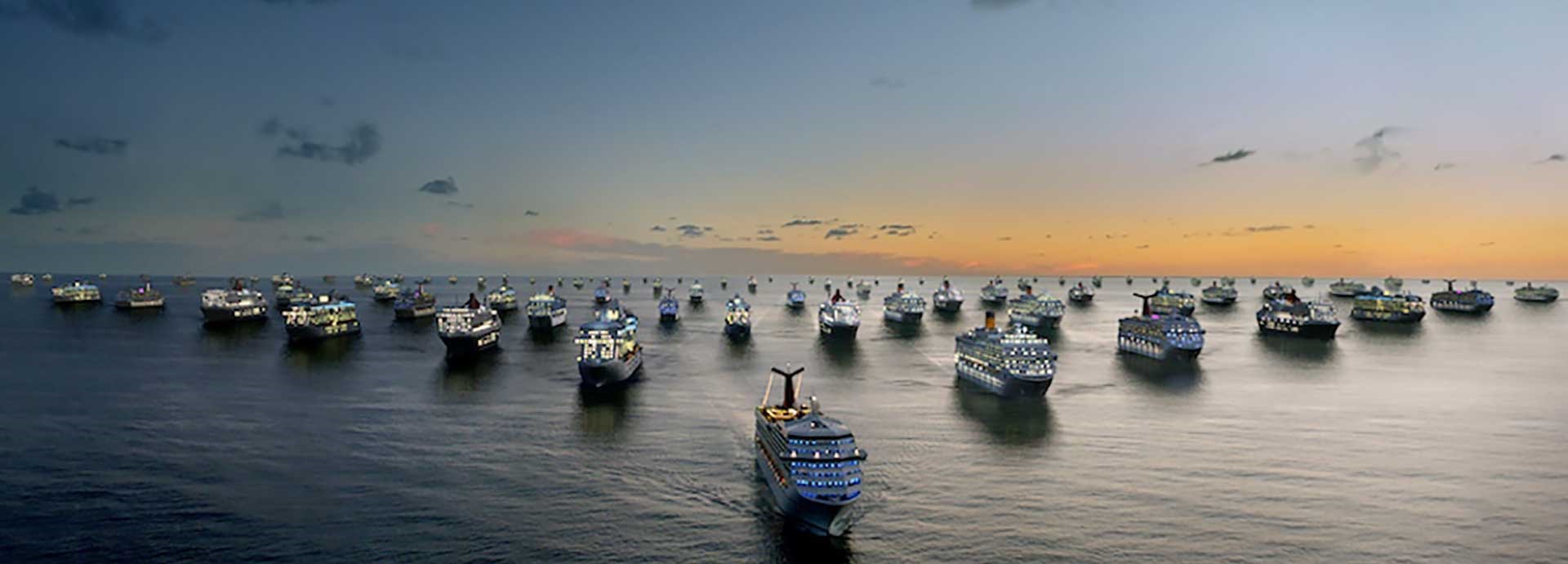
12-year guaranteed asset performance agreement for the fleet of 79 cruise vessels

Performance-based agreement with Carnival Corporation's fleet

A comprehensive, 12-year performance-based agreement has been signed between Wärtsilä and Carnival Corporation. The agreement covers the safety, reliability and fuel consumption of all the company’s cruise ships covered by the agreement.


Challenge

  • Ensuring safe, reliable and efficient customer operations

Solution

  • 12-year performance-based agreement for 79 of Carnival’s vessels

Benefit

  • Savings in fuel costs (tens of millions of dollars per year)
  • Increased safety and reliability


Carnival Corporation & plc, the world’s largest leisure travel company, was founded in 1972 and has its headquarters in Miami, Florida, USA. Carnival operates a fleet of 102 ships, visiting more than 700 ports around the world. The company employs over 120,000 people worldwide and its 10 cruise line brands attract nearly 11.5 million guests annually.


Why optimise ship lifecycle efficiency?

One of Carnival’s key focus areas is fuel consumption improvement. Their large fleet of 102 ships means that even the smallest improvements in fuel efficiency add up to big savings. For example, a 1% improvement of an annual one-billion-dollar fuel bill represents a massive ten million dollars in savings, states Mr. Burke. Another key focus is to avoid service interruptions. Everything needs to be up and running at a high level. If maintenance interruptions can be minimised and uptimes increased, along with fuel savings, the benefit will go to both Carnival and their passengers.

In January 2017, the performancebased agreement was signed to strengthen the partnership between Wärtsilä and Carnival. The agreement includes Wärtsilä’s Dynamic Maintenance Planning (DMP) and Condition Based Maintenance (CBM). Simplified, Wärtsilä will take care of engine maintenance and monitoring, scheduled or not. Wärtsilä will also have the responsibility to safely extend overhaul intervals where possible, as they will be closely monitoring the ship’s engines.

CBM and DMP both receive data from individual engines, which is analysed by Wärtsilä’s specialists. As such, real-time optimisation of the equipment is enabled to predict operational and maintenance demands. This means that data will be transmitted ashore every 30 seconds, and we’ll have direct around-theclock feedback on any actions taken. For example, this allows us to see how changes in components improves our fuel consumption, explains Mr. Burke.

With approximately 400 Wärtsilä engines covered under the agreement, even the smallest improvements in vessel fuel consumption add up to significant annual savings in fleet operational costs. With Wärtsilä maintaining the engines under our agreement and ensuring a high level of safety and reliability, we can concentrate on our core priority – providing great cruise vacations for our more than 11 million annual guests. Best of all, it also delivers superior fuel efficiency, says Mr. Burke.


Predictability and incentives

Carnival Corporation accounts for approximately 50% of the cruise industry, which means a huge engine volume. Wärtsilä engines can be found in 79 ships of their fleet. The long-term performance-based agreement provides predictability of costs and incentives for both companies as remuneration is based on how the equipment performs. Carnival Corporation will benefit from the predictability of having an expert overseeing maintenance, which will allow their staff to put more time and energy into the business side of things. For Wärtsilä, the predictability makes it possible to put more effort into R&D, manufacturing and other functions to create products and solutions that are even better and more efficient.

If Wärtsilä does well, they get paid more, and our pain is Wärtsilä’s pain, as they pay a penalty if our operational need is impacted, says Mr. Burke. Burke clarifies, If we buy an engine for a ship, Wärtsilä has been more than happy to sell us parts and services, but this deal gives Wärtsilä an incentive to keep everything up and running at a high level. By minimising spare parts and services to increase uptime and fuel savings, both companies will ultimately benefit. And fewer service interruptions make for happy cruise passengers, too.


Long-term partnership

The agreement will generate a data treasure that does not exist in the world today. From Burke’s perspective, this agreement unlocks Wärtsilä’s knowledge and experience for Carnival Corporation’s benefit and lays the groundwork for future opportunities for the two companies to work together.

Our Carnival Corporation brands sail to nearly 750 ports around the world, and there are not many suppliers that could support our ships in so many locations, Mr. Burke points out. This 12-year contract will keep us together for a long time if all goes well. We might have to amend the contract, since there may be things we haven’t thought of, and the collaboration may lead to some byproducts or spin-offs from the main deal. If we can make this contract work well, there will be many more opportunities. However, the continuous monitoring and analysis of engine efficiency and fuel consumption will lead to savings in fuel costs measured in tens of millions of dollars per year, concludes Bill Burke.

As the cruise industry is continuing to grow rapidly, it has become more and more critical for us to ensure that the operations of our fleet are safe, reliable and efficient. This is good for both our business and the market.

Mr. Bill Burke, Chief Maritime Officer at Carnival Corporation


Related solutions

Podcasts

20 Jun 2025 · Podcast
5 min listen
Four top tips for future-proofing your newbuild vessels
Discover four expert strategies to future-proof newbuild vessels: flexible design,...
Decarbonisation and future fuels Engine systems Marine electric
19 Jun 2025 · Podcast
5 min listen
How smart engine optimisation is one easy way to minimise methane slip
Are you looking to reduce methane slip from your LNG-powered vessel? Discover...
Decarbonisation and future fuels
6 Jun 2025 · Podcast
6 min listen
Three amazing ways to reduce vessel propulsion power and cut methane slip
Energy-saving technologies are a great way to cut vessel fuel use and...
Decarbonisation and future fuels
6 Jun 2025 · Podcast
5 min listen
Three fascinating ways you can avoid low loads and reduce methane slip
Avoiding low loads is a great way to minimise methane slip from LNG-powered...
Decarbonisation and future fuels
6 Jun 2025 · Podcast
5 min listen
Why good maintenance is a powerful tactic to cut methane slip from ships
What is methane slip and why should you care about it? What smart tactics...
Decarbonisation and future fuels Lifecycle services
6 Jun 2025 · Podcast
4 min listen
How to cut methane slip: winning tactics for maritime businesses
What is methane slip and why should you care about it? What smart tactics can you...
Decarbonisation and future fuels