

Side of Viking Grace Ro-Pax Ferry
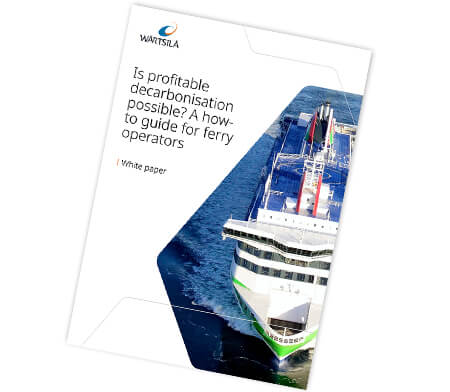
Is profitable decarbonisation possible? A how-to guide for ferry operators

Download this white paper and you will learn how ferry operators can reduce emissions, control costs and comply with 2030 targets through proven decarbonisation solutions.

13 April 2026 · 36 pages

White paper: Is profitable decarbonisation possible? A how-to guide for ferry operators

Decarbonisation is no longer optional for ferry operators — but it can still be profitable with the right approach. This white paper explains the three key pathways and the proven technologies helping operators stay efficient, compliant and competitive.

What are the most realistic, technically viable ways to decarbonise a ferry fleet today?

The ferry industry is under pressure to comply with tightening regulations, manage volatile fuel costs, and still deliver reliable, competitive service. Understanding which decarbonisation pathways genuinely reduce emissions and support business performance is now essential to long term planning.
 

  • The three most practical pathways to reduce ferry emissions.
  • Technologies that improve vessel efficiency and cut operating costs.
  • Options for alternative fuels, hybrid systems and electrification.
  • Insights from Wärtsilä on proven, scalable decarbonisation solutions.
  • Real examples of ferry operators achieving measurable results.
cover white paper Is profitable decarbonisation possible? A how-to guide for ferry operators

You will get:

  • Practical advice: Discover proven technologies and upgrades that improve efficiency, reduce fuel use and support compliance.
  • Proven solutions: Learn how leading ferry operators are reducing emissions in real operating conditions and what they’ve achieved.
  • Expert insight: Learn about the three most realistic pathways to cut ferry emissions — and when each one makes sense.
  • Guidance for the future: See which choices help you stay competitive as regulations tighten and fuel strategies evolve.

You will get a clearer view of what works today and what will continue to deliver value. This helps you prioritise actions that support compliance, control costs and reduce risk – and strengthen your performance.

A clear roadmap to lower emissions, higher performing ferry operations

Stay ahead of tightening regulations

The paper explains practical, technically viable options so you can make choices that reduce regulatory risk and keep your fleet future ready.

Find solutions for real impact

Explore technologies and upgrades that have proven to reduce emissions, improve efficiency and support operational reliability. 

Learn from examples

Real examples show how leading ferry companies are cutting emissions and improving performance under real operating conditions.

Frequently asked questions

Who is this white paper for?

Ferry owners, operators, technical managers, and sustainability officers will find this Wärtsilä white paper interesting.

Is this resource really free?

Yes! Download and share it with your team to learn how to respond to tougher safety, efficiency and emissions requirements with smart choices for ferries.

What are the most effective ways to cut emissions from a ferry fleet today?

Focus on three practical pathways:

  • Make vessels and operations more efficient (for example with energy‑saving tech, hybridisation, shaft generators, or power limitation).
  • Adopt alternative fuels and new energy sources (for example with LNG/methanol‑ready engines, fuel conversions, shore power, wind‑assisted propulsion).
  • Clean up exhaust emissions (using scrubbers, NOx reduction, onboard carbon capture).

These options can be combined for bigger gains, depending on vessel type, route profile and regulatory exposure. Wärtsilä’s cross‑portfolio experience helps operators assess which mix is technically viable now.

How can ferry operators meet tightening rules without blowing the budget?

Prioritise measures that improve both compliance and operating efficiency. For example:

  • Efficiency upgrades (propulsion optimisation, control systems) that save fuel and cut emissions.
  • Hybrid systems and shore power to cut port‑stay emissions and improve engine loading.
  • Combining several incremental improvements can help reach compliance targets faster, and it often offsets a large share of compliance costs over the lifecycle.

Wärtsilä provides data‑led assessments to identify quick wins versus larger upgrades.

Can existing ferries get close to 2030 goals without full replacement?

Often, yes: through targeted retrofits and operational improvements. For example:

  • Hybridisation and battery systems to smooth loads and cut fuel use.
  • Propeller/rudder redesigns and propulsion control to improve efficiency.
  • Scrubbers, NOx reduction, and onboard carbon capture for emissions control (field trials show CCS can reduce CO₂ by ~70%).
  • Route‑aware digital optimisation and predictive maintenance for ongoing gains.

Example cases in this white paper “Is profitable decarbonisation possible – A how-to-guide for ferry operators” show operators achieving measurable improvements via retrofits rather than replacements. Wärtsilä can help scope feasibility and lifecycle impact for older tonnage.

Smarter pathways to efficient, future ready ferry operations

The contents on this page have been written with the help of AI. A human expert has checked and verified the contents.