

Take a deep dive into four trends and technologies that our experts see affecting the maritime industry in 2026.
"In 2025 the maritime industry once again shone brightly, showing its fierce resilience and relentless ingenuity. The industry has continued to face global challenges head on, taking huge steps forward in important areas like digitalisation, sustainability and cross-industry collaboration.
We also saw that vessel owners and operators are determined to make bold, long-term decisions that will shape a cleaner and smarter future for shipping. At Wärtsilä, we remain firmly committed to driving this vital transformation, safe in the knowledge that each step we take today brings us closer to a decarbonised future."
– Roger Holm, President, Wärtsilä Marine
With emissions regulations evolving rapidly and technologies for ships advancing at lightning speed, the days of inflexible vessel designs and short-term thinking are over. What makes financial and operational sense today might not make sense in a year or even six months.
Age is no longer the sole determining factor for vessel owners when making decisions on fleet renewal. Older ships that have been well maintained and incrementally upgraded can outperform younger vessels that have not benefitted from best-practice maintenance approaches and timely investments in upgrades.
Efficiency improvements can demand significant capital expenditure and will probably need to be staggered over several years. This is why today’s vessel owners and operators are increasingly taking a longer-term, more holistic view of the vessel lifecycle. This helps them to make the right investments at the right time – and preserve the long-term value of their assets.
The trend towards a lifecycle optimisation approach is driven by the need to decarbonise and the need to reduce costs. Lifecycle optimisation is a holistic approach that takes account of environmental impact, operational efficiency and economic viability from the vessel design phase to the end of its operational lifespan.
In the maritime segment lifecycle optimisation means different things to different businesses. Some, like ferry and offshore operators, are primarily driven by the need to maximise vessel uptime and time between overhauls. Others, for example charterers in the tanker or bulker segment, are driven by the need to minimise fuel costs
For any lifecycle optimisation approach to be successful, it is critical that it is based on a deep understanding of the total cost of ownership. Developing this kind of understanding demands openness and transparency between owners, operators and OEMs. To this end, there is a shift in the industry towards building relationships that are founded on these principles.
When owners, operators and OEMs share their experiences and hard data, they are in a much better position to build a lifecycle optimisation approach that will deliver maximum benefits over the vessel lifecycle. It is an unavoidable reality that the costs associated with carbon taxes, emissions credits and other regulatory instruments are only going to increase. With that in mind, it makes sense to take a long-term view founded on incremental improvements rather than short-term fixes.
In an increasingly volatile and uncertain environment, vessel owners and operators are placing high value on elements that bring them some degree of certainty – a solid platform to plan for the future and remain competitive in the long term. Lifecycle services and expert advice can make a positive contribution in this regard.
Dynamic maintenance planning can help owners lower lifecycle costs by making smarter decisions on when to carry out engine maintenance and overhauls. On the operational side, digital fleet optimisation solutions and route planning can bring a more holistic overview of vessel performance and fuel consumption, helping to identify areas for improvement.
Predictive maintenance services enhanced by artificial intelligence can improve reliability over the vessel lifecycle. With direct access to a wealth of vessel data, these smart services can prevent minor symptoms from becoming major problems by providing crews with timely corrective maintenance recommendations.
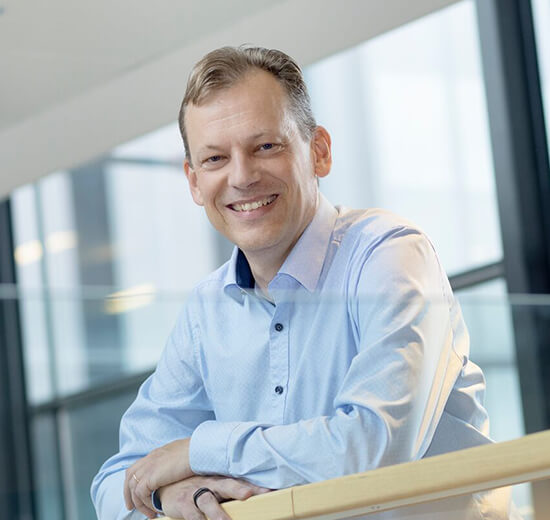
Detailed vessel simulation models can demonstrate how upgrades and other adjustments will impact total cost of ownership over the lifecycle of a vessel. This information supports smarter decision-making, bringing clarity over what to invest in, when to invest and the expected returns on these investments.
“Optimising your vessel’s lifecycle over 20–30 years can be challenging in a world where regulations and technology evolve rapidly. That’s why having a clear, well-structured plan is essential. With a Wärtsilä Lifecycle Agreement you can focus on what matters most to you while we act as your trusted partner in optimising lifecycle operations.
Whether your priority is maximising uptime, achieving efficiency savings or ensuring peace of mind, Wärtsilä can help you reduce total cost of ownership. Additionally, through Wärtsilä Decarbonisation Services you benefit from expert advice and guidance based on your vessel’s real operational data. This includes tailored upgrade recommendations with a clear return on investment, helping you stay ahead in a rapidly evolving industry”
– Jesper Bonde, Director, Agreement Product Management, Wärtsilä
Handpicked related content
Reference case: Guaranteed asset performance – a win-win for Wärtsilä and Carnival
Article: Strong decarbonisation strategy for your ship? 3 simple steps to success
Decarbonisation means different things to different businesses. It depends on the vessel type, its operational profile, the availability of alternative fuels and the ability to offload captured carbon, for example. Whatever way businesses respond to the need to decarbonise, all the responses have one thing in common – they have to make commercial sense.
Decarbonisation is an opportunity to be more efficient. To make best use of this opportunity companies need a properly thought out decarbonisation strategy with flexibility at the core. This strategy will be informed by operational factors, but also by business drivers and priorities, available capital and the financial risks associated with waiting to see what happens. All these variables mean that there is no one-size-fits-all decarbonisation strategy, no silver bullet, and that flexible decarbonisations strategies will remain important for the foreseeable future.
There are three main stages to developing an actionable decarbonisation strategy. Firstly, the planning stage, where equipment – from engines to energy saving devices to carbon capture and storage – is selected to achieve the goals of the strategy. Secondly the installation and systems integration phase. And thirdly the monitoring phase, where results are continuously monitored and adjusted to ensure the expected outcomes are being achieved.
Not so long ago, when investing in a newbuild vessel we could be pretty sure that, with proper maintenance, the technology on board would be good for 20 years. Today the only thing we can be sure about is that whatever technology we invest in, it will be out of date in 20 years.
This leads to complex choices. How much do we spend on the latest technologies now and how much do we save to upgrade to more relevant technologies in five or ten years? How much space should we reserve for carbon capture and storage solutions, rotor sails or alternative fuel tanks and handling systems in the future?
You don’t want to put the CAPEX there too early, but making effective changes becomes too expensive if you don’t prepare at the start. In the worst case scenario, without a proper plan, a newbuild vessel could become a stranded asset many years before its time.
The only answer to this challenge is built-in flexibility. Start with a fuel roadmap that makes sense for the vessel’s planned operational profile. Fuel-flexible engines are key here so that they can stay relevant throughout your journey from, say, diesel/LNG to bioLNG to methanol.
Integrate a hybrid solution where possible and use data to demonstrate what energy saving technologies can best complement your vessel’s design. Have a plan for what additional technology will be installed later and make sure there is enough space on board to accommodate it.
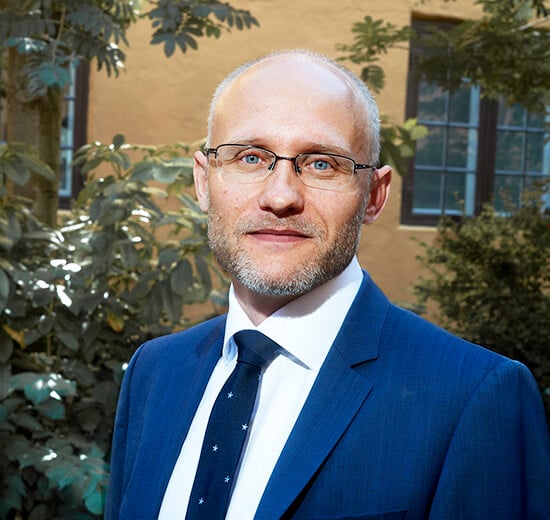
“Flexible decarbonisation strategies require rigorous planning in the vessel design phase, looking across a wide range of potential technological solutions. Fuel-flexible engines mean you can switch to, or start dropping in, methanol, ammonia, LNG and bioLNG as soon as it makes economic sense. The timing of these decisions will depend on how regulations and the cost of carbon emissions evolve.
Hybrid electric propulsion systems enable seamless switching between power sources and maintain optimised system performance when introducing energy savings devices. For this reason, hybrid systems are an ideal foundation for a future-proof, adaptable propulsion train. Wärtsilä is continuing to develop efficiency improvements and methane slip mitigation technologies for its engines to ensure they can be upgraded over the lifecycle."
– Grant Gassner, Director, Integrated Systems and Solutions, Wärtsilä
Handpicked related content
Article: Carbon capture: 17 facts that smart marine professionals should know
As vessels become increasingly complex – with hybrid setups, power management systems and alternative fuel handling systems – big data and digitalisation are needed to connect the different technologies and to ensure they work as an optimised whole.
When fully utilised, the vast amount of data to be harnessed from onboard systems will be a game-changing weapon in the ongoing battle to minimise inefficiencies – to reduce fuel consumption, emissions and operational costs.
Though many vessel owners and operators are already making excellent use of big data, for most it remains an untapped opportunity. While it’s true that the generic vessel performance data needed for noon reporting is adequate for most decision making, much greater use of the data could be made through more detailed, enterprise-level analytics.
Today, those that take advantage of their data the most do so for onshore trend forecasting and to trim the fat from operational costs. But if you want to make really big savings in excess operational costs, you need systematic, continuous analysis that gives you real-time operational recommendations.
In the future, some analytics could be performed on board vessels to give crews direct actionable insights. For example, power management system data could be combined with weather forecast information to create real-time recommendations on propeller RPM. Such real-time operational insights will translate into real savings – a clear monetary benefit for investing in more and better quality data.
The benefits of big data analytics go beyond realising significant operational cost savings. Data can also be used to quantify and verify benefits before making investment decisions.
Data can be used to build digital vessel models and to simulate the effect of tightening regulations or new equipment like energy saving technologies. This removes the guesswork from choosing the correct investment path. This type of deep-dive analysis can guide your decisions on which vessel to invest in first, which vessels to be prudent with and which vessels would benefit most from pooling, for example.
It is clear that digitalisation and increasing amounts of data will enable big savings and regulatory compliance. To unlock these advantages, the industry needs to clear some of the roadblocks to the universal uptake of big data analytics. For example, issues around governance, data ownership, cyber security and the integration of fragmented systems continue to be concerns.
Despite this, industry forerunners like Norwegian Cruise Line Holdings are already making good use of their data for real-time voyage optimisation, fuel efficiency forecasting and emissions tracking.
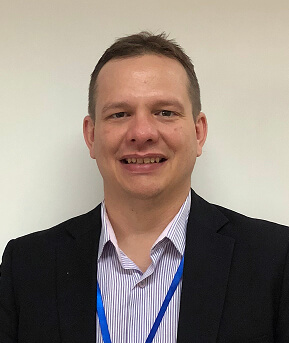
“The cost of installation and integration continues to be a blocker for many businesses when it comes to investing in IoT equipment and big data. But by discussing their needs with a trusted adviser, companies can start leveraging their data incrementally, with each step delivering incrementally bigger cost savings.
Starting with the Expert Insight service, an AI-powered solution enabling predictive maintenance, is a great way to boost asset performance. Later, one of our Voyage optimisation services can help you get more from your vessel’s data.”
– Markus Mannevaara, Director, Fleet Optimisation, Wärtsilä
Handpicked related content
Webinar: Three simple ways that data and AI can save you money in vessel operations
Article: 3 unexpected AI-powered strategies for improving your vessel efficiency
Article: Expert advice: 7 benefits of data in improving vessel performance
Article: Vessel pooling – What is it and how does it help you avoid FuelEU Maritime penalties?
The one-year delay to the introduction of the IMO Net-Zero Framework was undoubtedly a setback for those looking for certainty in global regulations. However, the direction is still clear. A range of regional initiatives, as well as customers in some segments, will continue to drive emission reductions.
Regional initiatives like the EU’s Emission Trading System and the FuelEU Maritime regulation impact 15–20% of global shipping. Customer pressures in segments from cruise and ferry to containerships and offshore also continue to drive decarbonisation efforts on thousands of vessels around the world.
Unpredictability around emissions regulations creates uncertainty. And that makes investment decisions more challenging. Uncertainty perpetuates the chicken and egg situation where investment in the alternative fuel infrastructure is waiting for investment in alternative fuel powered vessels, and vice versa.
But this deadlock can be broken by regulations that increase the cost of emissions to a level where more expensive alternative fuels become more cost effective than fossil alternatives. When that happens, we can expect to see accelerated technological advances and infrastructure rollout. Then, as we already see in the onshore energy industry, cleaner energy sources will also be cheaper energy sources.
While we are waiting for this shift to happen in the maritime industry, businesses are looking to prepare for the tightening of regulations. They are doing this by increasing their fuel flexibility so that they can be ready to fully transition to alternative fuels the moment it makes economic sense to do so.
With regulations comes the need to prove compliance. Businesses are recognising the need to have more robust reporting protocols in place. Many in the maritime industry are looking for turnkey solutions for handling reporting and advice to help them better manage carbon taxes and other regulation-related costs. Others are investing in improving their data quality and building their own analytics teams but need help with automated, auditable reporting.
One way that Wärtsilä is responding to this trend is with the Compliance and reporting module of the Fleet Optimisation Solution, which covers CII, FuelEU Maritime and EU ETS. There are also dashboards for tracking emissions from individual vessels. These dashboards can show, for example, what the emissions were in the first half of the year and indicate if any changes are needed to ensure compliance at the end of the year. There is also scenario planning, where you can see the effect of a change in operational profile on emissions.
The maritime industry finds itself caught between the current uncertainty around emissions regulations and the certain need to decarbonise. However, by taking a lifecycle optimisation approach and adopting flexible decarbonisation strategies ship owners and operators can prepare well for whatever the future may bring.
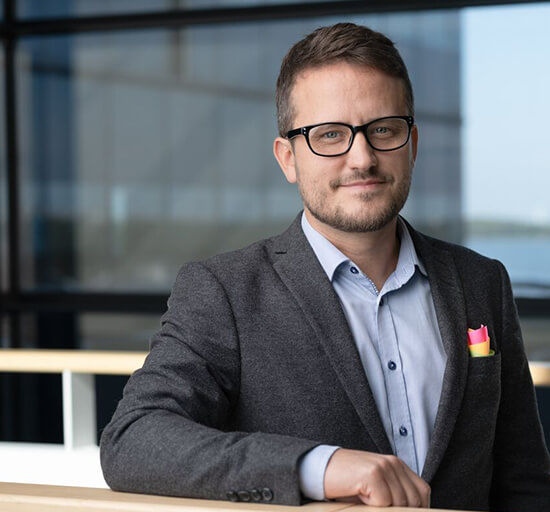
“The best way to prepare for tightening regulations is to start reducing emissions now. If we leave out carbon capture, this basically means using less fuel. There are range of energy saving technologies available that can reduce fuel consumption by up to 10%. Additionally, a hybrid propulsion system is a great solution for many vessel types as it reduces fuel consumption by allowing the engines to run at optimal load.”
– Peter Hanstén, Director of Business Development, Project Services, Wärtsilä

Handpicked related content
Article: Seven fascinating hybrid ship trends that everyone needs to know about
Article: Unsure about CII compliance? Here’s how energy saving technologies can help
“In 2026 collaboration will play a vital part in driving the sustainable transformation of shipping and shaping a cleaner and smarter future for the maritime industry. Wärtsilä’s leadership in fuel flexibility, integration and cross-industry partnerships reflects the growing need for OEMs, operators, ports, fuel providers and regulators to work together. We stand shoulder-to-shoulder with our customers, bringing innovative solutions, expert guidance and a clear focus on enhancing efficiency and creating long-term value.”
– Roger Holm, President, Wärtsilä Marine
Written with input from
Once every six weeks, you will get the top picks – the latest and the greatest pieces – from this Insights channel by email.