
15 Sep 2025 · 24 pages
This white paper shows offshore vessel owners and designers how to boost safety, cut fuel costs, and meet emissions rules – using proven, real-world solutions.
Offshore operations are under pressure because emissions rules are tightening, fuel costs are on the rise, and charters are more demanding. Clear, actionable guidance is important for making the right decisions.
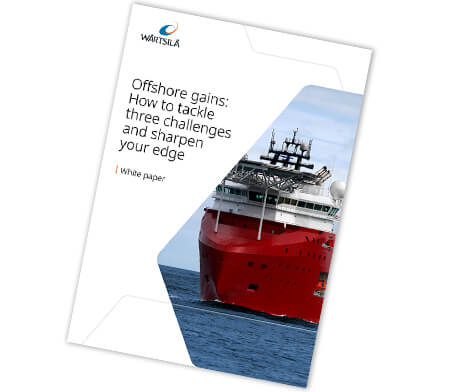
When you're making decisions about offshore vessel design, upgrades or operations, this white paper gives you the clarity you need. It helps you focus on what matters most: safety, efficiency and sustainability. And you can move forward with confidence.

Stay ahead of offshore demands
Learn how to respond to tougher safety, efficiency and emissions requirements with smart vessel choices. The white paper shows what leading operators are doing to stay competitive.

Find proven solutions that work
Explore real examples of hybrid systems, fuel-flexible engines and smarter maintenance strategies. These are already delivering results in offshore operations.

Learn what to prioritise next
Get expert guidance on vessel design, technology selection and regulatory readiness. Wärtsilä’s insights help you focus on what matters most for long-term success.
Offshore vessel owners, operators, technical managers, and sustainability officers will find this Wärtsilä white paper interesting.
Yes! Download and share it with your team to learn how to respond to tougher safety, efficiency and emissions requirements with smart choices for offshore vessels.
Optimising thruster configuration—rather than simply adding more power—is one of the smartest ways to improve offshore vessel manoeuvrability without increasing fuel use. This Wärtsilä white paper explains how this works in practice, with real examples and expert tips.
Reducing emissions starts with choosing the right combination of technologies—like hybrid propulsion, fuel-flexible engines, and energy-saving systems. These solutions not only cut emissions but also help vessels meet IMO and EU requirements, including the EU ETS and FuelEU Maritime. This Wärtsilä white paper explains how offshore operators are already using these technologies to stay compliant and competitive.
Designing vessels for actual operating conditions—rather than idealised trial specs—can significantly improve efficiency and reduce fuel use. It also helps avoid over-dimensioning and supports better lifecycle performance. This Wärtsilä white paper outlines how this approach leads to smarter design decisions and highlights Wärtsilä’s Opti Design methodology as a practical tool for ship designers and owners.
Hybrid systems, predictive maintenance, and engines that support alternative fuels often deliver strong ROI by lowering fuel costs, reducing emissions, and improving charter appeal. This Wärtsilä white paper shares real examples of how offshore operators are using these technologies to cut operating expenses and future-proof their fleets.
The contents on this page have been written with the help of AI. A human expert has checked and verified the contents.