Future fuels A to Z – 19 best picks on future marine fuel technology

The 19 best picks on marine future fuel technology to help you comply with regulations, save money and hit your decarbonisation targets in a handy A-Z.

Read article

Wärtsilä Marine leads the industry in its journey towards a decarbonised and sustainable future. Our portfolio of engines, propulsion systems, hybrid technology and integrated powertrain systems deliver the reliability, safety, and environmental performance to decarbonise the worlds fleet. We offer our customers performance-based agreements, lifecycle solutions, and an unrivalled global network of maritime expertise.

Articles

16 Dec 2025 · Article
5 min read
Short sea shipping and sustainability: 3 interesting considerations
Could an aging fleet and tightening environmental regulations be an opportunity...
MV Afros installed with 4 Anemoi Rotor Sails
11 Dec 2025 · Article
7 min read
Wind-assisted propulsion for ships: 8 helpful things every ship owner should know
Wind power is making a comeback – but with a modern, high-tech...
View from bridge from Harmony of the Seas
3 Dec 2025 · Article
6 min read
From big data to lifecycle optimisation – 4 trends that will affect shipping in 2026
Take a deep dive into four trends and technologies that our...
3D illustration of offshore vessels and rigs
18 Sep 2025 · Article
7 min read
Make more from offshore: how to turn three challenges into opportunities
Want to make more from offshore, with maximised safety and manoeuvrability,...
Bow of TT-Line's MS Robin Hood
17 Jul 2025 · Article
5 min read
3 unexpected AI-powered strategies for improving your vessel efficiency
AI hype is everywhere, and the maritime industry is no exception. How can...
Ammonia as fuel by Wärtsilä
7 Jul 2025 · Article
10 min read
Ammonia as marine fuel? Benefits, challenges, and smart adoption
Adopting ammonia to fuel ships can decrease greenhouse gas emissions. How will it...
Wärtsilä service employee at work
24 Jun 2025 · Article
5 min read
12 amazingly simple ways to slash ship maintenance costs
Ship maintenance can be costly and time-consuming for owners and operators. To make it...
Engine room on Allure of the seas
18 Jun 2025 · Article
5 min read
How to protect ship crews from the biggest cause of engine room fires
Two out of three ship fires start in the engine room. What are the 4 top steps...
Rendering of a ship with electric propulsion from Wärtsilä
6 Jun 2025 · Article
5 min read
Four successful ways to electrify mechanical propulsion – from basic to brilliant
If your vessel uses mechanical propulsion, there are four proven...

Webinars

3D rendering of a vessel with Carbon Capture and Storage
28 May 2025 · Webinar
Get a competitive edge with these 3 tips on onboard carbon capture
Experience our online event and get the insights of carbon capture!
Container vessel animation
25 Feb 2025 · Webinar
How advanced digital twins and AI help optimise vessel performance
Watch our insightful webinar where industry experts reveal how AI and digital...
Three simple ways that data and AI can save you money in vessel operations
20 Nov 2024 · Webinar
Three simple ways that data and AI can save you money in vessel operations
Watch this insightful webinar where industry experts reveal three...
Methanol 32 with engineers
24 Oct 2024 · Webinar
Cyber requirements: how to meet them with the power of type approvals
Watch this interesting webinar and you will learn more about the cyber type...
17 Jan 2024 · Webinar
New methanol engines: how will they power the future?
Watch this interesting webinar and you will learn how the new methanol engines will power the...
14 Nov 2023 · Webinar
Tech Talk - What does the future hold for small merchant vessels?
Follow a fascinating panel debate! You will get insight that helps you develop...
Cargo ship at sea
25 Oct 2023 · Webinar
How to reduce methane slip – winning tactics for your maritime business
Watch this interesting webinar and you will learn how to reduce methane slip...
Container ships at sea
5 Oct 2023 · Webinar
Real-world solutions for the Greek and Cypriot merchant fleet
This webinar will focus on real-world concepts that can help, from future fuels,...
17 Jan 2023 · Webinar
Carbon Intensity Indicator (CII) – Data tools to help you improve your fleet’s CII ratings
Building resilient maritime education in 2022 and...

Whitepapers

propeller flow analysis, where the colored lines or contours represent the velocity and path of the fluid
White paper
36 pages
Insider’s guide to ship propulsion: 8 tips to help you make the right choices
Download this eGuide and learn how to choose propulsion solutions to...
White paper
24 pages
Offshore gains: How to tackle three challenges and sharpen your edge
Perfect for offshore vessel owners and designers. Learn how to boost efficiency...
Wärtsilä employee testing equipment
White paper
32 pages
eGuide: Expert advice: How to deal safely with ammonia on board ships
This safety essentials eGuide draws from Wärtsilä’s experience in ammonia as...
Wärtsilä service employee at work
White paper
20 pages
White paper: How to make the best maintenance plan for your ship – the simple way
Proper planning is the key to a successful maintenance or overhaul...
Aerial top view Tug boat drag container ship to sea port for unloading container
White paper
28 pages
White paper: How to solve the top 4 problems everyone has in merchant shipping operations
Four burning problems are common to every merchant...
high speed Seajet passenger vessel leaving port of Piraeus to Aegean Cycladic island destination
White paper
20 pages
White paper: How to spend less on ship fuel and make amazing savings every sailing
How to cut operational costs? How to meet the tightening...

Case studies

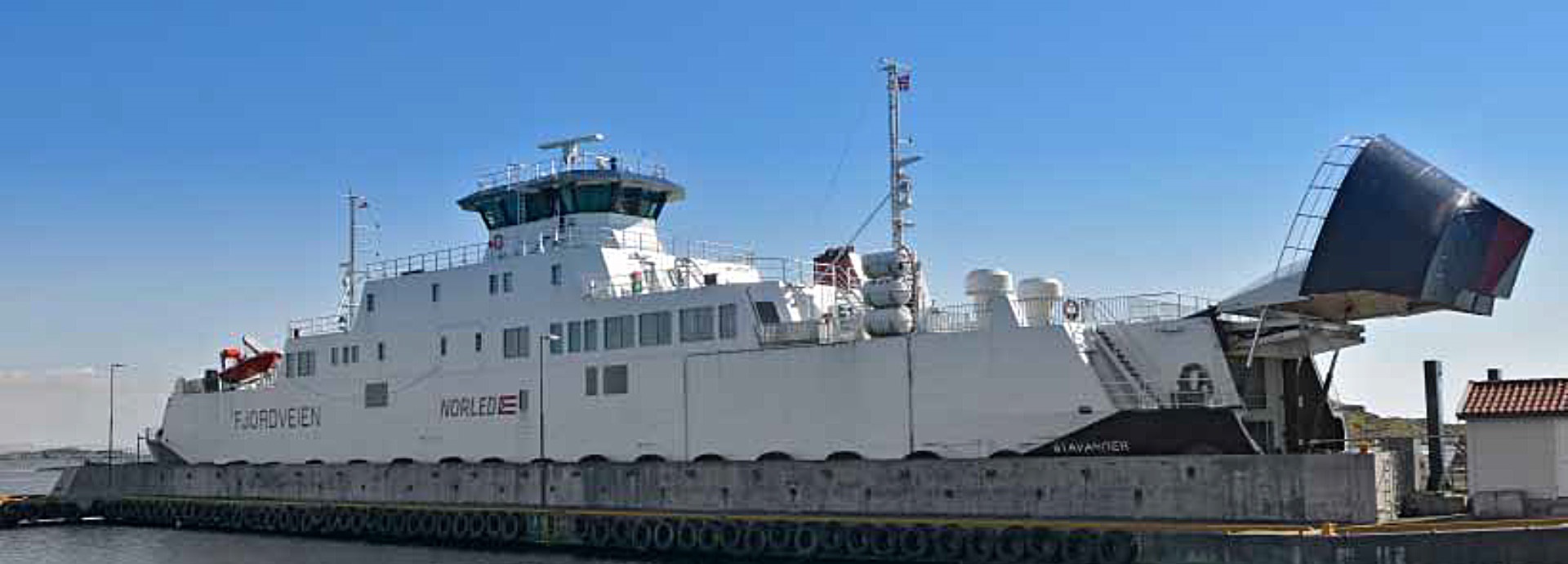
Fjordveien

LowNOx conversion reduces NOx taxes for the Fjordveien ferry

LowNOx conversion reduces NOx taxes for the Fjordveien ferry

A major overhaul of Norled AS’s Fjordveien ferry engines was imminent. With support from the Norwegian NOx Fund, the company decided to use the opportunity to invest in a LowNOx conversion at the same time. This conversion not only enhances Norled’s image as a green company, but generates revenue in terms of significantly reduced NOx taxes. 


Challenge

  • Helping the customer to comply with the Norwegian NOx emissions reduction targets
  • Reducing the NOx taxes the customer must pay to the NOx Fund

Solution

  • LowNOx conversion of the vessel’s four Wärtsilä 6L20 engines, including conversion engineering, related spare parts and installation work

Benefit

  • Decreased NOx emissions by approximately 18%
  • Reduction of NOx taxes, amounting to approximately NOK 55,000 per year


Stavanger-based Norled AS, founded in the 1850s, is one of Norway’s largest ferry and express boat operators, operating some 80 ferries and express boats. Recently, the company has significantly invested in new types of vessels and eco-friendly technology. Norled AS has over 1,000 employees, an annual turnover of NOK 2 billion and is a wholly-owned subsidiary of Det Stavangerske Dampskibsselskap AS.

The Fjordveien ferry is vitally important for those living on the island of Kvitsøy as it is the only connection for cars, supplies and passengers to Mekjarvik on the mainland. From time to time during the winter, the 40-minute journey is made in rather rough seas. The ferry connection is vital for the inhabitants and the companies on the island. Until the planned underwater tunnel to the island is ready, they are dependent on the ferry, says Mr. Marwoll.


LowNOx conversion – an easy choice

For Norled, it is important to be known as an environmentally-aware company. DNV has already issued a certificate stating that Norled is a green company in terms of environmental issues.

The LowNOx conversion was made according to our environmental policy. Since the Fjordveien was up for a major overhaul of its four Wärtsilä 6L20 engines (60,000 hours), the decision to make a LowNOx conversion at the same time was fairly easy to decide. The conversion only required a few extra spare parts in addition to the extensive overhaul the engines were due for.

Wärtsilä supplied a tailor-made solution for Norled, covering the design and engineering, spare parts, and the installation of the LowNOx conversion. The decision to make the installation at the same time as the engines were overhauled was based on the fact that a large number of parts would have been up for change anyway. Combining these two projects was both time and cost effective for the customer, especially from a manpower perspective. 


NOx emissions lower than expected

The conversion lasted 18 days and was completed according to schedule. There were hardly any challenges during the conversion. No more than can be expected during a project of this type. Everything went very well, says Mr. Marwoll. He further adds that both Wärtsilä’s people in charge and the workers on-board conducted the conversion in a good and professional way. He visited the site many times during the project and admits that he was impressed: They were very good. We had excellent cooperation with Wärtsilä before, during, as well as after the conversion.

The Fjordveien ferry has now been in service again for some time and the experiences with the LowNOx conversion are remarkable. Engine performance as such has not improved noticeably, but that was not expected either. An external company was assigned to take some measurements onboard and the results showed significantly lower NOx levels than before (approximately 18%). So, the LowNOx conversion was a success resulting in NOx emissions below the expected.


Significant savings in reduced NOx taxes

In Norway, there is a system with a so-called NOx Fund, where companies pay a NOx tax according to NOx outlet. Companies can apply for national grants from the NOx Fund in proportion to the amount of NOx reduction that can be presented for new buildings and modifications, limited to 80% of the total cost for new buildings/modifications. The introduction of the NOx tax was motivated by the need for Norway to quickly achieve additional NOx reductions to meet set emission targets. Through an agreement between the Norwegian government and business organisations, the tax was transformed into a fund for investments. Participants in the NOx Fund can apply for grants to finance NOx abatement measures.

NOx taxes are also applicable for the Fjordveien ferry, meaning that they need to pay taxes to the NOx Fund based on the emissions. According to Mr. Marwoll, Norled has gained some important benefits through this conversion. The engines are now converted and the vessel has become more environmentally friendly.

With lower NOx emissions, we save the environment from pollution and also some money for the company. We estimate a yearly reduction of approximately 12,000 tons of NOx, which in our case translates into a rebate of approximately NOK 250 per kilo. So, this was a major factor influencing our decision to do a LowNOx conversion. The LowNOx conversion of the Fjordveien ferry supports Norled’s ambition to achieve the goal of being a green company.

We can so far only see good environmental benefits, so we recommend other ship operators and owners to do the same type of LowNOx conversion, says Mr. Einar Marwoll.

We estimate a yearly NOx reduction of more than 12,000 tons. For us that means we can apply for a payback of approximately NOK 250 per kilo reduction in NOx, limited to 80% of the cost for modification, from the NOx Fund.

Einar Marwoll, Technical Superintendent at Norled AS


Related solutions

Podcasts

20 Jun 2025 · Podcast
5 min listen
Four top tips for future-proofing your newbuild vessels
Discover four expert strategies to future-proof newbuild vessels: flexible design,...
19 Jun 2025 · Podcast
5 min listen
How smart engine optimisation is one easy way to minimise methane slip
Are you looking to reduce methane slip from your LNG-powered vessel? Discover...
6 Jun 2025 · Podcast
6 min listen
Three amazing ways to reduce vessel propulsion power and cut methane slip
Energy-saving technologies are a great way to cut vessel fuel use and...
6 Jun 2025 · Podcast
5 min listen
Three fascinating ways you can avoid low loads and reduce methane slip
Avoiding low loads is a great way to minimise methane slip from LNG-powered...
6 Jun 2025 · Podcast
5 min listen
Why good maintenance is a powerful tactic to cut methane slip from ships
What is methane slip and why should you care about it? What smart tactics...
6 Jun 2025 · Podcast
4 min listen
How to cut methane slip: winning tactics for maritime businesses
What is methane slip and why should you care about it? What smart tactics can you...