
Improve efficiency, reduce emissions, extend vessel and asset lifetime, and prepare your vessel for changing operational and regulatory requirements. Lifecycle upgrades help you get more value from existing assets while avoiding the cost and disruption of premature replacement. This page helps you explore your options.
This page helps you identify and compare your upgrade options for engines, propulsion, energy systems, and emissions control.
Why lifecycle upgrades matter:
How upgrading works:
Where upgrades apply:
Lifecycle upgrades are typically evaluated when one or more of the following situations apply:
Fuel consumption is an issue. Fuel prices are high, and many vessels operate differently today than when they were designed, and thus may consume more fuel. Engine, propulsion and hybrid upgrades can help reduce fuel consumption, improve efficiency and lower operating costs.
New compliance requirements are approaching. Requirements such as EEXI, CII and regional emissions regulations may require changes to vessel operation or equipment. Upgrades can help improve compliance while maintaining operational flexibility.
A maintenance stop or dry dock is already planned. Many upgrades can be implemented during scheduled maintenance, major overhauls or dry dock periods. This reduces disruptions and improves your return on investment.
Equipment may be becoming obsolete. Control systems, automation equipment and other critical components may eventually reach the end of their supported lifecycle. Upgrading helps maintain reliability, cybersecurity and long-term support.
That is why the key question is not “should you upgrade?” but where to start – and which upgrade options fit your vessel and your timing constraints.
Choose the outcome you are looking for.
Reduce fuel use and operating costs
Explore:
Reduce emissions and improve compliance
Explore:
Extend asset lifetime and ensure continued support
Explore:
Prepare for future operating requirements
Explore:
Most upgrade projects start during one of three opportunity windows.
During normal operation: Some solutions can be evaluated and implemented with minimal operational disruption.
Typical examples:
During a planned maintenance stop: Maintenance intervals often provide a practical opportunity to improve efficiency, reliability and compliance.
Typical examples:
During dry dock or as a major retrofit project:
Larger modifications are often combined with planned docking or major asset renewal programmes.
Typical examples:
Use the interactive guide to identify the vessel-efficiency opportunities that would be most relevant to your current situation.
Lifecycle upgrades are often part of a wider efficiency, compliance or lifecycle strategy. You may also benefit from:
Decarbonisation Services: Use modelling, analysis and expert guidance to identify the technologies and upgrade pathways most suited to your vessel and operating profile.
Fleet and voyage optimisation: Identify operational opportunities that can complement technical upgrades and further reduce fuel consumption and emissions.
Lifecycle agreements: Combine upgrades with long-term maintenance, support and performance management for predictable costs and operational reliability.
Maximising the value of your vessel over its lifecycle increasingly depends on how well you can adapt it to new efficiency targets, emissions requirements, and operational pressures.
Lifecycle upgrades are essential to make sure that your vessel or fleet delivers maximum value throughout its lifetime, but no single upgrade can solve everything. Improving performance, reducing emissions or maintaining compliance will require different technical approaches, from engine tuning to hybridisation or exhaust treatment.

Lifecycle upgrades can help you reduce fuel consumption, cut emissions, improve reliability, and extend the lifetime of your vessel or fleet. The specific outcome depends on which systems you choose to upgrade – whether it’s engines, propulsion, energy systems, or emissions control.
Choose the upgrade areas that match your vessel's technical setup and operating profile, and you can reduce operating costs, extend asset lifetime, and target the improvements that matter most for your operations and compliance needs.
If you already know the upgrade you are looking for, you can explore the complete offering of upgrade solutions in the Services Catalogue.
Lifecycle upgrades are not only technical improvements, but drivers of total cost of ownership. When the vessel uses fuel more efficiently, requires less maintenance and meets compliance requirements, its operating costs will be lower – often significantly lower. This, in turn, improves your margins and competitiveness.
Most upgrade journeys start from you defining the target outcome, such as improved energy efficiency, reduced methane slip, or compliance with regulations. Lifecycle upgrades can help achieve these outcomes and extend asset lifetime. The most effective solution depends on your vessel, operating profile and goals.
If you already know the upgrade you are looking for, you can explore the complete offering of upgrade solutions in the Services Catalogue.
When your goal is to improve energy efficiency, start with modelling to evaluate your options. Modelling gives you a clear, fact-based view of how different upgrade paths can impact your vessel’s performance, fuel consumption, and emissions. It also helps you compare solutions and understand what will deliver the best results for your specific operating profile.
You can then take advantage of expert input from Decarbonisation Services to identify the most suitable technologies, then make a feasible upgrade plan.
Lifecycle upgrades are not only technical improvements, but drivers of total cost of ownership. When the vessel uses fuel more efficiently, requires less maintenance and meets compliance requirements, its operating costs will be lower – often significantly lower. This, in turn, improves your margins and competitiveness.
Wärtsilä delivers upgrades through a structured process.
Testing and commissioning
Typical implementation windows
Wärtsilä brings experience from completing more than 2,500 upgrade and retrofit projects in more than 14 locations worldwide.
Improve fuel efficiency, reliability, and operating costs with engine performance upgrades
Wärtsilä 4-stroke engine performance upgrades improve engine efficiency and reliability, helping you reduce fuel consumption, lower operating costs, and cut emissions.
Typical opportunity window: During maintenance break (or drydock)
Extend engine lifetime and ensure continued compliance with control system upgrades
Wärtsilä 4-stroke engine control system upgrades improve performance and modernise your systems, helping ensure ongoing support, compliance with class requirements, and robust cyber security.
Typical opportunity window: During maintenance break (or dry dock)
Achieve step-change efficiency improvements and extend compliance timelines with Fit4Power derating
Wärtsilä Fit4Power radical derating for 2-stroke marine engines optimises engine output by reducing bore size. This can improve efficiency by up to 15% or more and extend CII compliance—for an average ship, by as much as 3–5 years.
Typical opportunity window: Dry dock
Reduce greenhouse gas emissions from LNG operation
Wärtsilä offers greenhouse gas emissions reduction upgrades for dual-fuel engines Wärtsilä 20DF, Wärtsilä 34DF, Wärtsilä 46FDF, and Wärtsilä 50DF. These upgrades improve engine performance in gas mode and significantly reduce methane slip.
Typical opportunity window: During maintenance break (or dry dock)
Reduce methane slip with a spark gas conversion
Converting Wärtsilä 50DF engines to spark gas (SG) operation can achieve a 75% reduction in methane slip emissions. One or more engines can be converted, depending on the vessel configuration.
Typical opportunity window: during a major engine overhaul.
Increase fuel flexibility and reduce compliance risk with fuel conversion solutions
Wärtsilä offers fuel conversion and retrofit solutions for both 2-stroke and 4-stroke engines. These solutions allow your vessel to use different fuels. This helps reduce risks related to fuel availability and evolving emissions regulations. It also supports long-term compliance planning.
Typical opportunity window: Dry dock
Reduce fuel consumption with improved propulsion control and optimisation
EcoControl for retrofit automatically adjusts propeller pitch and engine RPM in real time to maintain the most efficient operating point, helping reduce fuel consumption and emissions.
Typical opportunity window: During maintenance break
Improve propeller inflow and reduce fuel consumption
EnergoFlow improves the inflow to the propeller by creating more optimal flow conditions. This helps reduce fuel consumption and improve propulsion efficiency.
EnergoProFin is an energy-saving propeller cap that can deliver average fuel savings of around 2%, with a payback time of less than one year. Redesigning the propeller can further improve hydrodynamic performance.
You can combine EnergoFlow, EnergoProFin, and a new propeller design to improve fuel efficiency by up to around 10%, depending on the vessel and operating profile.
Typical opportunity window: Dry dock
Improve performance in demanding operating conditions
The high performance nozzle upgrade improves bollard pull and propulsion efficiency, helping vessels perform better in conditions that require higher thrust.
Typical opportunity window: Dry dock
Extend the lifetime of propulsion equipment and improve reliability
EnduraPac improves lubrication oil condition, which helps extend the lifetime of steerable and transverse thrusters and supports reliable operation.
Typical opportunity window: During maintenance break
Trailing edge modifications for heavy-running propellers adjust propeller performance to restore proper interaction between the engine and propeller.
Typical opportunity window: Dry dock
Achieve compliance with environmental regulations in specific operating areas
The Wärtsilä Vessel General Permit (VGP) 2013 compliance package upgrades transverse thrusters for vessels operating in US coastal waters, helping meet regulatory requirements.
Typical opportunity window: Dry dock
Reduce fuel consumption by optimising engine load with hybrid retrofit solutions
Wärtsilä HY is a hybrid solution available as a lifecycle upgrade for existing vessels. It introduces a HY Module that optimises the use of auxiliary engines. This reduces engine running hours and helps save fuel.
Typical opportunity window: During maintenance break (or dry dock)
Improve efficiency and reduce emissions with battery-supported operation
Hybrid systems combine a vessel battery with conventional engines. The battery absorbs load fluctuations and allows the engines to run at optimal load. This improves efficiency, reduces fuel consumption, and lowers greenhouse gas emissions.
Typical opportunity window: During maintenance break
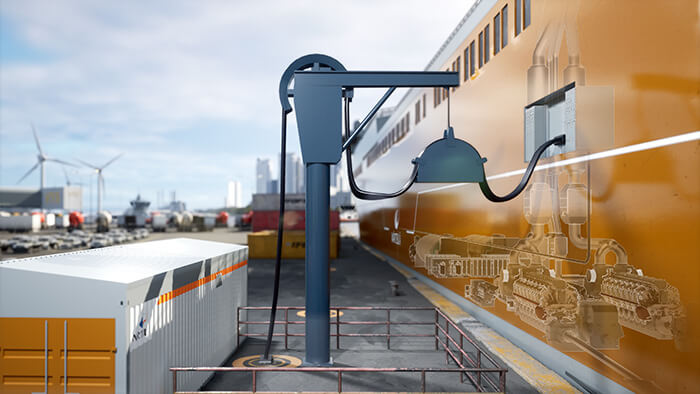
Eliminate emissions in port with ship-to-shore power
A ship-to-shore power (Alternative Marine Power, AMP) system upgrade allows your vessel to take electricity from shore while in port. This means onboard engines do not need to run for power generation, enabling zero-emission operation in port.
Typical opportunity window: Can be introduced when the vessel is in operation
Reduce regulated emissions from your vessel with exhaust treatment solutions
Exhaust treatment solutions help reduce sulphur oxides (SOx), nitrogen oxides (NOx), and particulate matter in exhaust gases. These upgrades support compliance with emissions regulations and allow vessels to continue operating in regulated areas.
Typical opportunity window: Dry dock
Support your decarbonisation strategy with additional emissions reduction technologies
Solutions such as onboard carbon capture can further reduce greenhouse gas emissions from your vessel, supporting longer-term decarbonisation goals.
Typical opportunity window: Dry dock
Discover how different upgrade paths have delivered measurable results in real operations – from fuel savings to emissions reduction and lifetime extension.
Figures and outcomes shown are drawn from Wärtsilä customer cases and solution pages. Results vary by vessel, operating profile, operating conditions and integration scope.
When you are considering modernisation or upgrades, the key is to identify the options that match your vessel, your operations, and your timing.
Wärtsilä can help you evaluate and implement the right upgrade path - even under tight schedules.