The main component of liquid natural gas (LNG) is methane. When you burn LNG as fuel, most of the methane is consumed in the energy conversion process. The unburned methane escapes into the atmosphere – and this is known as methane slip.
Methane is a greenhouse gas (GHG) and has a 100-year global warming potential that is around 30 times that of CO2. It is extremely important to reduce methane emissions. Cutting methane emissions is the strongest lever we have to slow climate change over the next 25 years, and it complements ongoing efforts to reduce carbon dioxide.
If you own or operate a vessel with dual-fuel engines that burn LNG, you should take every action to cut its methane emissions.
A simple upgrade to your existing LNG engine will cut its methane emissions significantly. The upgrade is quick and easy to install and can cut methane slip by up to 65% depending on the engine type and load.
There are upgrades that reduce the methane emissions of the following dual fuel engine types:
Learn more about the Wärtsilä W34DF upgrade: Got a Wärtsilä 34DF engine? How to easily cut greenhouse gas emissions.
LNG is important as a transition fuel and a first step towards reducing carbon emissions in the maritime industry. It produces fewer greenhouse gases and other air pollutants compared to fuel oil. However, reducing methane slip is crucial for LNG to be a viable maritime fuel.
Learn more - this article has the answer to frequently asked questions: Seven helpful and unbiased facts to know about methane slip.
Did you know? There are simple ways to reduce methane slip with little or no additional investment needed.
Wärtsilä has developed engine technology over the years to minimise methane slip. Methane slip from Wärtsilä dual-fuel engines has been cut by around 90% over the past three decades, and we’re working hard to reduce it even further.
Methane emissions vary in LNG-fueled engines depending on the engine type and on how they are operated. Wärtsilä has been developing gas technologies to reduce methane slip for decades, and one of the results is the NextDF. It can be applied to the Wärtsilä 31DF and Wärtsilä 25DF engines which already achieve very low emission levels.
The NextDF feature maintains a stable combustion process at a set target independently from the cylinder boundary conditions such as
The resulting thermodynamic process is fast and complete and significantly reduces hydrocarbon emissions while operating at superior efficiency.
Setting an industry benchmark, Wärtsilä’s modern dual-fuel engines achieve methane slip below the FuelEU Maritime regulation of 3.1% of fuel use. The introduction of NextDF technology for the Wärtsilä 31DF and Wärtsilä 25DF engines allows operators to further reduce methane emissions.
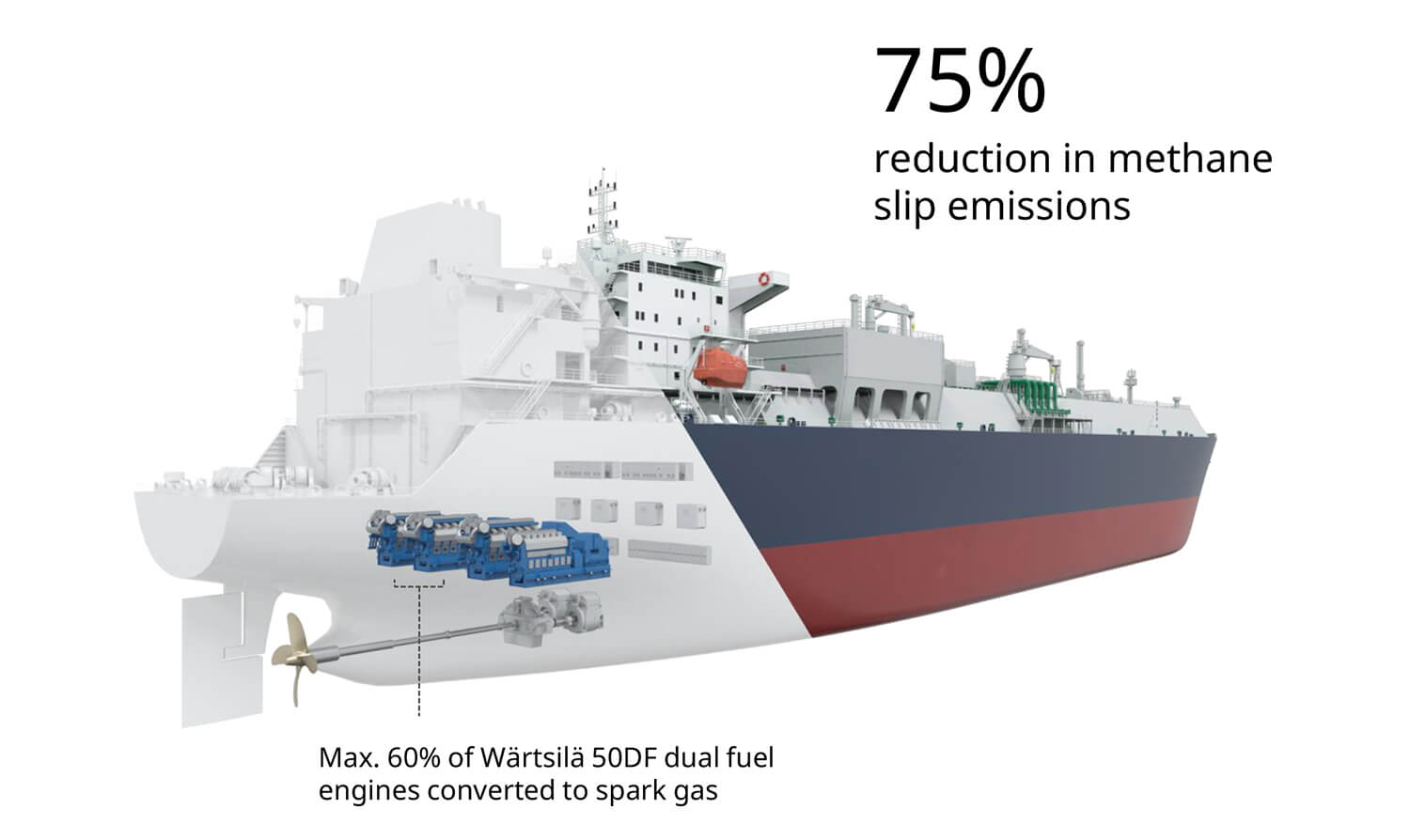
The Spark Gas Conversion is an upgrade for Wärtsilä 50DF engines. It replaces pilot fuel ignition with spark-ignited pure gas operation. This configuration is optimised for LNG, and it is proven to deliver
In addition to emission reductions, the conversion improves fuel efficiency—achieving up to 4.6% fuel savings at 50% load. These results are verified and can translate into substantial cost savings over time.
Explore the technical details:
Learn more about Spark Gas Conversion
See the numbers in action:
Converting your LNG carrier’s dual-fuel engines to SG technology can bring you significant savings because you will save fuel and cut emissions. This infographic shows you the numbers.
Hybrid vessels combine two methods of propulsion, a conventional combustion engine and a rechargeable battery. This reduces fuel consumption and increases operational efficiency, among other benefits.
With batteries on board, hybrid vessel owners can choose smaller, less costly and less fuel-thirsty engines. Hybrid vessels can be designed for peak load operation without compromising the optimisation of most operations.
For example, LNG carriers are designed for a speed of 19.5 knots, but several studies have shown that their average sailing speed today is around 15 knots. This means they are not operating optimally – and therefore they are generating more emissions.
Compared to an LNG carrier with a low-pressure 2-stroke solution, a modern hybrid electric system can deliver a 20%+ reduction in methane slip.
The International Maritime Organization (IMO) does not currently have regulations for methane slip. It does have initiatives to investigate how methane slip from existing vessels should be measured and regulated.
In the European Union, methane slip is addressed through a combination of regulatory mechanisms which include:
Today, methane emissions have direct cost implications for LNG‑fuelled vessels calling at EU ports. Under EU ETS, methane emissions are converted into CO₂‑equivalent and increase the number of emission allowances that must be surrendered. Under FuelEU Maritime, methane slip worsens the reported greenhouse gas intensity of energy used on board, which increases the risk of penalties as requirements tighten over time.
As a result, methane slip is no longer just an emissions metric – it is a driver of regulatory cost and long‑term asset risk.
For a detailed explanation of how methane slip translates into regulatory costs under EU ETS and FuelEU Maritime – and how those costs can be managed – see this white paper on cutting regulatory costs and protecting asset value.
Learn what our customers have already achieved in their activities to cut methane emissions.
Have a look at these when you want to learn more about LNG as marine fuel and methane slip.
Here are great solutions – whether you want to upgrade or even convert your engine, or identify your best options for decarbonization for your vessel or fleet.
Do you know how much you could reduce the methane slip from your engines? Get in touch with us to explore your options.