Future fuels A to Z – 19 best picks on future marine fuel technology

The 19 best picks on marine future fuel technology to help you comply with regulations, save money and hit your decarbonisation targets in a handy A-Z.

Read article

Wärtsilä Marine leads the industry in its journey towards a decarbonised and sustainable future. Our portfolio of engines, propulsion systems, hybrid technology and integrated powertrain systems deliver the reliability, safety, and environmental performance to decarbonise the worlds fleet. We offer our customers performance-based agreements, lifecycle solutions, and an unrivalled global network of maritime expertise.

Articles

16 Dec 2025 · Article
5 min read
Short sea shipping and sustainability: 3 interesting considerations
Could an aging fleet and tightening environmental regulations be an opportunity...
MV Afros installed with 4 Anemoi Rotor Sails
11 Dec 2025 · Article
7 min read
Wind-assisted propulsion for ships: 8 helpful things every ship owner should know
Wind power is making a comeback – but with a modern, high-tech...
View from bridge from Harmony of the Seas
3 Dec 2025 · Article
6 min read
From big data to lifecycle optimisation – 4 trends that will affect shipping in 2026
Take a deep dive into four trends and technologies that our...
3D illustration of offshore vessels and rigs
18 Sep 2025 · Article
7 min read
Make more from offshore: how to turn three challenges into opportunities
Want to make more from offshore, with maximised safety and manoeuvrability,...
Bow of TT-Line's MS Robin Hood
17 Jul 2025 · Article
5 min read
3 unexpected AI-powered strategies for improving your vessel efficiency
AI hype is everywhere, and the maritime industry is no exception. How can...
Ammonia as fuel by Wärtsilä
7 Jul 2025 · Article
10 min read
Ammonia as marine fuel? Benefits, challenges, and smart adoption
Adopting ammonia to fuel ships can decrease greenhouse gas emissions. How will it...
Wärtsilä service employee at work
24 Jun 2025 · Article
5 min read
12 amazingly simple ways to slash ship maintenance costs
Ship maintenance can be costly and time-consuming for owners and operators. To make it...
Engine room on Allure of the seas
18 Jun 2025 · Article
5 min read
How to protect ship crews from the biggest cause of engine room fires
Two out of three ship fires start in the engine room. What are the 4 top steps...
Rendering of a ship with electric propulsion from Wärtsilä
6 Jun 2025 · Article
5 min read
Four successful ways to electrify mechanical propulsion – from basic to brilliant
If your vessel uses mechanical propulsion, there are four proven...

Webinars

3D rendering of a vessel with Carbon Capture and Storage
28 May 2025 · Webinar
Get a competitive edge with these 3 tips on onboard carbon capture
Experience our online event and get the insights of carbon capture!
Container vessel animation
25 Feb 2025 · Webinar
How advanced digital twins and AI help optimise vessel performance
Watch our insightful webinar where industry experts reveal how AI and digital...
Three simple ways that data and AI can save you money in vessel operations
20 Nov 2024 · Webinar
Three simple ways that data and AI can save you money in vessel operations
Watch this insightful webinar where industry experts reveal three...
Methanol 32 with engineers
24 Oct 2024 · Webinar
Cyber requirements: how to meet them with the power of type approvals
Watch this interesting webinar and you will learn more about the cyber type...
17 Jan 2024 · Webinar
New methanol engines: how will they power the future?
Watch this interesting webinar and you will learn how the new methanol engines will power the...
14 Nov 2023 · Webinar
Tech Talk - What does the future hold for small merchant vessels?
Follow a fascinating panel debate! You will get insight that helps you develop...
Cargo ship at sea
25 Oct 2023 · Webinar
How to reduce methane slip – winning tactics for your maritime business
Watch this interesting webinar and you will learn how to reduce methane slip...
Container ships at sea
5 Oct 2023 · Webinar
Real-world solutions for the Greek and Cypriot merchant fleet
This webinar will focus on real-world concepts that can help, from future fuels,...
17 Jan 2023 · Webinar
Carbon Intensity Indicator (CII) – Data tools to help you improve your fleet’s CII ratings
Building resilient maritime education in 2022 and...

Whitepapers

propeller flow analysis, where the colored lines or contours represent the velocity and path of the fluid
White paper
36 pages
Insider’s guide to ship propulsion: 8 tips to help you make the right choices
Download this eGuide and learn how to choose propulsion solutions to...
White paper
24 pages
Offshore gains: How to tackle three challenges and sharpen your edge
Perfect for offshore vessel owners and designers. Learn how to boost efficiency...
Wärtsilä employee testing equipment
White paper
32 pages
eGuide: Expert advice: How to deal safely with ammonia on board ships
This safety essentials eGuide draws from Wärtsilä’s experience in ammonia as...
Wärtsilä service employee at work
White paper
20 pages
White paper: How to make the best maintenance plan for your ship – the simple way
Proper planning is the key to a successful maintenance or overhaul...
Aerial top view Tug boat drag container ship to sea port for unloading container
White paper
28 pages
White paper: How to solve the top 4 problems everyone has in merchant shipping operations
Four burning problems are common to every merchant...
high speed Seajet passenger vessel leaving port of Piraeus to Aegean Cycladic island destination
White paper
20 pages
White paper: How to spend less on ship fuel and make amazing savings every sailing
How to cut operational costs? How to meet the tightening...

Case studies

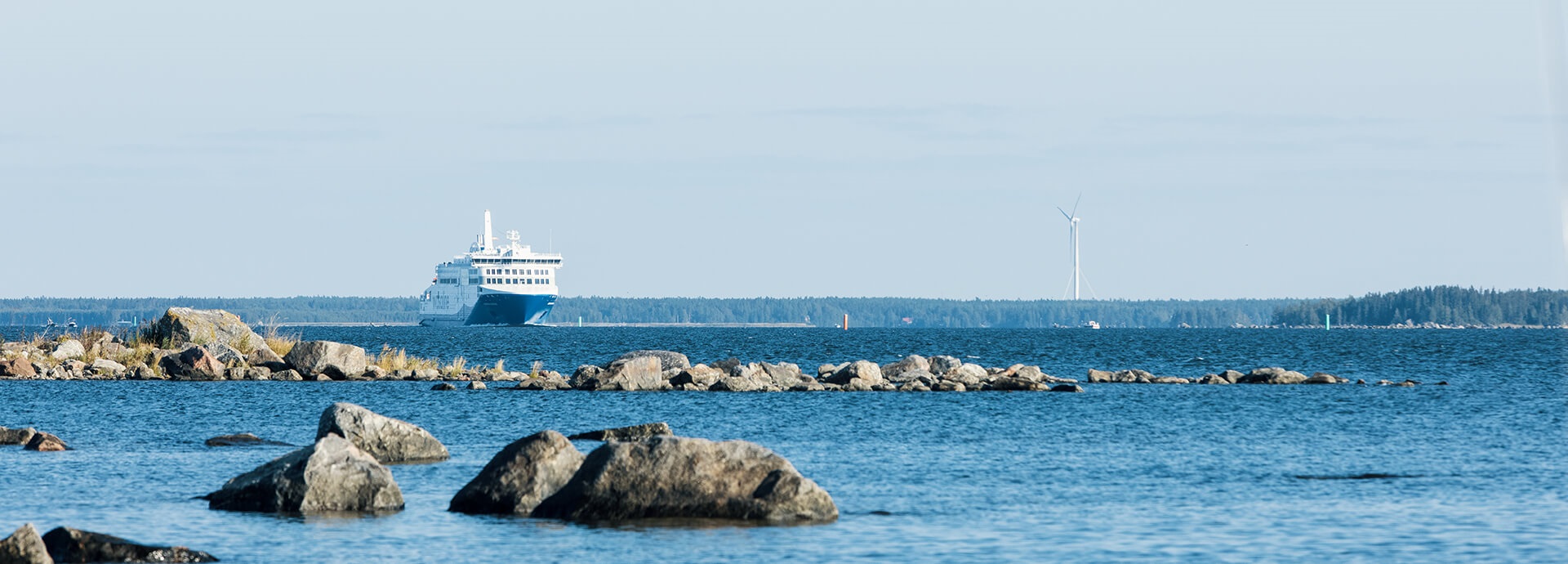
Aurora Botnia - Fuel optimization

Hybrid propulsion and flexible dual-fuel technology are just two of the ways ferry operator Wasaline is improving fuel efficiency and reducing emissions.

What did Wasaline do to improve fuel efficiency and reduce emissions?

A view from the bridge – fuel optimisation  

Using your engines and systems more efficiently is the fastest route to more sustainable and economical vessel operations. Technical Director Jonas Teir reveals how Finnish ferry operator Wasaline is taking big strides forward in fuel efficiency with engine upgrades and data monitoring.

Wasaline’s state-of-the-art Aurora Botnia is a 150-metre-long RoPax vessel with 1,500 lane metres of cargo and vehicle space plus room for 800 passengers. Launched in August 2021 it’s one of the world’s most efficient and sustainable ships – already compliant with the IMO’s 2050 greenhouse gas reduction target and the EU’s upcoming Fit for 55 package. 
So what is Wasaline doing to improve fuel efficiency and reduce emissions on what is already a highly efficient vessel?

“Fuel optimisation is the fastest route to more sustainable and economical vessel operations,” says Teir. Our ambitious environmental targets and the current spike in fuel prices make fuel efficiency a critical part of daily operations for us.”

These are the four ways Wasaline is improving fuel efficiency and reducing emissions.


1. Upgrading engines 

“While saving a few per cent in annual fuel consumption per year might sound small, on a larger scale it has a huge impact. We are able to use the vessel as an R&D test platform and technology demonstrator, and the learnings from this project will benefit other ferry operators too,” says Nico Höglund, Product Manager, Wärtsilä 31 engine.

“After just a few years Wasaline could see double-digit reductions in fuel consumption compared to where they started. This translates into an equivalent reduction in emissions, or perhaps even more. From a wider perspective, looking at the whole supply chain there are energy savings from well to tank.”


2. Using hybrid propulsion

The Aurora Botnia’s hybrid propulsion solution combines engines and 2.2-MWh batteries. In theory the Aurora Botnia’s could operate solely on batteries, but in practice these are mostly used for peak shaving and as spinning reserve to optimise engine operation. The batteries are also used to provide power for manoeuvring in port and to power the vessel’s hotel load.

The outlook so far is very promising, with data showing that operating with batteries has contributed to a three to four percent improvement in fuel economy.

“We are still taking baby steps with the hybrid system, so this is a learning curve for us,” Teir points out. “Wärtsilä’s monitoring and guidance has been crucial in this respect because it has allowed us to confirm or ignore our hunches and ideas about how to make optimal use of the system. The data gathered helps us to see the real impact of operating with batteries and to see how we can do things better.”

The outlook so far is very promising, with data showing that operating with batteries has contributed to a three to four percent improvement in fuel economy.


3. Optimising maintenance based on real engine data

The main Wärtsilä equipment and systems aboard the Aurora Botnia are covered by a 10-year Wärtsilä Optimised Maintenance agreement. Under the agreement Wasaline benefits from predictive maintenance support using cutting-edge digital solutions based on artificial intelligence.

We can use the collected data and Wärtsilä’s expertise to fine tune the engines for even better reliability and fuel economy.

“Proper engine maintenance is one of the cornerstones of good fuel efficiency,” Teir points out. “Data monitoring and analysis is a huge part of helping us achieve this. This goes beyond the ‘nuts and bolts’ of a traditional maintenance agreement because the engine parameters are monitored continuously. We can use the collected data and Wärtsilä’s expertise to fine tune the engines for even better reliability and fuel economy.”


4. Using flexible dual-fuel technology

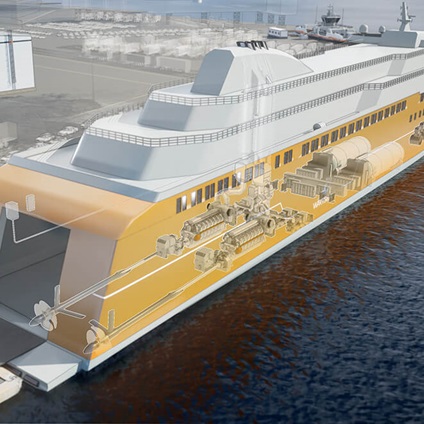
The Aurora Botnia’s four Wärtsilä 31DF dual-fuel engines can burn liquefied natural gas (LNG) and/or biogas. Wärtsilä LNGPac™ technology is used for LNG storage, supply control and monitoring. This dual-fuel capability helps Wasaline avoid the problem of having all its eggs in one basket in terms of fuel – both now and in the future. “With our current setup we have multiple alternatives to choose from,” says Teir.

“On top of fossil LNG and diesel the vessel can also operate on biodiesel, liquefied biogas (LBG) and, when they become available, eFuels like eDiesel and synthetic LNG. This makes us more resilient to situations like the current challenges with LNG availability. It also means we have multiple pathways to decarbonise with low and zero-carbon fuels.”

“For me, the future is not full of endless challenges but limitless opportunities. Our collaboration with Wärtsilä is a chance to learn from each other and do something significant in the field of fuel efficiency that will benefit not just us, but the entire ferry industry,” Teir concludes.


Related solutions

Podcasts

20 Jun 2025 · Podcast
5 min listen
Four top tips for future-proofing your newbuild vessels
Discover four expert strategies to future-proof newbuild vessels: flexible design,...
19 Jun 2025 · Podcast
5 min listen
How smart engine optimisation is one easy way to minimise methane slip
Are you looking to reduce methane slip from your LNG-powered vessel? Discover...
6 Jun 2025 · Podcast
6 min listen
Three amazing ways to reduce vessel propulsion power and cut methane slip
Energy-saving technologies are a great way to cut vessel fuel use and...
6 Jun 2025 · Podcast
5 min listen
Three fascinating ways you can avoid low loads and reduce methane slip
Avoiding low loads is a great way to minimise methane slip from LNG-powered...
6 Jun 2025 · Podcast
5 min listen
Why good maintenance is a powerful tactic to cut methane slip from ships
What is methane slip and why should you care about it? What smart tactics...
6 Jun 2025 · Podcast
4 min listen
How to cut methane slip: winning tactics for maritime businesses
What is methane slip and why should you care about it? What smart tactics can you...