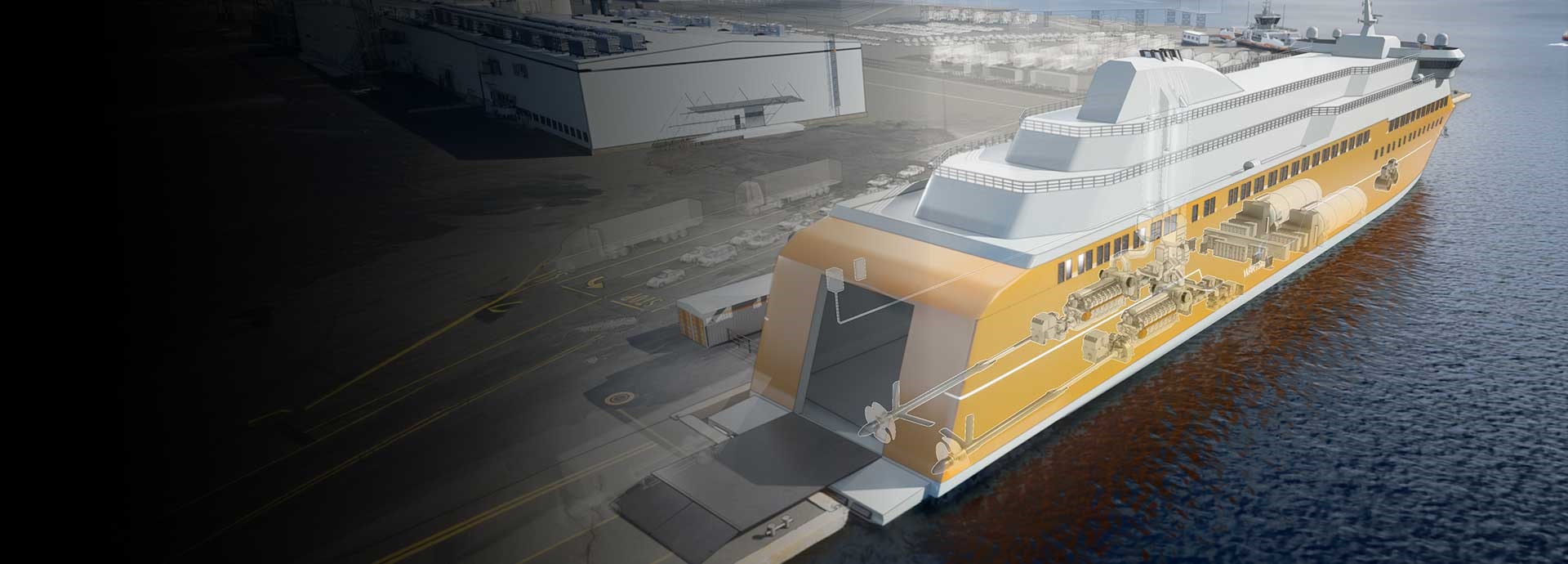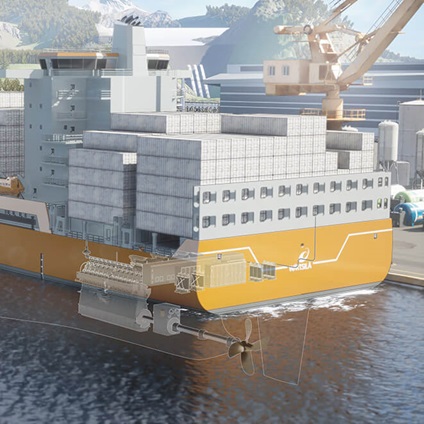
When considering ship electrification, the conversation often starts with technology. But there’s a more important question to ask: how can you make smarter ship electrification decisions before your design options disappear?
If you’re already exploring vessel electrification, you have probably asked yourself some or even all of these technology-related questions in some form:
These are all good questions. But experienced ship designers are starting to recognise that they need to be thinking one level higher:
How to design a vessel so that it is adaptable enough to stay profitable throughout its lifetime – with future flexibility that keeps electrification options open?
Designing a vessel today increasingly means working with incomplete information. Fuel pathways, regulatory requirements and operating conditions are evolving all the time, while vessels are expected to remain commercially viable for decades. In this context, a good design is less about optimising a single operating point and more about how well the vessel can adapt as requirements change.
Want to know more about what to consider when thinking about electrification? Download the Insider’s guide to ship electrification: 5 important topics to consider when thinking about going electric.
Ship electrification covers a spectrum of options from electrified mechanical propulsion to hybrid systems and fully electric vessels. Each option brings different benefits and trade-offs between efficiency, cost, complexity and flexibility.
The challenge is not simply to choose the solution that works best today. It is to understand which decisions need to be made now, which can wait and which will limit your options in the future.
One of the first decisions to be made about propulsion is whether to choose mechanical or electric propulsion.
Mechanical propulsion is traditionally the best fit for vessels that mainly sail from A to B at a relatively constant speed. This is because it avoids the losses of electric power conversion, making it significantly more efficient.
Ship operators usually choose electric propulsion when the vessel’s operating profile means that the flexibility of electric propulsion outweighs the conversion losses. This could include vessels with:
This makes choosing mechanical vs. electric seem like a straightforward decision, but in practice it isn’t. You also need to consider what the vessel might do – and need – in the future. For example, there is a great deal of uncertainty about how global decarbonisation regulations will evolve. This makes it difficult to know which technologies will be needed to meet both future regulations and ongoing business goals.
Even though they add conversion losses, flexibility is a key advantage of electric propulsion systems. The power sources in the system, which might be diesel engines today, can be replaced over the vessel’s lifetime by an engine that can use an alternative fuel, or by batteries or fuel cells. Electric propulsion also makes it easier to adjust operational profiles and speeds in the future.
Ask yourself what the future might hold for your vessel. Some things might be clear, but others – like regulation – might be more uncertain. Making sure your vessel design has the necessary flexibility to adapt to tomorrow’s operational landscape can save you money in the long run and increase the profitable lifetime of your vessel.
The key thing to remember is that choosing between mechanical and electric propulsion isn’t a binary choice. The practical decision you need to make is not ‘mechanical or electric’, it’s how far along the electrification spectrum you want to go to balance efficiency, complexity and long-term adaptability. Shaft generator systems and hybrid systems, for example, can add flexibility and keep future options open while retaining the efficiency benefits of mechanical propulsion.
The different electrification options available make early design decisions more important. For example, one electrification option that you might consider in your vessel design is shore power capability. This is a decision that for most vessels needs to be made early in the design phase.
Shore power allows a vessel to connect to the onshore electricity grid while in port. This reduces fuel consumption, emissions and noise by eliminating the need to run auxiliary engines. Because shore power reduces emissions and noise when in port, including this capability in your design can support compliance with local port requirements now and in the future.
While having shore power capability does not define how your vessel will operate at sea, designing the vessel so that shore power can be used is a decision that becomes increasingly difficult to change later.
Shore power can also be used to charge onboard energy storage systems like batteries. For vessels that will rely heavily on batteries, charging power and charging times are key design parameters that influence:
These are all factors that must be considered early in the design phase. It is also important to consider your vessel type and potential future operating conditions as these will dictate likely connection times before shore power is available in port. For example, ferries need quick connection and disconnection to allow fast turnaround times.
There is no ‘perfect’ level of electrification that suits all vessel types. The right choice depends on what your vessel needs to do and how and where it operates – and this may change during its lifetime.
A vessel with a highly predictable operating profile may have very different requirements from one that needs to accommodate changing routes, variable loads or uncertain future operational demands.
That’s why looking at electrification as a spectrum can be more useful than treating it as a binary choice between mechanical or electric propulsion:
Every additional system has implications for space, weight, cost, complexity and efficiency. When designing a vessel, it’s important to look at where adding future flexibility brings real value.
When considering ship electrification, the aim is not to predict exactly what your vessel will need 20 years from now, it is to avoid making design decisions today that restrict your options in the future.
That’s the perspective behind the Insider’s guide to ship electrification: 5 important topics to consider when thinking about going electric. The guide examines the key electrification choices from a vessel design perspective – from shaft generators and batteries to hybrid propulsion, electrical architectures and shore power. Importantly, you’ll also learn when those choices are easiest to make and what can become harder to change later.
Download the Insider’s guide to ship electrification to find out more.
Once every six weeks, you will get the top picks – the latest and the greatest pieces – from this Insights channel by email.