

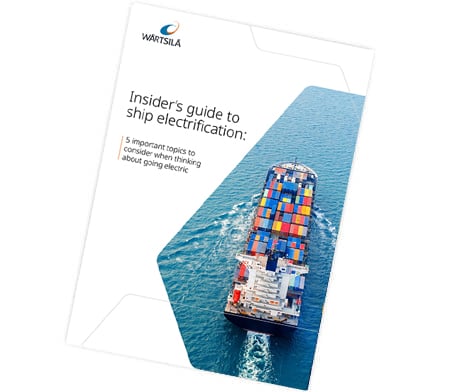
Container ship on the high seas, bird's-eye view
Insider’s guide to ship electrification

This guide helps ship designers and naval architects evaluate electrification options, understand trade-offs, and preserve flexibility for the future.

12 August 2026 · 40 pages

Insider’s guide to ship electrification: 5 important topics to consider when thinking about going electric

Ship electrification offers more possibilities than ever before, but the decisions made early in vessel design can have lasting consequences. This guide helps ship designers and naval architects evaluate electrification options, understand trade-offs, and preserve flexibility for the future.

Avoid costly design compromises: What to evaluate before going electric

The pressure to improve energy efficiency, reduce emissions, and prepare vessels for future requirements has made electrification a key topic for ship designers and naval architects. Yet many of the most important decisions are made early in the design process, when alternative approaches remain available.

Understanding your choices before they become difficult or expensive to change can help you create vessels that remain competitive, adaptable, and commercially viable for years to come.

What you will learn from the guide:
  • Learn how different levels of ship electrification affect vessel flexibility, efficiency, and future adaptability.
  • Understand when mechanical, electric, and hybrid propulsion systems are most appropriate.
  • Explore the decisions that become difficult, costly, or impractical to reverse later in the design process.
  • Discover practical questions to ask when evaluating batteries, shaft generators, electrical architectures, and shore power.
  • Benefit from insights informed by Wärtsilä's experience from more than 200 vessel electrification retrofits and a broad range of vessel applications. 
Insiders guide to ship electrification cover

You will get:

  • Practical insight: See which electrification decisions can shape vessel design, efficiency and future upgrade options. 
  • Future-ready thinking: Understand how shaft generators, batteries, hybrid propulsion and shore power can support long-term flexibility. 
  • Greater confidence: Learn from real vessel applications, common misconceptions and expert guidance across different vessel types.

Ship electrification requires more than choosing a single “best” solution. The right approach depends on the vessel, its operating profile and how much flexibility it may need in the future. This guide explores five important electrification topics and helps you understand the key choices early, while important design options are still open.

Make better electrification decisions from the start

Avoid costly design dead ends

Learn which electrification decisions are difficult to reverse later and how early planning can help preserve future flexibility and avoid unnecessary redesign work.

Evaluate options with confidence

Understand the practical differences between propulsion architectures, hybrid solutions, batteries, shaft generators, and shore power systems.


Design for an uncertain future

Explore ways to create vessel concepts that can adapt to changing regulations, operational requirements, and emerging technologies over time.

Frequently asked questions about buying spare parts

Should I choose electric propulsion or hybrid propulsion?

The answer depends on what the vessel needs to achieve. Some vessels benefit from fully electric propulsion, while others gain greater value from hybrid solutions or partial electrification. The guide explains where different approaches typically make sense and how they affect future flexibility.

When should electrification decisions be made during vessel design?

Some of the most important electrification decisions should be considered early, while key architectural choices are still flexible. Delaying these decisions can make future modifications more costly, complex, or impractical. This guide helps identify which decisions deserve attention early in the design process.

Which ship electrification decisions are hardest to change later?

Some choices, such as propulsion architecture, electrical distribution concepts and space allocation for future technologies, are easiest to address early in the design process. This guide highlights the decisions that can significantly influence future flexibility, efficiency and upgrade possibilities.

Can any existing vessel be electrified?

In many cases, yes. Electrification is not limited to newbuilds. Technologies such as shaft generators, batteries, hybrid systems, and shore power capabilities can also be introduced through retrofit projects. Wärtsilä's experience includes more than 200 vessel retrofits involving electrification-related technologies.

Make ship electrification decisions early to help preserve flexibility for decades

The contents on this page have been written with the help of AI. A human expert has checked and verified the contents.