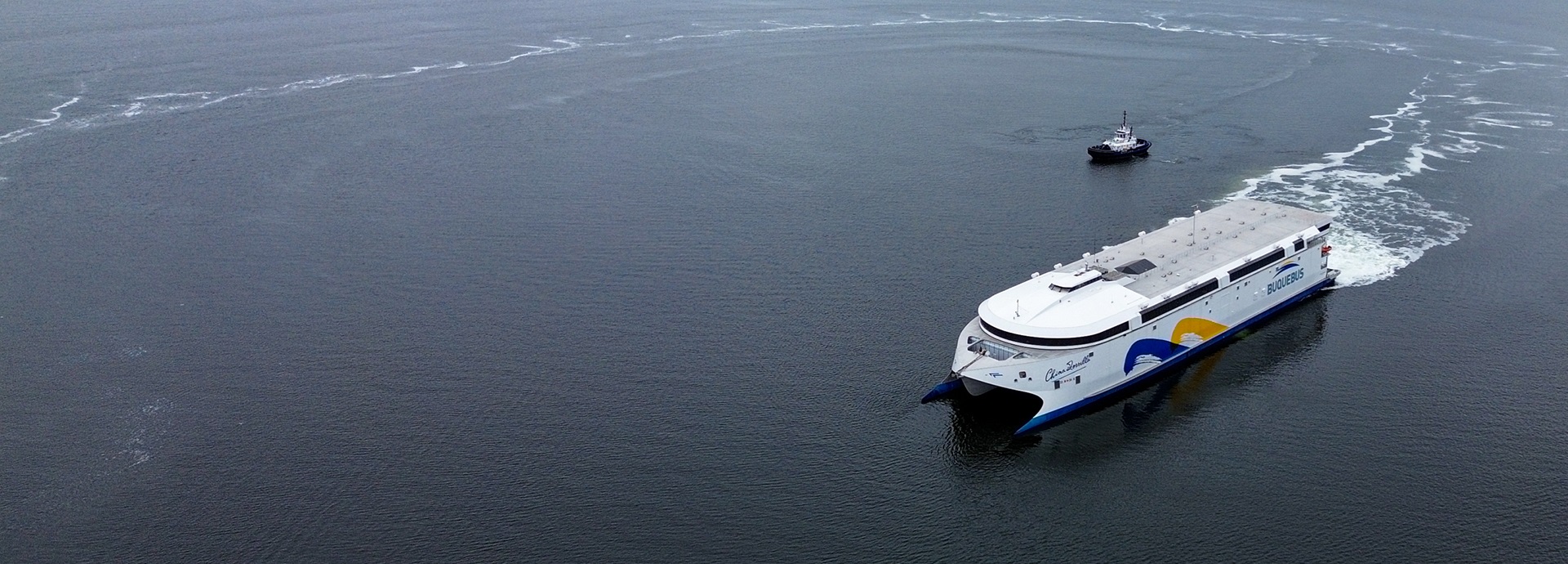
Uruguayan ferry operator Buquebus operates the world’s largest fully electric zero-emission RoPax ferry between Buenos Aires in Argentina and Colonia del Sacramento in Uruguay. The ferry’s size, speed and range demonstrate that fully electric ships are commercially viable options for an increasingly wide range of operational profiles.
Buquebus is keen to reduce the carbon footprint of its operations in response to both local emission reduction targets, aimed at vessels operating from terminals in the vicinity of busy cities, and global IMO targets. Investing in fully electric vessels powered by batteries charged at port allows Buquebus to take significant steps towards zero-emission operations while providing customers with a reliable service and supreme passenger comfort.
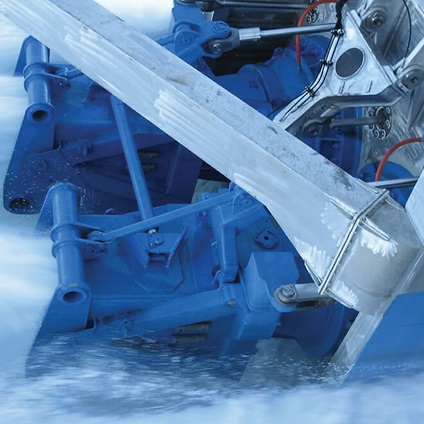
The China Zorilla catamaran ferry is the world’s largest battery-electric ship. The battery-electric propulsion system includes eight modular waterjets. The waterjets allow shallow draft operation, enable accurate and responsive manoeuvrability and minimise maintenance needs.
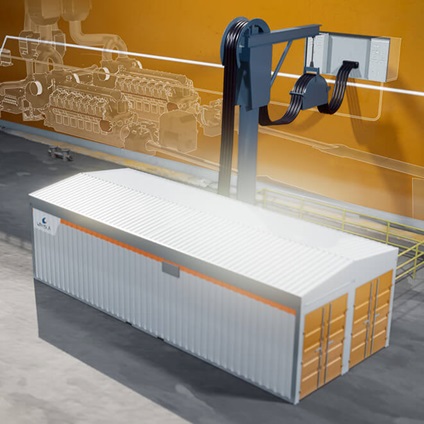
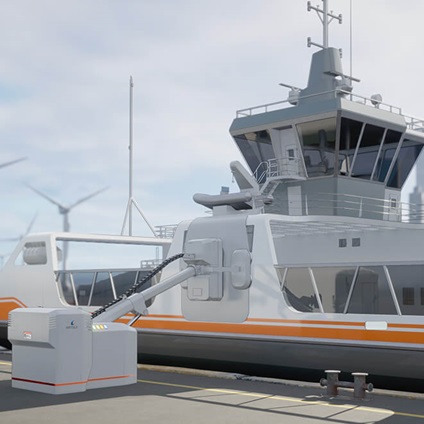
The 41.2 MWh onboard battery modules provide power to eight electric motors, which in turn drive eight axial flow waterjets. The battery packs are recharged in port using a high-capacity DC shore charging system.
The China Zorilla was constructed by Incat at their shipyard in Hobart, Australia. Demand for ever larger, faster and more efficient catamaran ferries from Incat’s customers has been increasing year on year. The company has often turned to Wärtsilä to help design and optimise the propulsion systems for vessels with onboard battery energy storage systems, an area in which Wärtsilä is the global market leader.
Scope of the Wärtsilä solution
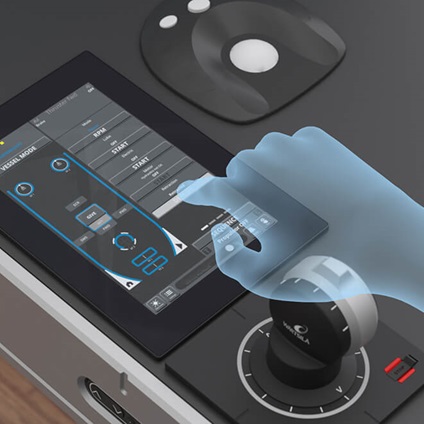
Shipbuilder Incat selected Wärtsilä to implement fully electric propulsion for the newbuild China Zorilla RoPax ferry. The scope of supply includes the power conversion system, smart energy management system, DC shore charging systems, battery modules, DC hubs, electric motors, waterjets and the Wärtsilä ProTouch remote propulsion control system.
The system is optimised for the vessel’s medium-speed (25 knots) operating profile, and the waterjets are driven by eight highly efficient, compact permanent magnet electric motors.
The China Zorilla – a 14,000 GT, 130-metre RoPax vessel – shows that fully electric, zero-emission propulsion is a technically and commercially viable option for increasingly large ferries. With a regular fixed route and a DC shore charging system, ferry operators can decarbonise their operations and increase passenger comfort on journeys of 60 km or more.
Last updated: September 2026
Content owner: Wärtsilä Marine