

District heating is a profitable pathway to net zero.
It has vast potential to drastically scale renewable energy usage by drawing on various renewable and low-carbon heat sources, thus reducing dependency on fossil fuels.
It is an underutilised flexible energy solution for Europe to achieve cost-effective decarbonisation when used with Combined Heat and Power (CHP) engines.
Enhance financial performance through diversified revenue streams | Support grid stability in systems with high renewable energy penetration | High engine reliability and dispatchability | High fuel efficiency of CHP vs separate production of heat and power | Future proof for decarbonized fuels |
Driven by the decarbonisation agenda, the district heating sector is experiencing radical changes.
This shift provides both challenges and opportunities.
In a recent presentation, Igor Petryk, Market Development Director, discussed how new business models can bring benefits for district heating system operators and consumers while creating value for power systems.
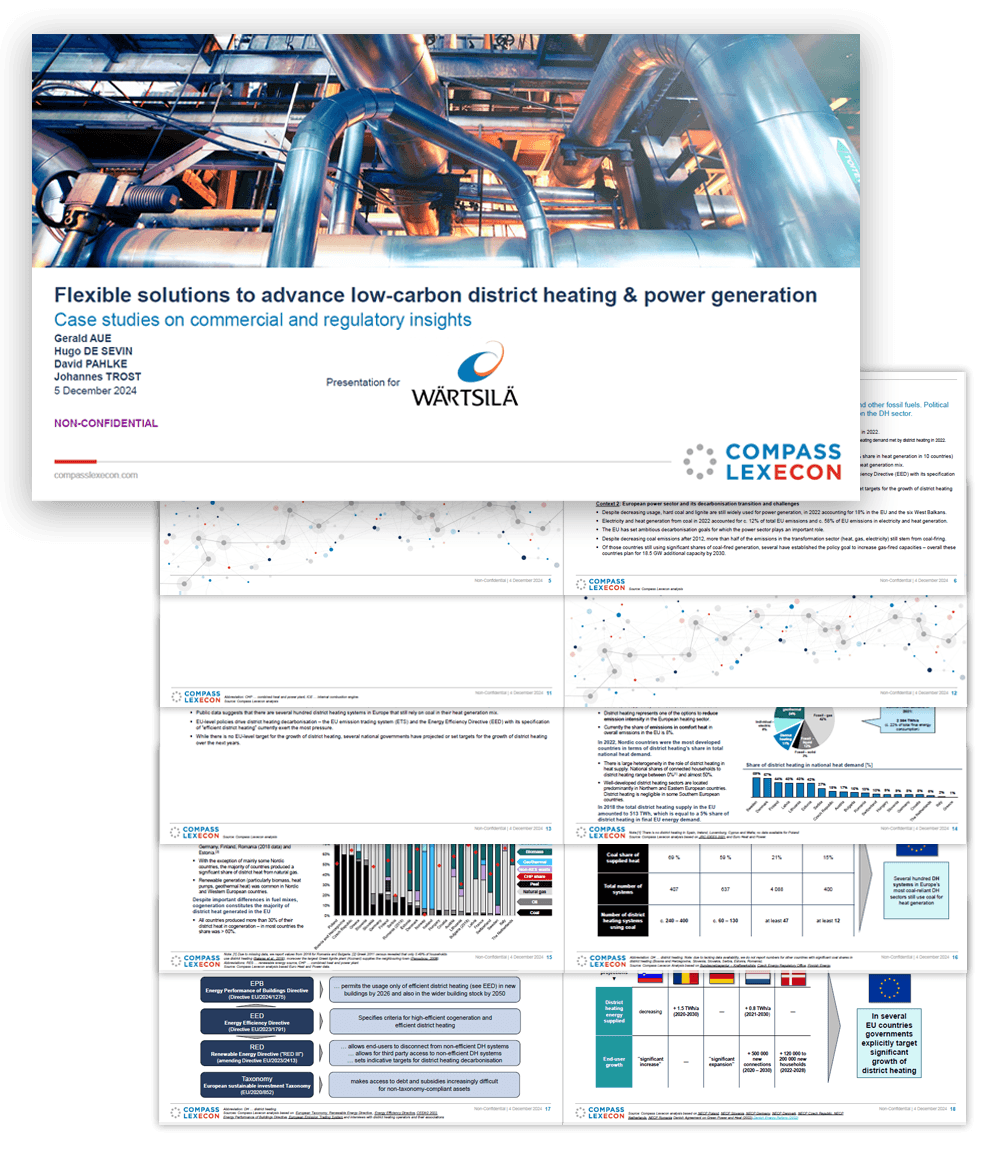
This report showcases ways to decarbonise fossil (particularly coal) based district heating systems in a commercially viable way and the role flexible generation technologies (particularly gas-engines) could play in this transition, while identifying roadblocks to decarbonisation in the fields of market structure, regulation, capabilities and market trends.
The study establishes the stack of revenues available for internal combustion engine combined heat and power installations (ICE-CHP):
With its district heating technologies, Wärtsilä is at the forefront of the transition towards a 100% renewable energy future and helps to accelerate to the most reliable, cost optimal, and net zero energy future.
Sector coupling of district heating and power systems plays an increasingly important role and is transformative for Europe’s energy future. Combined heat and power engines and flexible technology like heat pumps optimise energy use. They dynamically select between heat and power production technologies to adapt to market prices, maximising economic returns. For example, when renewable energy is abundant, heat pumps and electric boilers absorb the extra energy. When solar and wind are low, these engines produce heat for cities and power for the grid, keeping energy supply reliable.
The Wärtsilä Combined Heat and Power (CHP) plant is a cost-effective and innovative solution where total efficiency can exceed 90%. The most common heat products are hot water or steam, which makes it perfect for both industrial and district heating purposes.
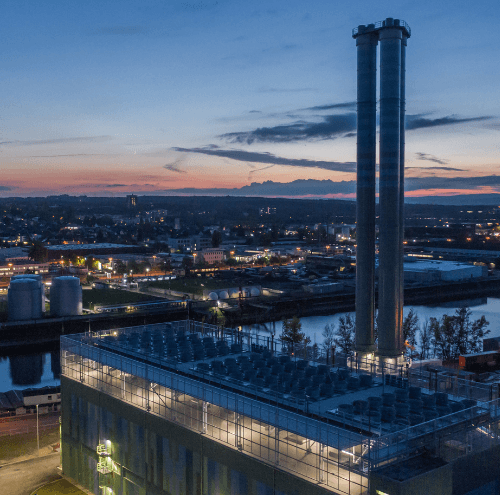
“District heating has untapped potential in Europe to be a profitable pathway to net zero. It is more than just heating homes – it is about enabling renewable energy growth, offering flexibility, and creating a viable solution for coal-dependent countries transitioning to cleaner energy







.tmb-448x262.png?Culture=en&sfvrsn=7d8ce645_2)