Driven by the decarbonisation agenda, the district heating sector is experiencing radical changes. This shift provides both challenges and opportunities. In a recent presentation, Igor Petryk, Market Development Director, discussed how new business models can bring benefits for district heating system operators and consumers while creating value for power systems.
Transformative changes in the energy sector
The energy sector is undergoing transformative changes. Intermittency of growing renewable energy in power systems raises the question of adequate means to balance high variability of wind and solar generation. District heating has the potential to become the largest source of flexibility for power systems while can simultaneously benefit from price volatility in electricity markets. This is what we call sector coupling.
Coupling of the power and heating sectors assumes that district heating system would utilise excess renewable electricity to produce green heat and would generate balancing power back to the grid. This approach creates possibilities for financially feasible business models.
However, selecting adequate technologies is paramount for the success of any models, and failure to identify future-proof candidates can cost billions. When a German utility commissioned two large blocks in Bavaria in 2011, combined cycle gas turbines (CCGTs) was the best available technology for the time and the intended operating profile. A few years later, renewables changed the electricity market in Germany, and high electricity price volatility started squeezing inflexible capacities out of the merit order. The owners decided to shut the blocks down due to “the lack of economic prospects”.
This example underscores the importance of considering market dynamics and the potential for rapid changes in the energy sector. But how would the German utility have hedged against unfortunate scenarios?
The importance of power system modelling and scenario analyses
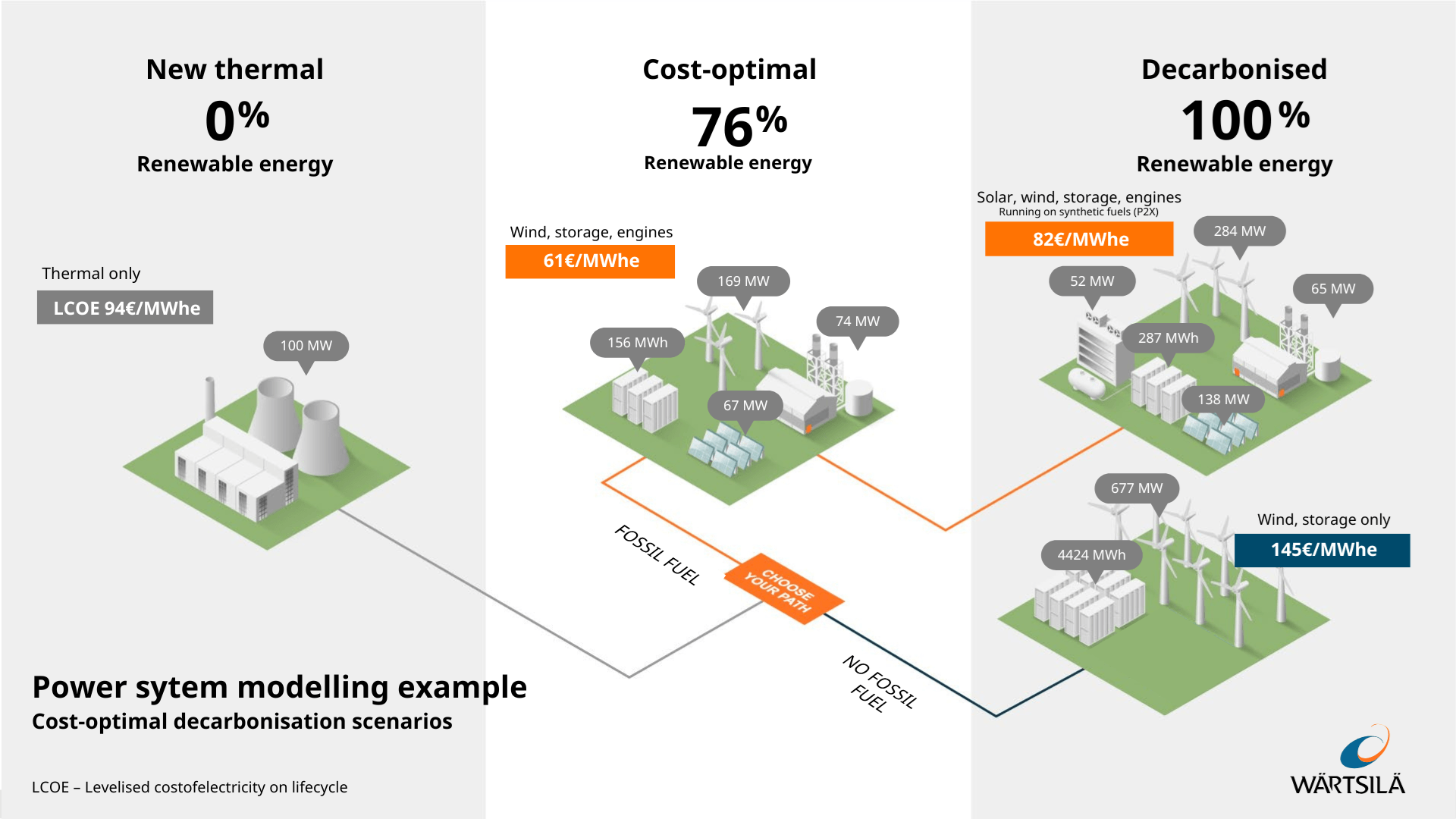
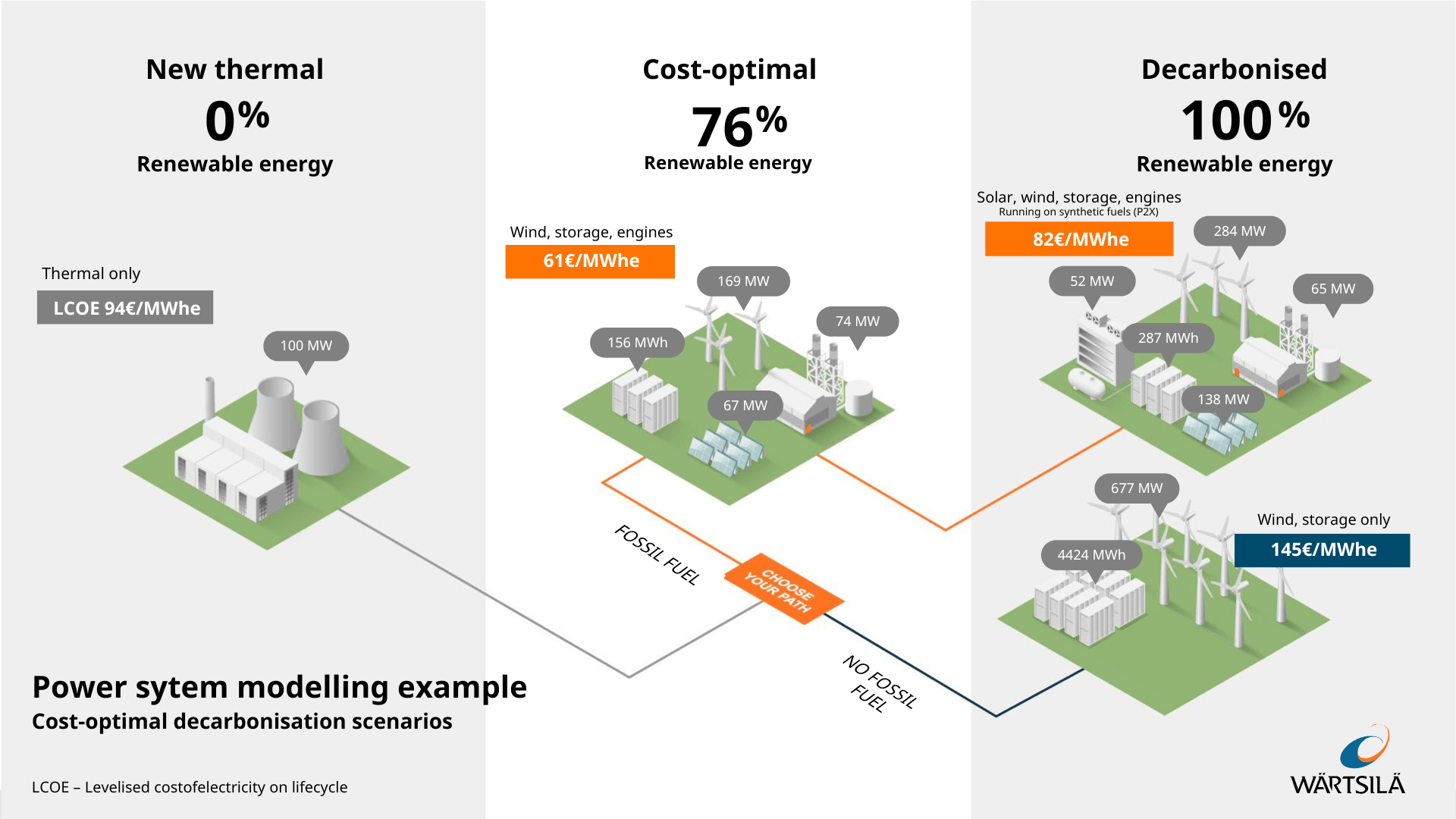
Power system modelling with sophisticated software is a powerful tool to analyse potential scenarios. Wärtsilä Energy has modelled over 190 power systems to find the cost-optimal path to reach 100% decarbonised systems. The modelling clearly demonstrates that building a fully decarbonised system based solely on renewables and energy storage is more expensive than an alternative two-step approach.
In the first step, renewables build-out is accompanied by the addition of the most flexible balancing technologies: gas engine power plants and battery energy storage that optimise the utilisation of renewables. This will get you to around 75%-80% decarbonised energy – cost-effectively and fast. To fully decarbonise electricity production, Power-to-X technology can be deployed as the second step to turn excess renewable energy to carbon-neutral fuels that can be used in gas engine power plants.
The two-step approach is cost-effective and future-proof: technologies selected by objective computer modelling provide the lowest cost of electricity while ensuring their suitability for future power systems.
Meanwhile, the same engine power plants can generate heat for cities, and here we are returning to the topic of sector coupling.
From theory to reality: Skagen, Denmark
In Skagen, Denmark, the benefit of sector coupling is already tested and proven. The district heating system in Skagen successfully integrates various technologies, including reciprocating engines, heat pumps, and electric boilers. The system operates flexibly, buying electricity when prices are low and generating electricity when prices are high, thereby maximising profits and reducing heat tariffs.
At the same time, such operations help balancing the power grid; low electricity prices mean there is an excess of renewable power whilehigh prices mean there is a lack of power in the grid. Skagen’s district heating helps balance the power fluctuations.
Modelling examples from Poland and the Czech Republic
In a city in Poland, power system modelling was conducted to help analyse viable paths to decarbonise heat and identify the optimal technology mix to replace coal. This was done by co-optimising heat production and electricity sales while always meeting heat demand. The optimised portfolio mix replacing the coal-fired boiler, included a flexible engine-based combined heat and power (CHP) plant, heat storage, heat pump, an electric boiler, and a gas boiler. Investment in the mix would result in 42% lower emissions and 20% lower heat tariffs while achieving a 10% IRR.
The same modelling approach was used for a district heating company in the Czech Republic. The company wanted to replace an existing coal CHP plant with gas turbine technology. Results from the study clearly demonstrated that reciprocating engines in the capacity mix ensure lower total cost of heat production and higher revenue from electricity sales. This is due to the flexibility of engine power plants and their dynamic abilities to operate in the electricity market.
The way forward in district heating
Renewables will define the future of our energy systems and flexible technologies will be essential in high-renewable systems. District heating can become the largest source of flexibility for power systems helping integrate more renewables while aiding decarbonisation of heat and the security of heat supply.
To ensure effective and economically viable sector coupling, truly flexible district heating technologies must be deployed. This is an optimal path to a sustainable energy future.
Once every six weeks, you will get the top picks – the latest and the greatest pieces – from this Insights channel by email.