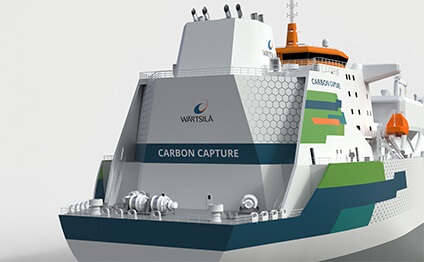
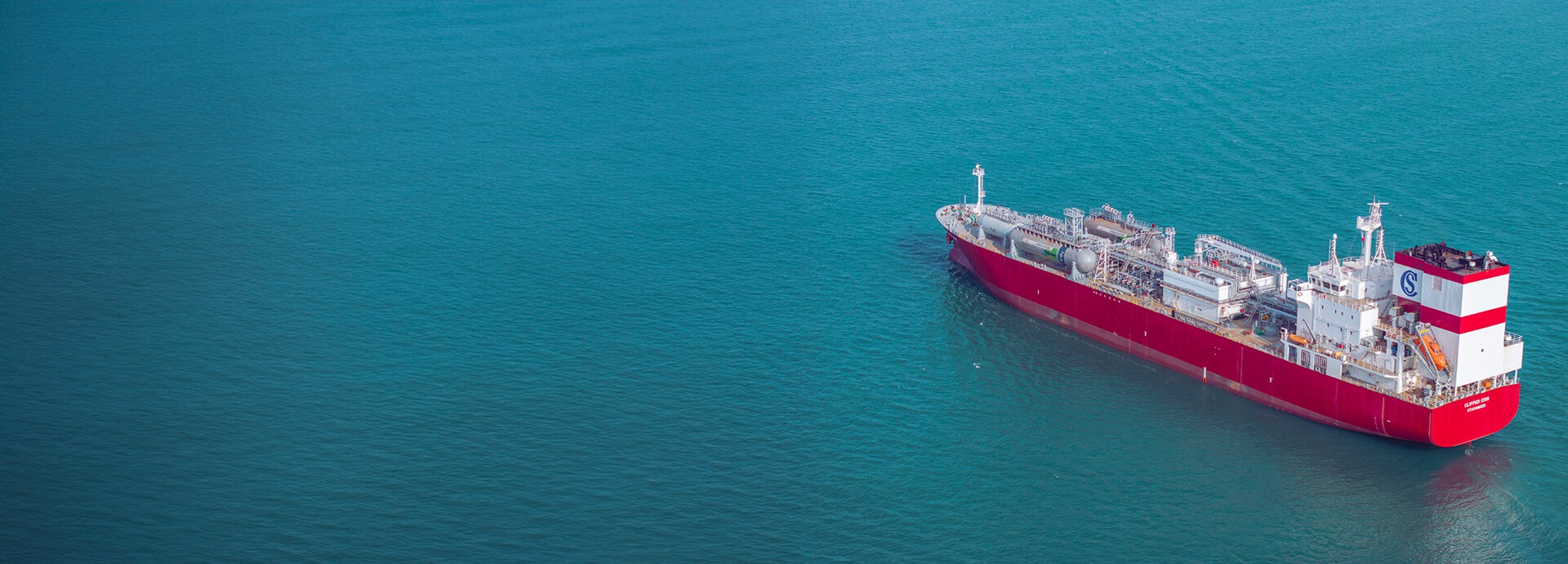
Solvang ASA has achieved a world first by implementing onboard carbon capture and storage (CCS) on its Clipper Eris ethylene carrier. The company is fast-tracking its fleet decarbonisation programme with the world’s first comprehensive, full-scale installation of CCS technology. The successful pilot demonstrated that Wärtsilä’s Carbon Capture Solution is capable of capturing over 70% of the vessel’s CO2 emissions.
Watch the video to see how Solvang is fast-tracking its fleet towards the IMO’s 2050 targets with onboard CCS.
“We’ve already captured more than 70% of the CO2. One of the key aspects of the pilot is to demonstrate that we can capture but also discharge the CO2 in a safe and constructive manner.
With a vast global maritime fleet competing for the small amount of alternative fuel currently available, Solvang was looking for a way to meet IMO targets with existing fossil fuels like HFO. CCS provides a significant shortcut for Solvang to achieve meaningful steps forward in its decarbonisation journey.
“For a ship owner like us, there are only two ways to the future: You either have to switch fuel, or you have to clean your exhaust and use the existing fuel you have today. That seems like the best solution for us.
Wärtsilä’s Carbon Capture Solution is scalable and flexible, so it can be deployed onboard vessels of all shapes and sizes – both newbuilds and existing vessels. The technology works on exhaust gases from any carbon-based fuel including HFO, methanol, LNG and MGO.
An onshore pilot at Wärtsilä’s research centre and test facility in Moss, Norway demonstrated the effectiveness of the technology. During testing 10 tonnes of CO2 a day were captured from a Wärtsilä marine engine. The full scale-installation onboard the Clipper Eris has been a success, already achieving 70% carbon capture, which equals 50 tonnes of CO2 per day.
Looking for a competitive edge in your decarbonisation efforts? Discover findings from the world’s first full-scale carbon capture pilot in this webinar: Get a competitive edge with these 3 tips on onboard carbon capture.