
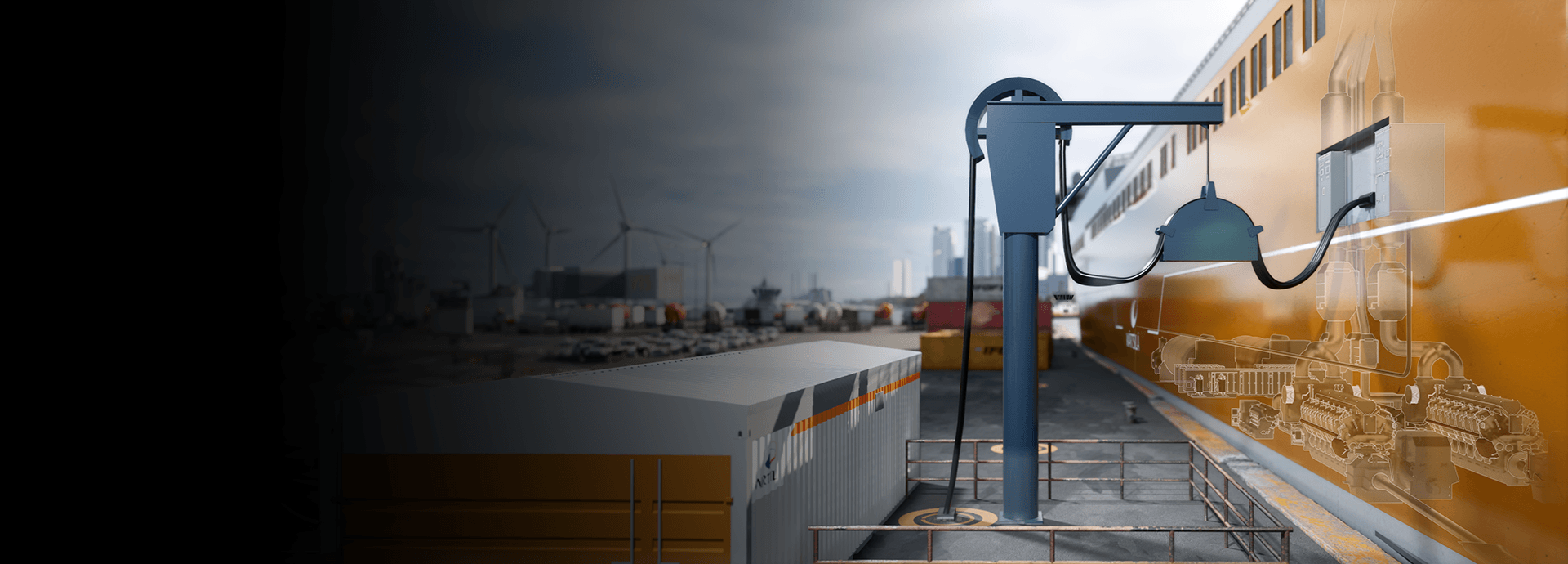
Shore power is the term used in shipping for supplying a vessel in port with electricity from the shore instead of generating power onboard.
Shore power solutions make it possible for a ship to plug in to an onshore electricity grid when in port. With shore power, the vessel does not have to use its auxiliary engines to generate power. This decreases emissions and noise.
Shore power can also be used to charge the energy storage system on board the ship.
Increasingly, shore power is becoming a standard feature in new vessels and a popular retrofit for existing fleets.
What it is: Shore power solutions allow ships to connect to an onshore electricity grid while docked in port. With shore power, the ship does not have to run its engines to generate power. This will reduce emissions and noise.
The solution includes standardised IEC-80005 plug technology, which ensures interoperability across ports.
This process, also known as Alternative Marine Power (AMP), shore connection, or cold ironing, replaces the need for the ship to run its engines to generate power, leading to reduced emissions and operational noise.
Why it matters: Shore power solutions are essential for making maritime operations more sustainable. Because they save fuel and cut emissions, they help the industry meet regulatory requirements and support global decarbonisation efforts. These systems also contribute to quieter ports and improved air quality for local communities.
How it works: The shore power system connects the vessel to the local power grid via a power conversion unit in the port, which converts electricity to the IEC standard required by ships. Battery-powered ships can use the onshore power grid for charging their onboard energy stores.
Typical applications:
Current legislation will require container and passenger vessels to use shore power in EU ports from 2030. Investing in shore power is a timely move to future-proof operations, comply with decarbonisation targets, and demonstrate commitment to sustainability.
With over 150 systems delivered, Wärtsilä’s solutions are proven and help operators meet tightening environmental regulations.
This short video explains the basics of shore power and why it has become a practical and increasingly important solution for vessels operating in port.
Want to explore the business case, drivers, and benefits in more detail? Learn more: Ship to shore power – 5 exciting reasons why it’s time to invest
Shore power solutions will help reduce fuel use and emissions during port stays because they allow vessels to take electricity from shore instead of running auxiliary engines. This also reduces noise in port environments.
With shore power increasingly becoming a standard feature in new vessels and a common retrofit option for existing fleets, shore power solutions can support compliance with tightening environmental requirements.
Battery-powered and hybrid vessels can use shore power to charge their onboard energy storage systems.
Wärtsilä’s shore power solutions allow vessels to plug into onshore electricity while docked. The shore power supply is provided through a dedicated shore connection between the port’s electrical system and the ship.
With shore power, ships can turn off their auxiliary engines, which reduces emissions and noise. The solution uses IEC-80005 standardized plug solutions (IEEE SA - IEEE/IEC 80005-1-2019 most used in the High Voltage version), which ensures that the vessel will be able to get shore power in any commercial port.
Key onboard components of the solution include:
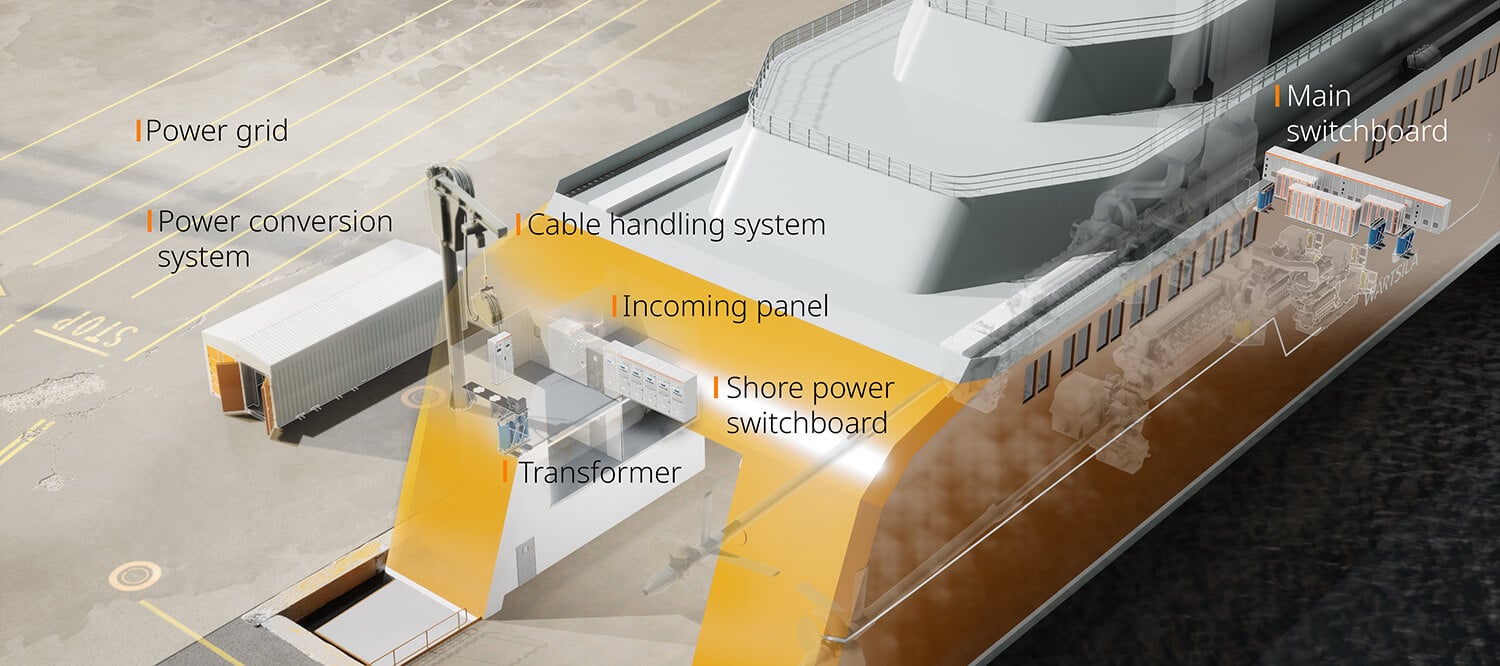
The power grid (for example 8kV, 50Hz) feeds the power conversion system, such as an e-house or container in the port.
In this e-house or container the electrical power is converted to the IEC standard, which is 60hz and for most vessels 6.6kV or Direct Current for a battery charging application. The power conversion system includes a converter, transformer, cooling and fire fighting system.
Then the cable handling system allows the heavy cables to be lifted up to the ship. On the ship an incoming panel is placed in a confined room, where the operator connects the ship to shore power.
The power is often via a transformer (if ship grid is low voltage) connected to the main switchboard. The Wärtsilä shore power control system and built in safety features ensures safe and seamless operation.
Alternative Marine Power (AMP) is a standardised form of shore power used to supply electricity to vessels while they are in port.
When a vessel uses Alternative Marine Power (AMP) while in port, it can turn off the genset and take power from shore. This reduces the vessel’s emissions, fuel consumption and noise during port stays.
Container vessels and passenger vessels often use an AMP solution. Current legislation determines that both vessel types are required to use shore power in EU ports from 2030 onwards. Other users include RoRo vessels, LNG carriers, tankers, ferries, and mega yachts.
For a deeper look at AMP systems, standards, and requirements, explore our Alternative Marine Power solutions.
Shore power for charging refers to using onshore electricity to charge the onboard energy storage systems of battery‑powered or hybrid vessels.
Charging (often referred to as ferry charging) covers a range of tailored shore power solutions designed specifically to transfer energy to onboard batteries rather than supply hotel load alone.
A chargeable onboard energy storage system allows vessels to operate without running engines. Using a zero-carbon on-shore power grid for charging means that the vessel can achieve zero-carbon operations when it is battery-powered.
A key advantage of charging solutions is shorter connection time. This is particularly important for ferries with only a few minutes available for charging the energy storage system during passenger and vehicle turnaround.
All vessel charging systems share the same fundamental onshore setup as AMP systems, including power conversion equipment, not just the visible cable handling system.
Learn more about shore power charging solutions for battery‑powered and hybrid vessels.
Shore power is used across a wide range of vessel types and operational scenarios, both for in‑port power supply and for charging onboard energy storage systems. Shore power can bring practical benefits to the following vessels and scenarios:
Vessel types that can use shore power:
Special purpose vessels (such as research or cable‑laying vessels)
Where and how shore power is applied:
Typical shore power use cases include:
Supporting decarbonisation targets and regulatory compliance
To date, Wärtsilä has delivered more than 150 shore power solutions to ships. In fact, Wärtsilä’s solution was the reference for the Long Beach port – the first one that made shore power mandatory.
The world’s largest zero-emissions lightweight catamaran ferry, ordered by Buquebus and built by Incat Tasmania will have the world’s largest DC shore charging system.
Curious about how shore power or charging solutions could benefit your operations? If you’d like to discuss your options or have any questions, we’re here to help – simply get in touch when you’re ready.
When reaching out, it helps to consider your vessel type, typical port stay duration, and whether shore power is mainly needed for onboard power, battery charging, or both.