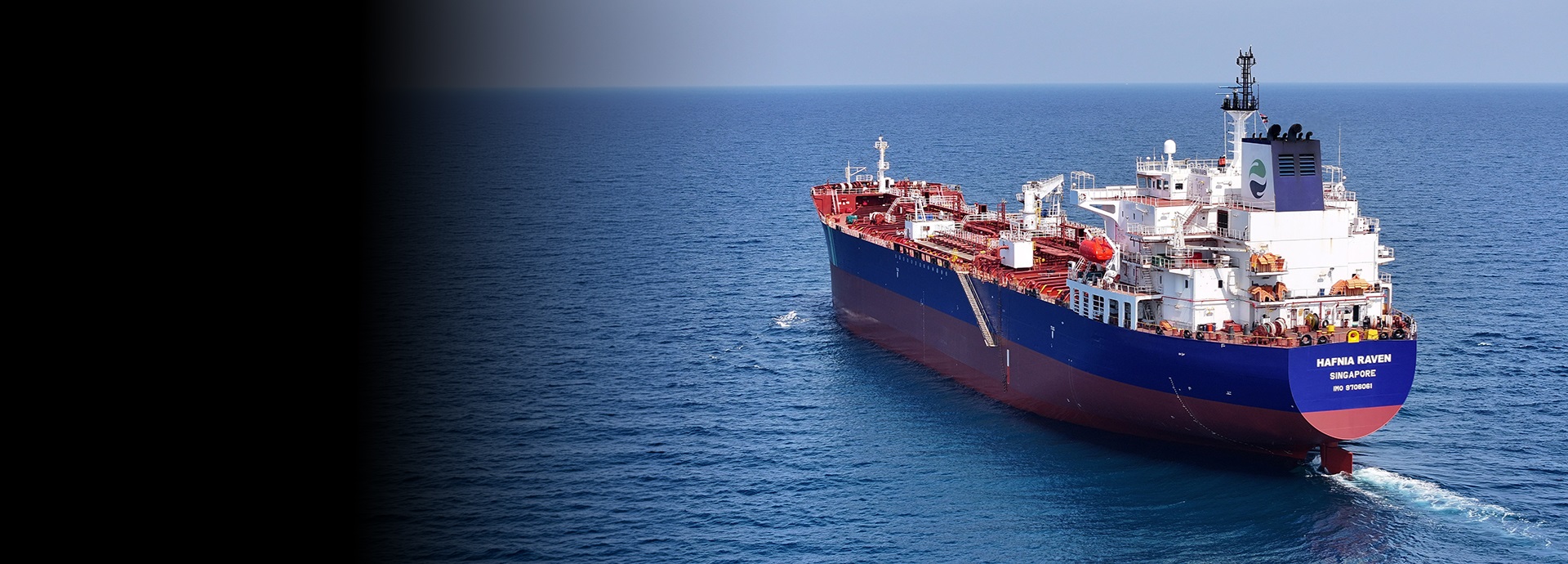
Hafnia, one of the world’s largest operators of product and chemical tankers, has sustainability firmly at the heart of its corporate strategy. The company has deployed propulsion-related energy-saving technologies on multiple vessels across its fleet to reduce fuel consumption and emissions.
These types of technologies offer a proven and cost-effective way to address the increasingly strict emissions limits and efficiency improvement requirements laid down by global and regional regulations.
As one of the world’s largest tanker operators, Hafnia takes the sustainability of its operations very seriously. The company has implemented a variety of ship-based measures to improve the efficiency of its vessels in line with tightening targets set out by the IMO and the EU. Every ship dry dock stay is viewed as a window of opportunity.
The 17 vessels that have been retrofitted with Wärtsilä EnergoFlow represented an excellent opportunity to reinforce Hafnia’s commitment to continuous improvement. The proven energy-saving technology was implemented as part of Hafnia’s regular dry dock schedule, so the vessels did not need to be taken out of profitable operation.
Wärtsilä was able to provide reliable data prior to installation to demonstrate that the fuel savings enabled by the technology would provide a fast return on investment.
Hafnia has taken a systematic and evidence-based approach to energy-saving retrofit investments. The company performed its own CFD analyses on vessel wake fields to identify where there was room for efficiency improvement. Based on this data, they were able to identify the vessels where the investment made economic sense in terms of payback time.
The goal was to build a business case for deployment of proven pre-swirl stator technology at scale without the need for piloting projects. Hafnia’s own analyses together with the data provided by OEMs demonstrated that the technology would deliver a positive impact for a number of vessels.
For Hafnia, the key was to avoid a trial-and-error approach and move forward with retrofits that they could be confident would achieve their efficiency-improvement goals. They also needed proven solutions which could be rolled out at scale.
Scope of the Wärtsilä solution
Hafnia selected Wärtsilä to retrofit the EnergoFlow energy-saving technology on a total of 17 vessels across its fleet: 10 medium-range (MR) product tankers and seven handy-size chemical tankers.
The scope of supply included the manufacture, delivery and installation of the EnergoFlow devices. Installation was performed during scheduled dry dockings.
The installation work was carefully coordinated around other maintenance tasks such as equipment overhauls and hull anti-fouling treatment so that it did not impact the dry dock schedule.
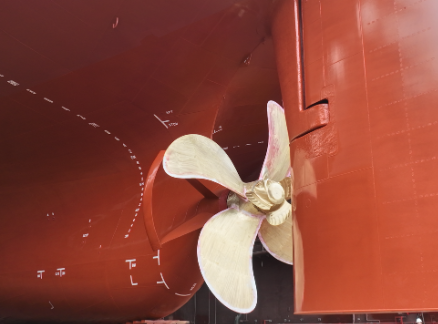
The CFD analyses provided by Wärtsilä before the EnergoFlow devices were installed on the tankers assisted in the decision-making process.
Hafnia’s decisions regarding energy-saving technologies are always data-driven, so verified data from OEMs plays an important part in building a business case for both retrofit projects and newbuild designs.
In-depth analysis of the vessels’ performance after the EnergoFlow devices were installed demonstrated a significant reduction in fuel consumption. The data showed that the technology lowered fuel consumption by 4%, just as Hafnia’s and Wärtsilä’s CFD analysis had shown.
“The data from Wärtsilä showed us that EnergoFlow had clear benefits in terms of fuel savings and emissions reduction for our vessels. This data was vital to help us build a strong business case for these retrofits. We were confident from the start that EnergoFlow was a good choice for the MR and handy-size tankers, and it is always an advantage when these types of retrofits can be done without disrupting a vessel’s normal operation.
Hafnia has shown what is possible when tanker owners and operators take a lifecycle approach to performance with targeted propulsion upgrades. The company has also shown what can be achieved when you have a clear plan for continuous improvement and when investment decisions are based on verifiable data that helps to build a strong business case.
Because Hafnia was using verified data based on CFD analysis, the company knew that pre-swirl stator devices like Wärtsilä EnergoFlow would deliver measurable savings without disrupting a vessel’s normal operation. Energy-saving retrofits like Wärtsilä EnergoFlow have been proven in real-world installations to be an attractive option for tanker operators to lower fuel consumption and support compliance with tightening global and regional emissions regulations.
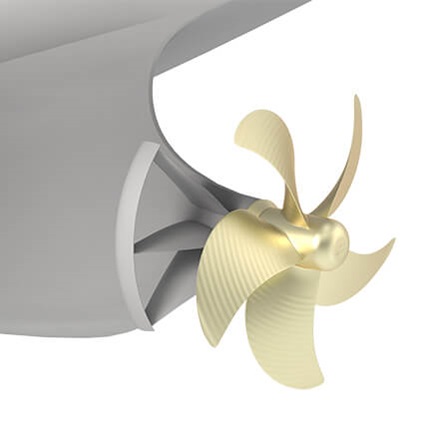
Wärtsilä EnergoFlow is a pre-swirl stator, which is an energy-saving device, or ESD for short. By reducing the power needed to move a vessel through water, ESDs improve propulsion efficiency, which is one of the fastest ways to reduce fuel consumption, improve CII and cut emissions.
A pre-swirl stator is installed at the vessel stern, in front of the propeller. The stator guides one side of the stern flow in the opposite direction to the propeller rotation. This counter-rotating inflow helps to neutralise the rotational energy losses in the propeller slipstream. Pre-swirl stators are designed on a case-by-case basis to ensure that each vessel gains maximum benefit from the installation.
The counter-rotating inflow, or pre-swirl, created by Wärtsilä EnergoFlow reduces energy losses and improves propeller efficiency, reducing the engine power needed, and therefore the amount of fuel burned, to maintain the same vessel speed. This means that the vessel can transport the same volume of cargo with lower fuel consumption.
EnergoFlow can be installed on a wide variety of vessel types including tankers, bulk carriers, RoRo vessels and single and twin-skeg LNG carriers. The solution is installed during a vessel’s scheduled dry dock stay.
Last updated: November 2026
Content owner: Wärtsilä Marine