
Wärtsilä's WISE (Wide and Intelligent Sustainable Energy) has taken part in a new co-innovation initiative, the Early Detection of Extreme Engine Events (EDE3) project, aiming to develop a framework for real-time identification, characterisation and prevention of extreme engine events. The advanced cooperation project is scheduled for two years, between 2025 and 2027.
Flexible engines, especially internal combustion engines (ICEs), remain a cornerstone in the global energy system. They dominate critical industries such as energy, maritime, off-road machinery and transport, making daily necessities heavily reliable on their smooth operations. Reliable power generation enables minimum downtime, reduced costs, lower CO2 emissions, and all-together efficient operations. However, like everything else in this world, these devices don't come without challenges.
Mechanical failures in engines can cause unplanned downtime and compromised safety, risking both the device itself as well as the people who operate it. The existing detection solutions, such as rule-based threshold monitoring and AI models trained on historical operating data, help up to a certain point but often lack the ability to make early-stage diagnostics. There is an urgent need for new types of predictive maintenance methods that can detect and characterise extreme engine events before irreversible damage occurs. This need is strongly recognised by the energy and maritime industries, where unplanned outages can lead to repair costs exceeding millions of euros per event and disrupt critical operations.
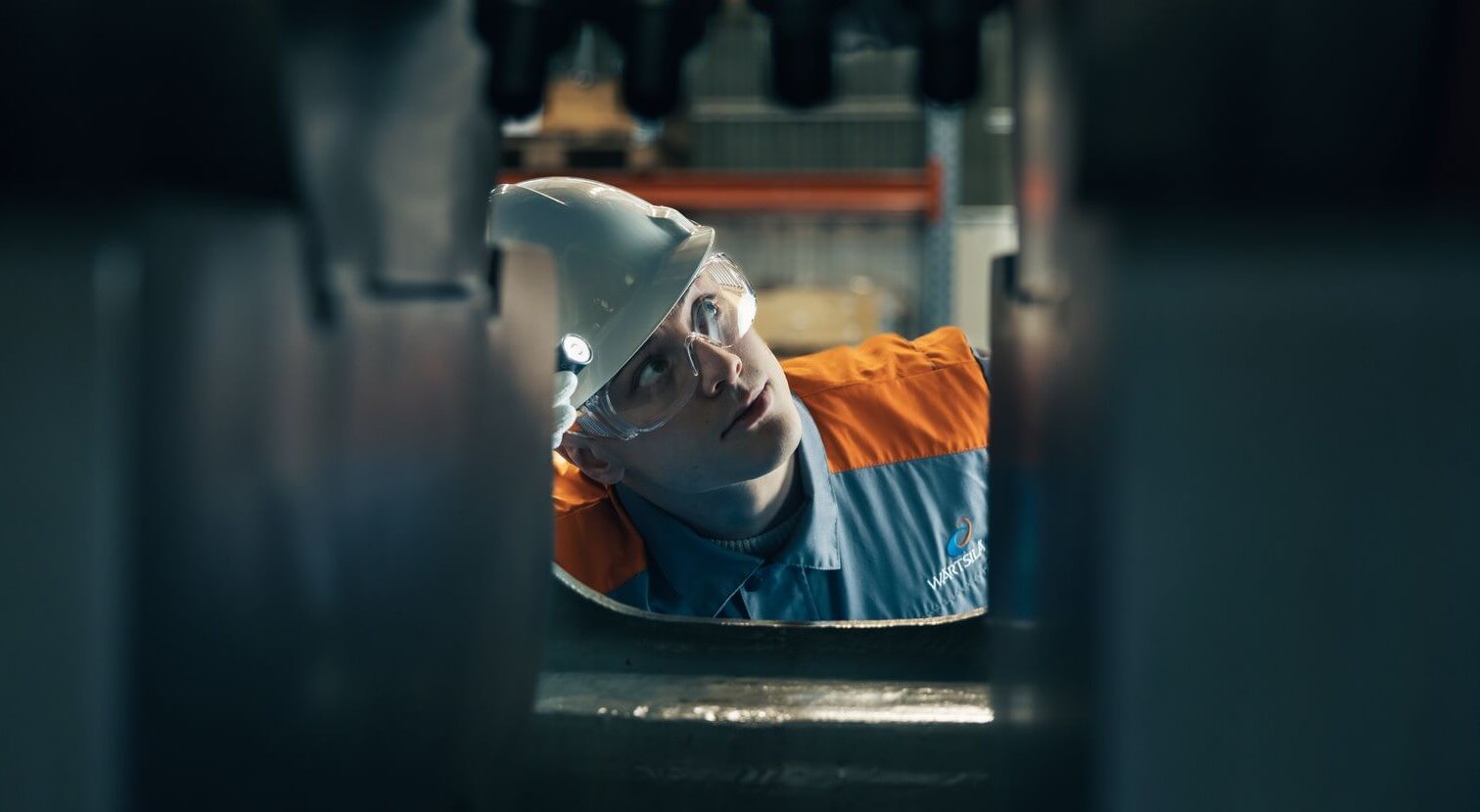
Ensuring engine safety like never before
The Early Detection of Extreme Engine Events (EDE3) project has taken on this challenge, by bringing together energy, technology and data experts to enhance engine safety and reliability. The project aims to develop a framework for real-time identification, characterisation and prevention of extreme engine failure events. The framework will integrate on-engine monitoring, fault simulation modelling, and adaptive signal processing to fault prediction mapping. In addition, fault cases will be created and measured in an experimental manner.
The project is led by Turku University of Applied Sciences (TUAS) and is a part of the Wärtsilä WISE programme, a Business Finland co-funded collaboration with the ambitious aim of developing zero-emission balancing power to help accelerate decarbonisation. Alongside Wärtsilä and two research groups at TUAS, the consortium partners include AGCO Power Oy, Nome Oy, Unikie Oy and EDRMedeso Oy. EDE3 is based on innovative collaboration between all parties. The combination of various expertise enables a strong process throughout.
The project will use Finite Element Analysis (FEA) to model normal operation and fault scenarios such as fuel injector failure, connecting rod damage, and piston seizure. FEA is also applied to simulate physical phenomena, supported by adaptive signal processing methods for detecting abnormalities such as vibration, velocity, or pressure signals. The anticipated outcomes include improved engine reliability, reduced operational risks, and a foundation for novel commercial maintenance solutions, potentially reaching way beyond the consortium’s own products. Additionally, this project will provide Wärtsilä and other energy operators with concrete tools for detecting and preventing severe heavy machinery failures before they occur, thereby increasing operational profitability.
“The main goal of the EDE3 project is to predict extreme engine events. These types of events are of course very expensive - we try to avoid them and save money

Wärtsilä’s know-how in the remote maintenance of power plants will provide first-hand expertise, engine event cases, and other crucial information to steer the development of the framework. The EDE3 project aims to contribute to creating long-term value for Wärtsilä and its customers, by ensuring engine availability, reliability, reduced fuel consumption, lower maintenance costs, and sustainable operations. It also aligns with Wärtsilä's vision of leveraging digitalisation to enhance power plant reliability and availability, while enabling predictive and smarter operations. The strong commitment to delivering safe and reliable energy production is what constantly drives the innovation forward.
While the EDE3 project is developed and validated in the context of flexible engines, the need addressed is much broader: predictive diagnostics of severe failures in heavy machinery. These include rotating machinery (e.g. turbines, compressors), battery systems (e.g. thermal runaway), and hybrid-electric platforms. The innovative EDE3 initiative responds to an internationally recognised demand for further enhancing proactive, forward-looking diagnostics, based on strong physical modelling. This advanced development will accelerate the shift away from reactive maintenance and enable safer, more reliable, and more efficient industrial systems all over the world.
Once every six weeks, you will get the top picks – the latest and the greatest pieces – from this Insights channel by email.