When
utilities embark on the path to decarbonisation, the playbook often looks
uniform: procure a renewable energy plant, add battery storage, and install an
energy or battery management system specifically
tailored to the new green assets, leaving the broader system to manual or
siloed dispatch. Too
often, utilities restrict their management system scope to the renewables and
BESS alone, missing the vital layer of system-wide optimization needed across
all generation assets.
Even when a comprehensive energy management system is deployed, treating it as a simple "set-and-forget" product creates a dangerous illusion of control. Live power systems are fluid, dynamic, and constantly changing. From everyday fluctuations in customer load and asset availability to the complex integration of renewables, an isolated grid lacks a larger continental power network to fall back on if something goes wrong. You are only as efficient and stable as the system running on your own ground.
For
Wärtsilä and our collaboration with Aqualectra, the success of the Curaçao
project serves as a textbook blueprint for why true decarbonisation requires
both comprehensive system-level scope and active, outcome-based lifecycle
partnerships that continually adapt to these dynamics.
A primary misconception among isolated grid operators is that an energy management system can be procured as a standalone component restricted solely to managing batteries and new solar or wind generation. By viewing green assets in a silo, utilities miss the vital layer of optimisation needed across all generation assets.
Furthermore, some operators harbour initial concerns that a solution from an engine manufacturer might not be fully aligned with maximising their own operational value and specific targets. Under our outcome-based lifecycle agreements, the opposite is true.
We are committed through our agreement to ensuring that the entire system operates as well as it can and delivers our customers' desired outcomes. The agreement aligns our interests directly with those of the customer by linking compensation to measurable performance outcomes. As a result, we are accountable for delivering real value, including minimizing the levelized cost of electricity (LCOE), maintaining overall system reliability, and maximizing renewable energy penetration.
Operating under an active lifecycle agreement means the Wärtsilä Energy Management System (EMS) is continuously supported by deep technical analysis, tuning, and performance monitoring. Rather than walking away after installation, our engineering teams constantly analyse live operational data, from wind speed variability to asset utilisation patterns, to adapt the software to reality.
This continuous feedback loop yields immediate, tangible results. For example, following initial deployment at Aqualectra, subsequent analysis revealed that the system's pre-configured reserve requirements were unnecessarily conservative. By fine-tuning those constraints through ongoing lifecycle support, our team successfully optimised reserve margins without compromising grid stability. This adjustment allowed assets to run at higher loads, translating into fuel consumption benefits and lower operational costs for the utility.
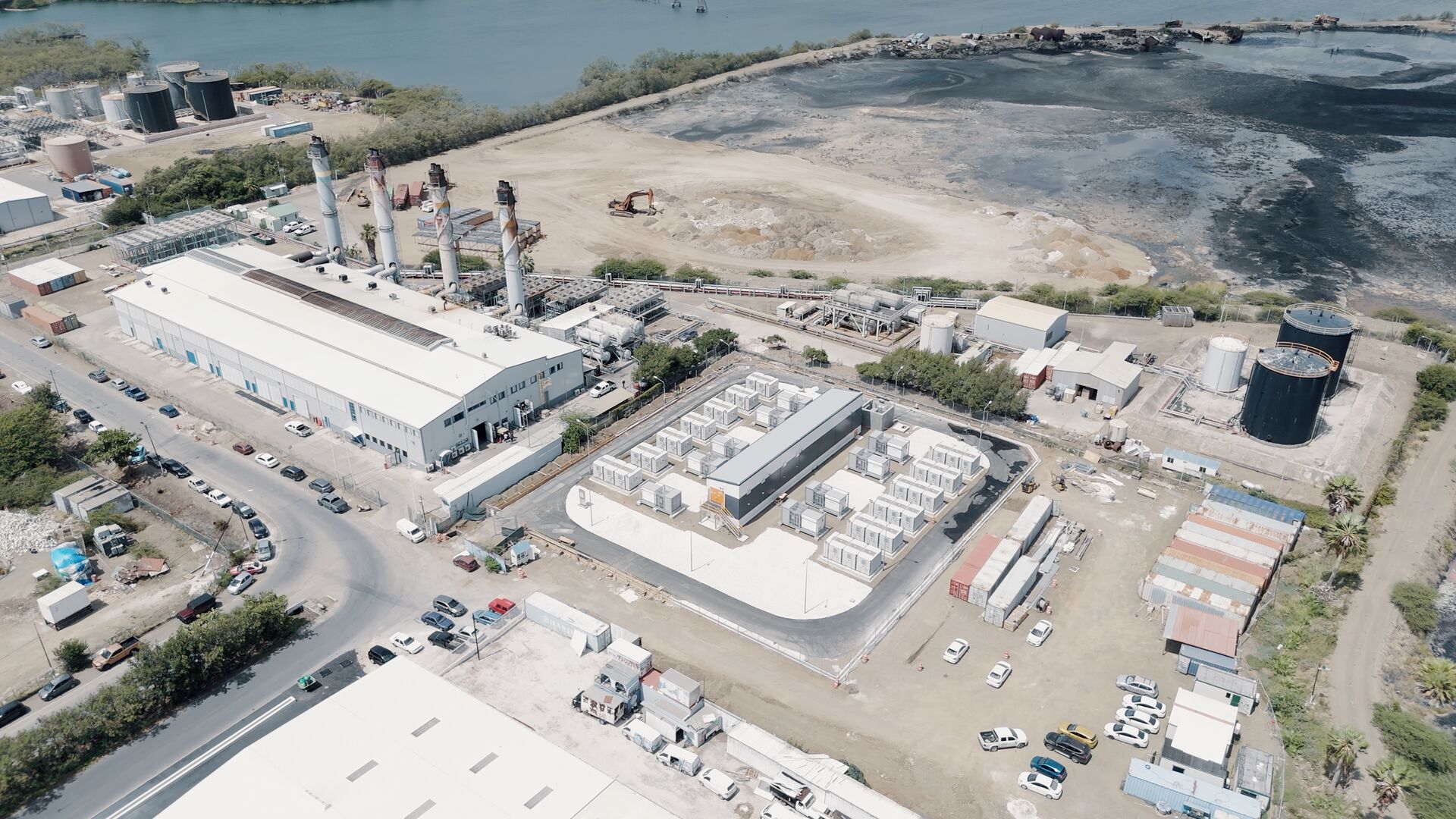
While the Wärtsilä EMS is technology-agnostic and capable of integrating diverse renewable suppliers and hardware, overall system optimisation must account for thermal assets—since that is where fuel is burned and system reliability is ultimately ensured. Our extensive domain expertise in engine technology further ensures that this reliability backbone operates optimally and in perfect harmony with incoming renewables.
As engines manage the heavy lifting where fuel is burned, optimising their behaviour is just as critical as managing incoming solar and wind. Through active collaboration with site teams, we have fine-tuned engine parameters within the Wärtsilä EMS, such as maximum and minimum up-and-down times, to ensure the thermal assets work in perfect harmony with incoming renewables.
Working
closely alongside Aqualectra's team, combining our remote advisory and BESS
support with their strong capabilities, allows us to address operational shifts
head-on and ensure that theoretical models translate seamlessly into practical,
real-world stability.
As island nations race toward ambitious clean energy targets, such as Aqualectra’s trajectory toward a 70% renewable share, the challenges of renewable variability require more than just new hardware. They require a partnership model that bridges the gap between software design and live execution.
By combining technology-agnostic optimisation, outcome-based accountability, and continuous lifecycle engineering support, the Wärtsilä and Aqualectra collaboration proves that the future of microgrid decarbonisation relies on a unified approach: one where software, services, and deep system expertise evolve together every single day.
Once every six weeks, you will get the top picks – the latest and the greatest pieces – from this Insights channel by email.