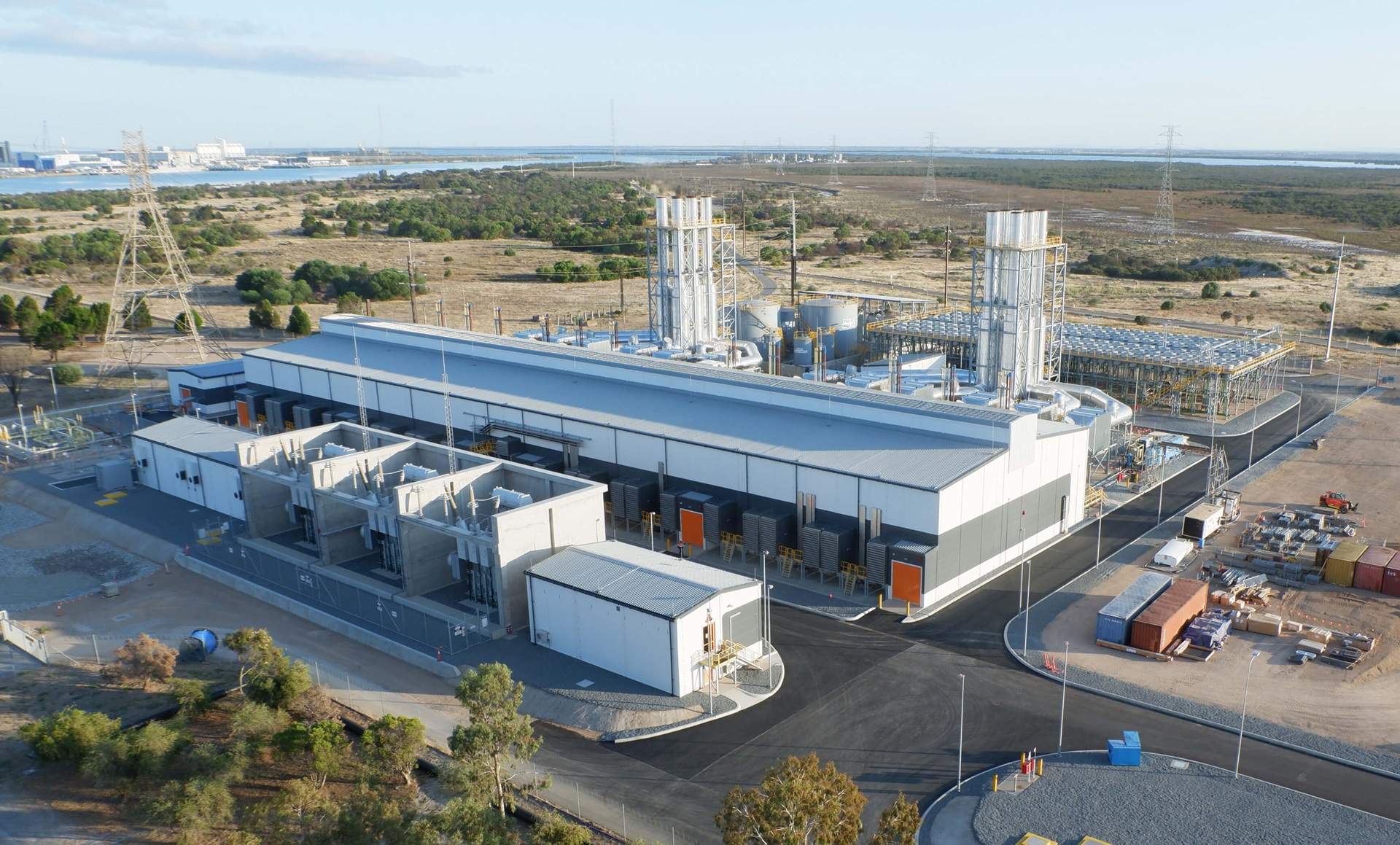
South Australia's renewable share has climbed to around 78 per cent of generation, placing the state among the power systems with the highest shares of renewable energy in the world. Barker Inlet Power Station, delivered to AGL Energy at the end of 2019, was designed to operate in a power system with growing shares of renewable energy. The 211 MW plant, featuring dual-fuel reciprocating engines, was built to provide firming capacity for renewable generation rather than operating constantly in baseload mode. Six years later, the way the plant is being used continues to evolve.
Electricity demand in South Australia has continued to grow while renewable generation has expanded further. Although renewables now provide most of the grid's generation, Barker Inlet continues to record substantial running hours, shaped by weather and demand variability.
Equally notable is when the plant is running. The plant has traditionally been busiest during autumn and winter demand peaks, though its operating profile can vary significantly from one year to the next, depending on rainfall, wind conditions and solar generation. Variable weather patterns are making seasonal demand and renewable output more difficult to predict. Barker Inlet’s running hours are increasingly extending into summer and spring as well. This points to a broader role for firming capacity across all seasons, rather than only during a limited number of predictable peak periods. Barker Inlet appears to be called on more often to help support system balance across a wider range of operating conditions.
The evening peak remains one of the most visible challenges in renewable rich power systems. As solar generation falls towards the end of the day and electricity demand remains elevated, dispatchable resources are needed to fill the gap.
Battery energy storage systems play an important role in this period and are particularly effective at providing fast response over short durations. South Australia's experience, however, demonstrates that the evening peak is only part of the balancing challenge. A more demanding test comes during extended renewable drought periods when both wind and solar generation remain low for longer than a single evening. In these conditions, battery duration becomes a binding constraint. No matter how much battery capacity is installed, batteries still need sufficient stored energy and opportunities to recharge. When low wind and solar output persist, those opportunities may be limited. Firm, flexible capacity like Barker Inlet can help fill that gap, with the plant’s running hours extending well beyond the traditional evening peak.
This operating pattern reflects the plant's modular design. Its individual engines can be started or stopped independently, allowing the plant’s output to be adjusted to changing system requirements throughout the day and night. Instead of following a fixed operating profile, the plant can respond flexibly to system needs as they evolve.
Barker Inlet's changing utilisation profile is relevant beyond South Australia. The state is often viewed as an early example of how power systems operate as renewable penetration increases, providing insights that may become relevant elsewhere as energy transitions progress.
Significant changes are already underway across Australia’s National Electricity Market. Around 14 GW of coal-fired generation is expected to retire by 2035, increasing the need for new ways to maintain reliability as the share of renewable generation grows.
While every market will follow its own transition path, South Australia's experience indicates that the need for flexible balancing capacity does not disappear as renewable penetration rises. Instead, the nature of that need evolves. Year-to-year variations in weather, and therefore in wind and solar output, add another layer or uncertainty for system planners. Flexible assets may be called on across more seasons, during more hours of the day and under a wider range of operating conditions than originally anticipated.
Barker Inlet's latest operating data offers a glimpse of what the future could look like. Six years after entering service, the plant is more relevant than ever, running more frequently and supporting the power system across a wider range of conditions than during its early years. As renewable generation continues to expand, similar operating patterns may become increasingly familiar across other parts of Australia's electricity system.
Learn more: AGL Energy Limited, Australia Barker Inlet Power Station
Once every six weeks, you will get the top picks – the latest and the greatest pieces – from this Insights channel by email.