When natural gas became largely available in Jordan, the Amman Asia Electric Power Company (AAEPC) decided to have the engines of the world’s largest combustion engine power plant commissioned for gas operation.
“We have achieved full flexibility in our IPP3 power plant. This means that we can now fulfil our power production agreement with an improved economy and significantly smaller environmental footprint,” says Mr. Hone Goo Park, Operation Director of AAEPC.
The Amman Asia Electric Power Company (AAEPC) is a consortium owned by the Korea Electric Power Corporation of South Korea (KEPCO), the Mitsubishi Corporation and Wärtsilä. At a time when Jordan was suffering blackouts, the National Electric Power Company of Jordan (NEPCO) awarded a contract to the AAEPC to build a grid-stabilising and independent power plant to remedy the situation.
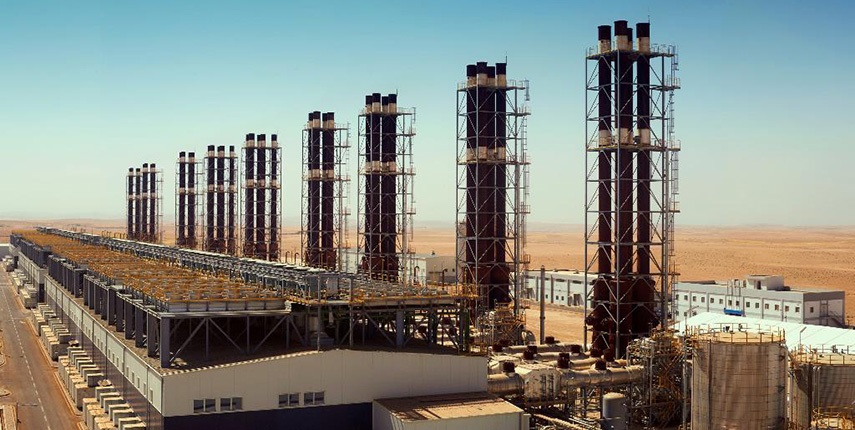
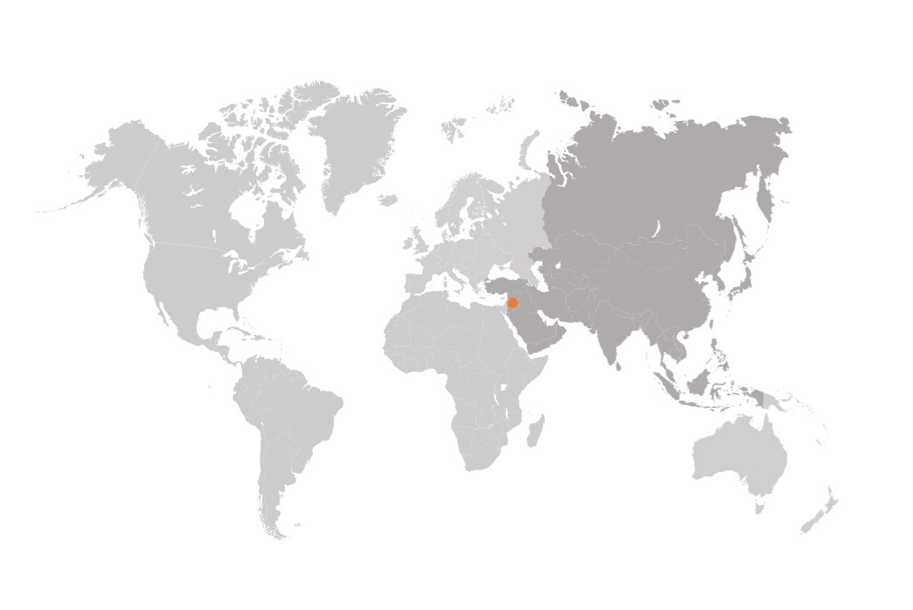
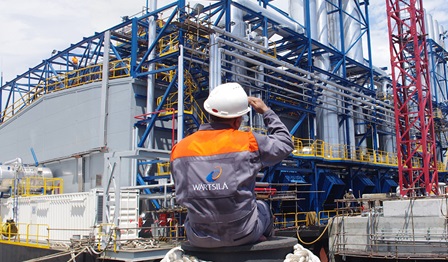
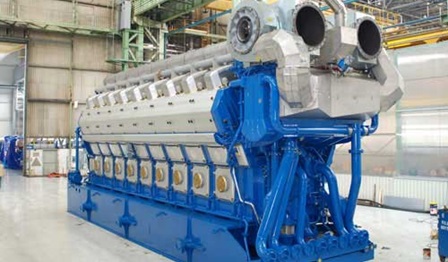
The world’s largest combustion engine power plant was built at Al Manakher, a green field site 814 metres above sea level and 30 kilometres outside the Jordanian capital, Amman. The IPP3 plant, delivered in 2014, has 38 Wärtsilä 50DF engines, 22 of which provide base load for the country’s national grid, while the rest, 16 engines, serve peak load.
Natural gas is cheaper and cleaner
After the plant delivery, the engines were first run in HFO mode, because there was no reliable distribution of natural gas. Later, however, the NEPCO successfully signed a contract to purchase natural gas from the Middle Eastern countries. The reason why AAEPC decided on commissioning to gas operation is explained by Mr. Park:
– We did not get many opportunities to start up our power plant, because the cost for HFO was twice as high as for natural gas. In addition, the emissions of sulphur oxides and nitrogen oxides were much higher with HFO than natural gas.
Since Wärtsilä is the manufacturer of the engines in the plant and already has a huge amount of experience in this field, it was natural for the AAEPC to award the commissioning to Wärtsilä.
– The gas commissioning was carried out in two phases: first the 16 peak load engines, Wärtsilä 18V50DF, and straight after the 22 base load engines, says Mr. Park.
The commissioning services were made within a short timeframe and the PPA performance guarantees were achieved. Detailed commissioning procedures were utilized, reviewed and followed up on a daily basis by all parties. Project time challenges were solved through good cooperation and seamless active communication between Wärtsilä and the AAEPC.
– As a result, all milestones were completed ahead of the original schedule, says Mr. Park.
According to Mr. Park, there were never any big issues during the commissioning, due to a well customised schedule over 3 months. When there were some engine trips because of high charging air temperature, the Wärtsilä engineers cooperated with the R&D centre in Finland and quickly found out a solution.
Clear savings through commissioning
Mr. Park says that the personnel from Wärtsilä were amazing during the project time and achieved the set target in a professional way. Wärtsilä has also continued to provide comprehensive service support by optimising efficiency and performance.
– We trusted their performance and skills to carry out such work.
The customer has seen several important benefits after commissioning the plant for gas operation. For example, the plant load factor has increased by 3.5%.
– We have gained savings in operational costs after the gas commissioning, because it is not necessary to operate the SCR system anymore, Mr. Park says.
– When we use natural gas to run the plant, the level of nitrogen oxides in the exhaust gas has dramatically decreased. The operational savings, by not having to purchase urea, amount to approximately USD 52,000 per day at full load.
On behalf of the customer’s company, Mr. Park expresses his gratitude towards the entire Wärtsilä team for a job well done.
– If natural gas is available for a power producer, I would absolutely recommend other Wärtsilä customers to start commissioning work, since natural gas is a clean form of energy and most likely will reduce maintenance works, concludes Mr. Hone Goo Park.