
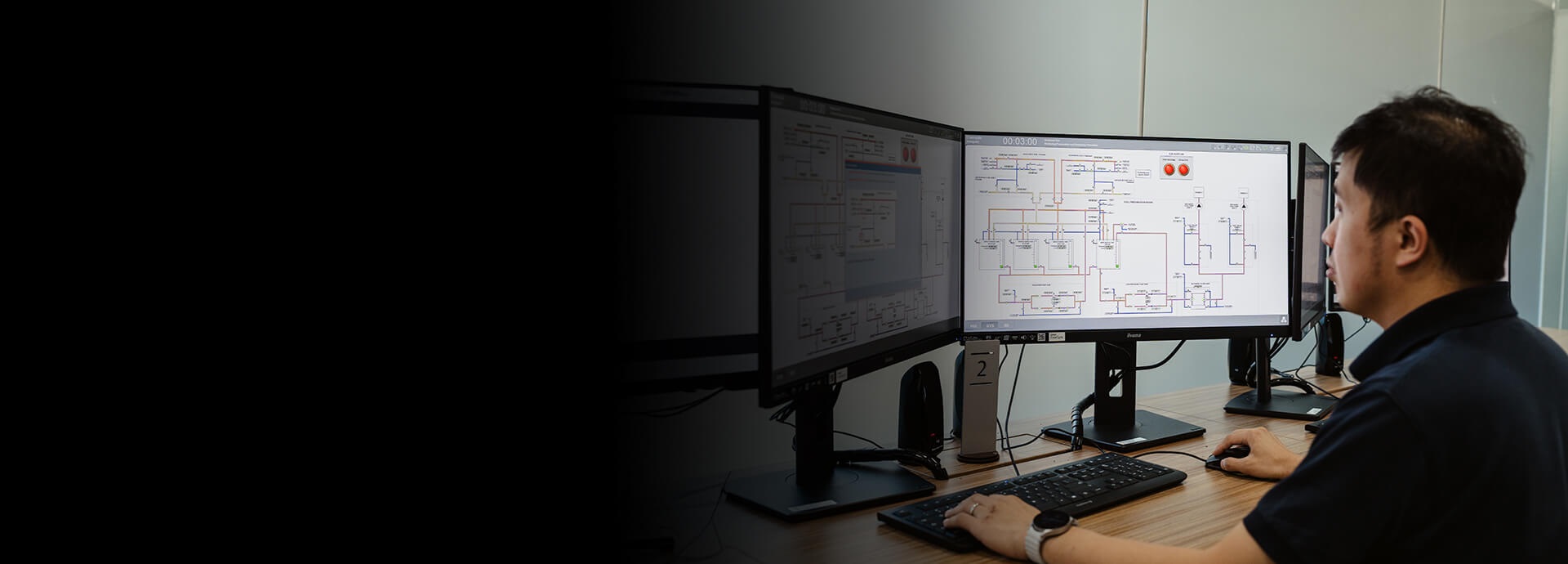
Wärtsilä Liquid Cargo Handling Simulators (LCHS) are designed to train and certify personnel responsible for the safe handling of liquid cargo and the operation of auxiliary equipment. The simulators are designed for liquid cargo tankers, gas carriers, and cargo terminals, as well as personnel responsible for the safe handling of cargo and auxiliary equipment. The simulators provide a detailed, true‑to‑life representation of vessel and terminal systems, supporting realistic and effective training in complex cargo operations.
Modern liquid cargo operations involve increasingly complex systems, tighter safety margins, and stricter regulatory oversight. Cargo incidents can have severe safety, environmental, and operational consequences, making realistic training essential.
Liquid Cargo Handling Simulators allow trainees to practise cargo operations, abnormal situations, and emergency response in a controlled environment, ensuring competence before operating on real vessels or terminals.
Wärtsilä’s Liquid Cargo Handling Simulators deliver comprehensive training and certification for personnel involved in liquid cargo operations. Trainees gain hands‑on experience with realistic cargo scenarios, learning to manage loading, discharging, stability, stress, and pollution prevention safely and effectively.
The simulator includes an integrated Load Calculator System (LCS) for real‑time calculation of tank volumes, hull stress, ship stability, and loading conditions, supporting safe cargo operations in line with STCW recommendations.
Automated e‑Tutor scenarios based on IMO Model Courses support assessment, record‑keeping, and self‑paced learning, reducing instructor workload and ensuring consistent training outcomes.
The solution supports both instructor‑led and automated training, enabling consistent assessment, flexible learning paths, and efficient use of instructor time.
The simulator provides a detailed digital replica of vessel and terminal cargo systems, combined with advanced visualisation and automation. Cargo operations are simulated using precise mathematical models that replicate real‑world behaviour under both normal and abnormal operating conditions.
The simulator is supported by an extensive ship model library covering all major oil and gas tanker types, with models based on real vessels for authentic training. The simulator supports multi‑cargo capability, enabling the simulation of virtually any cargo type using precise mathematical models for accelerated and realistic training.
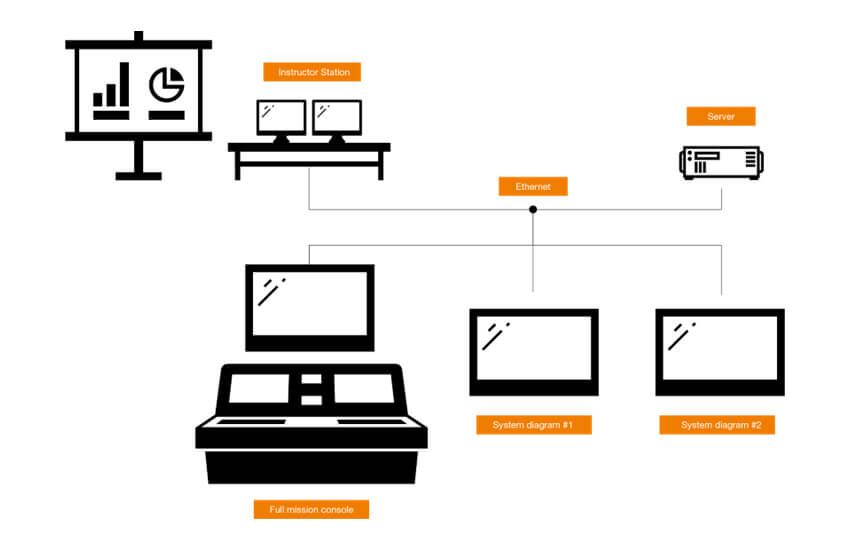
The training system is built around dedicated instructor and trainee workstations, each designed to reflect their real‑world operational roles.
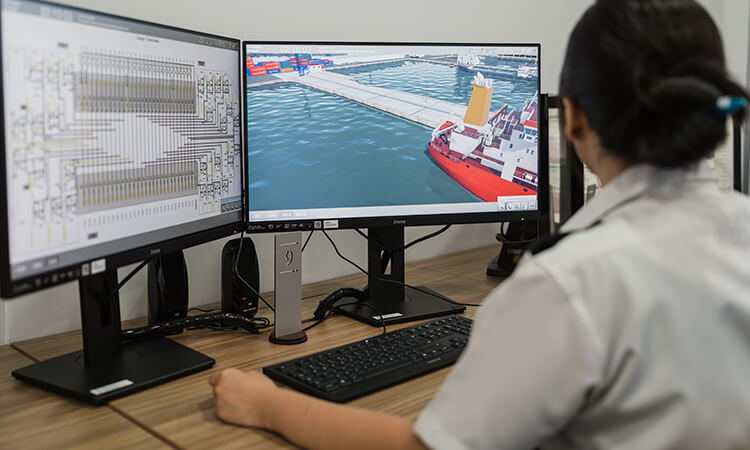
The instructor workstation features a dual‑monitor setup for exercise creation, live scenario control, and debriefing. It includes intercom functionality, audio and video logging, and e‑Tutor tools for automated assessment, performance tracking, and record‑keeping.
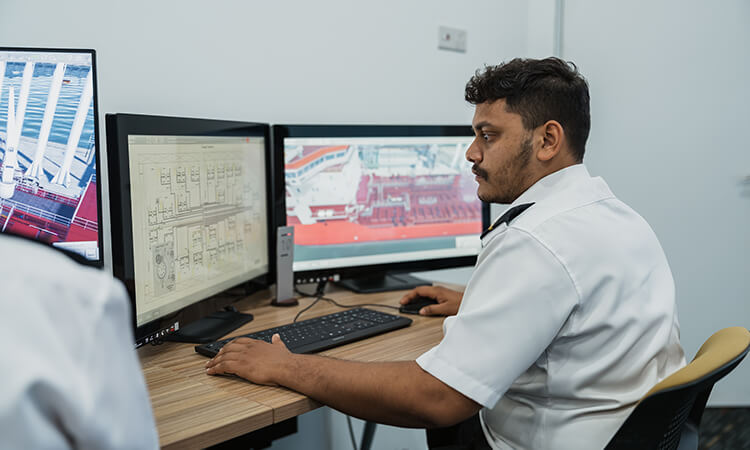
The trainee workstation provides a realistic cargo control room interface with animated 2D and 3D visualisation, CCTV views, and an integrated load calculator. Trainees use this environment to manage stability, strength, cargo transfer, and auxiliary systems during simulated operations.
Wärtsilä Liquid Cargo Handling Simulators are suitable for training personnel involved in:
The solution supports training across a wide range of operational roles, from trainees to experienced officers and terminal staff
The simulator includes detailed models of key cargo and auxiliary systems, including:
The Liquid Cargo Handling Simulator is available in multiple configurations to suit different training needs:
1. Cloud Simulation
2. Smart Realities
3. PC-based networked class for group and team training under instructor supervision
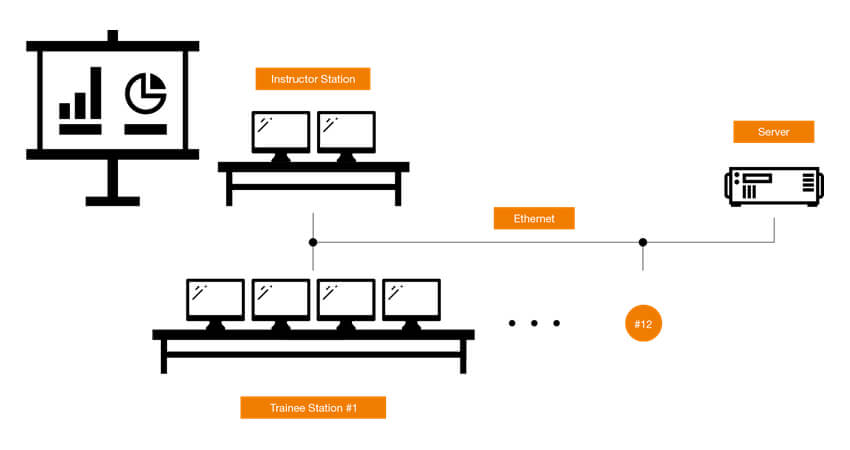
4. Full mission mode for professional hands-on training in a realistic, immersive ship-like environment
The Wärtsilä Liquid Cargo Handling Simulator meets the requirements of international standards, including:
This ensures suitability for both ship‑based cargo operations and terminal training programmes in line with OCIMF competence and assessment guidelines.
Contact Wärtsilä to discuss how Liquid Cargo Handling Simulators can support cargo safety, regulatory compliance, and operational competence