
Wärtsilä employee during maintenance work
Metal Stitching services

Cold metal stitching repairs for cracked engine blocks, casings, and housings in marine and energy applications. A proven alternative to replacement.

Metal stitching services – cold repair for cracked components

Cracked engine blocks, casings, and housings do not always require full component replacement.

When a critical component cracks, every hour of downtime matters. Replacing large parts can take weeks or months, and welding isn’t always a safe or viable option. Metal stitching helps repair suitable components on site with minimal disruption, protects alignment‑critical machinery, and reduces off‑hire risk – without compromising reliability.

Metal stitching services at a glance

  • Cold repair for cracked components that restores structural and pressure tight integrity without welding or heat input.
  • Repair instead of replacement, helping reduce downtime and avoid long lead times.
  • Preserves alignment and geometry by avoiding heat-related distortion and residual stresses.
  • Rebuilds load-bearing structure, not just sealing the crack.
  • Repairs are completed in situ, helping avoid dismantling, transportation, and associated costs.
  • Applicable to large components such as engine blocks, casings, and housings in marine and energy installations.

Metal stitching repairs cracks by rebuilding the structure of the component without heat, helping avoid distortion and reduce downtime.

What is metal stitching?

Metal stitching, sometimes also called cold stitching or cold pinning, is a precision mechanical repair technique for cracked metal components. Instead of using heat, the damaged area is restored by mechanically “stitching” the crack with our patented engineered stitching pins and locks that rebuild integrity and distribute loads.

The repair is engineered to restore the original strength, allowing the component to safely carry operational loads such as tensile forces, shear loads, and bending stresses in suitable cases.

A cold repair alternative to welding

Metal stitching is preferred when:

  • Heat input could cause distortion in alignment critical components
  • Welding could introduce residual stresses that increase the risk of new crack initiation or propagation
  • The component material or geometry makes welding high risk or impractical

What metal stitching can repair

In suitable cases, metal stitching can address:
  • Cracks caused by operational loads, fatigue, or external damage such as impact or incident
  • Cracks and fractures in structural sections of a component
  • Damage where restoring geometry, stability, and sealing performance is required
  • Repairs where minimizing dismantling and downtime is a priority

Example of a metal stitching repair

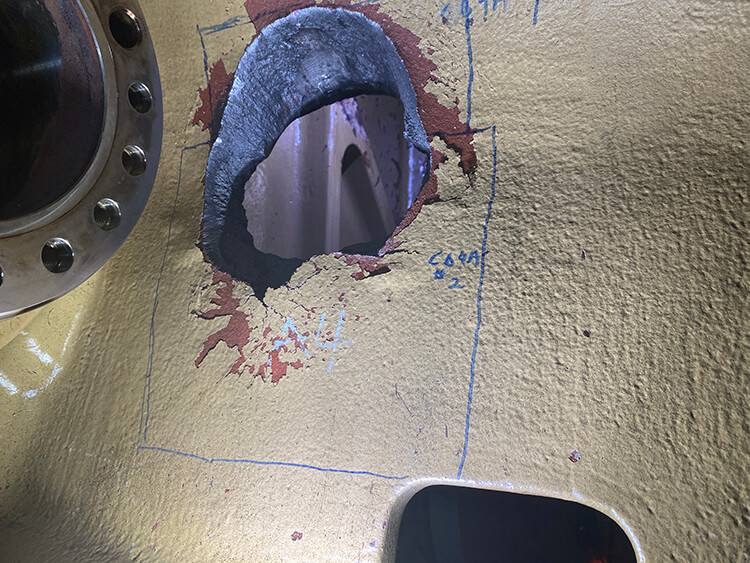
What is metal stitching

Connecting rod failure damaged the cam box housing.
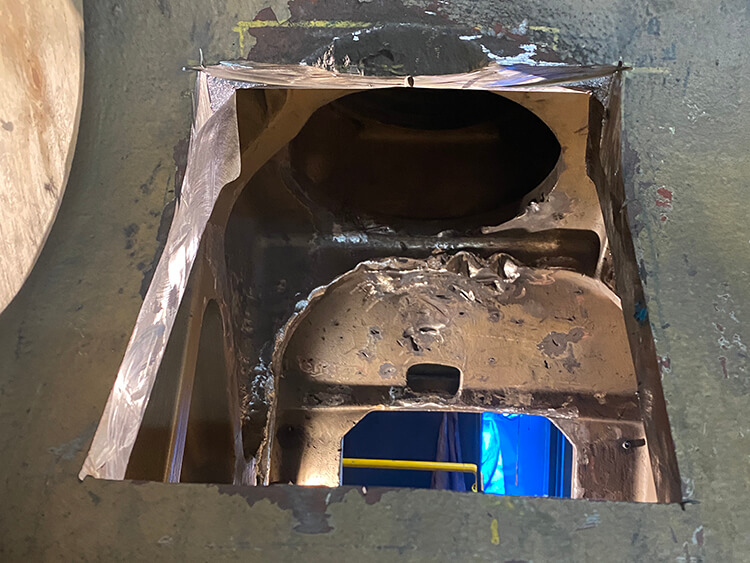
What is metal stitching

Damaged cam box section removed and prepared for repair casting.
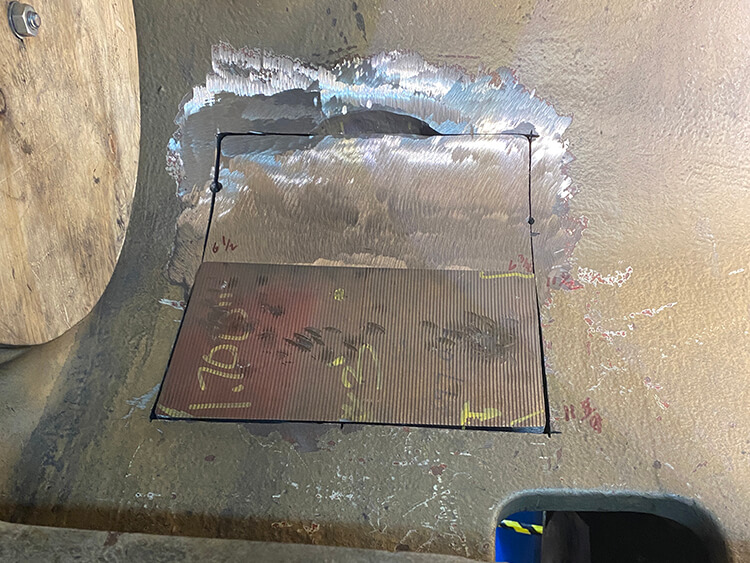
What is metal stitching

New 3D casting installed and secured with stitching pins.
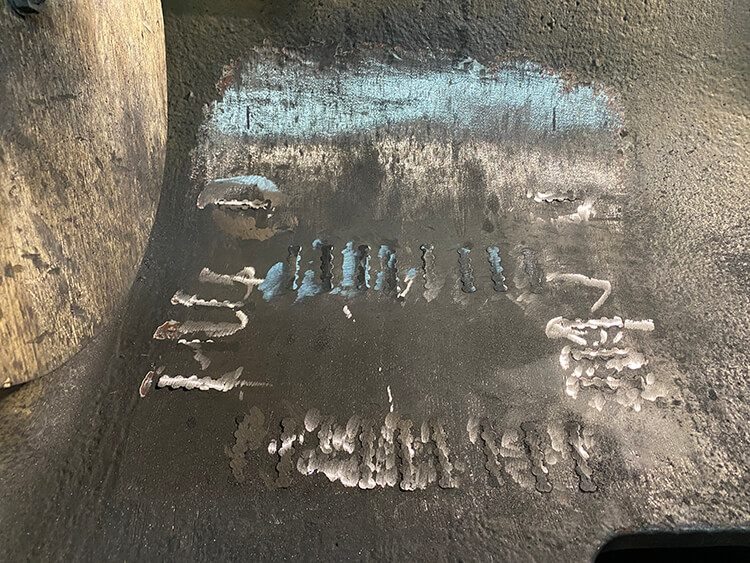
What is metal stitching

Precision locks installed to strengthen and stabilise the repair.
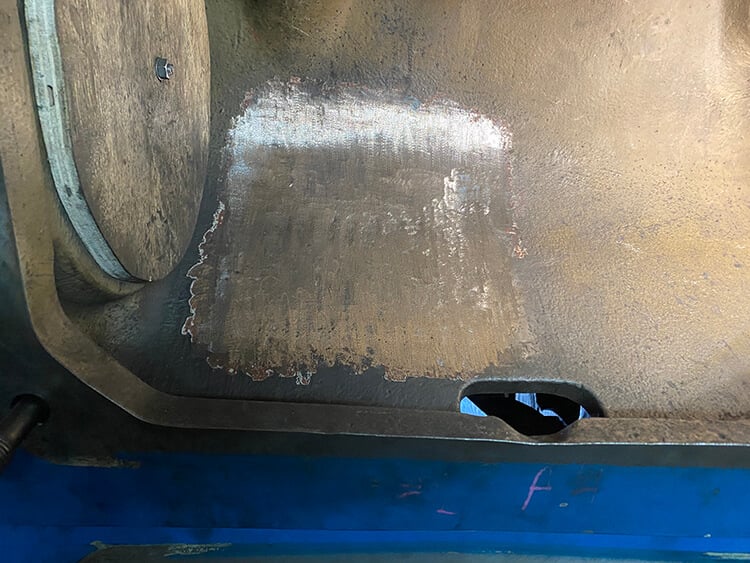
What is metal stitching

Repair blended and machined to restore original geometry.
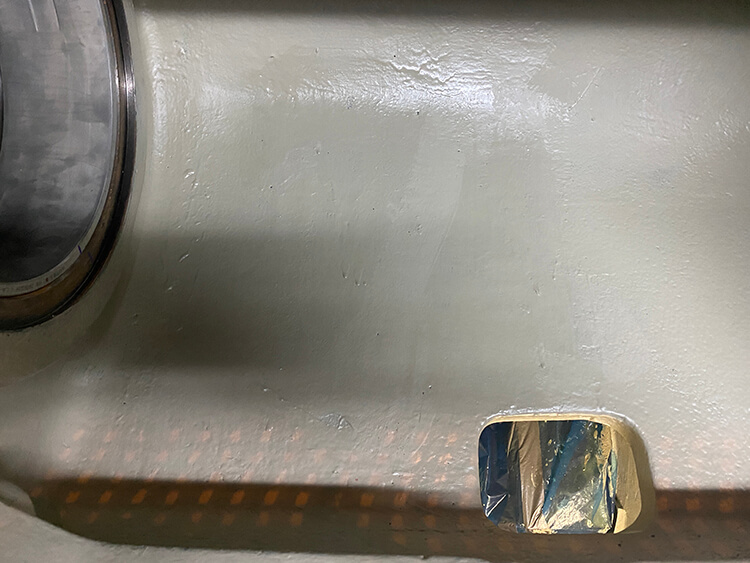
What is metal stitching

Completed repair restored structural integrity without replacement.

How the metal stitching repair process works

Wärtsilä follows a controlled approach to ensure suitability, reliability, and safe return to service.

Inspection and repair planning

This stage confirms that metal stitching is technically suitable and aligned with operational needs.

  • Damage assessment and suitability evaluation including crack length, and material thickness.
  • Repair method selection and scope definition
  • Engineering definition of the repair layout to support load transfer and permanent repair solutions.

Cold repair execution

The repair is carried out using precise, controlled cold-repair process, supported by dedicated tools and fixtures to ensure consistent quality and accuracy.

  • Precision Inspection of the damaged area to ensure all damage is restored.
  • Installation of stitching pins and locks to restore structural integrity and distribute loads
  • Controlled finishing of the repair area to match original geometry where required
  • Restoration and machining of critical features, such as bolt holes and surfaces, to original tolerances
  • Verification through appropriate inspection methods, including non-destructive testing where applicable

Verification and documentation

Verification helps ensure the repaired component can be returned to service with confidence.

  • Visual and dimensional checks
  • Testing where applicable (e.g., pressure/leak testing or non-destructive testing based on component needs)
  • Repair documentation for traceability and confidence

Typical applications of metal stitching 

Metal stitching and thread repair inserts can be used in marine and energy industries, across a wide range of equipment, including:

  • Engines and engine blocks
  • Cylinder heads
  • Gearboxes
  • Charge air cooler housings
  • Pump housings
  • Machinery casings and structural housings

If your component is not listed, Wärtsilä can help assess suitability based on material, crack location, access, and operating conditions.

How to choose between metal stitching, welding and replacement

The best repair path depends on material, crack location, damage extent, component criticality, access, and operational requirements. Understanding the differences helps reduce risk and avoid unnecessary replacement. Each option has clear technical limits, and the safest choice depends on engineering assessment and operating conditions.

When metal stitching is preferred option

  • Cast or heat sensitive components
  • Alignment critical machinery
  • Situations where replacement lead time would cause extended downtime

When replacement may be required

  • Damage beyond repair limits
  • Safety critical or regulation driven replacement needs
  • Repair cost exceeds the cost of replacement.

Quality and safety standards

Repairs are carried out by trained Wärtsilä specialists using standardised ways of working, with a strong focus on repair reliability, safety, verification, and documentation.

Where required, repairs may initially be classified as temporary and later confirmed as permanent following agreed verification and inspection – depending on the classification society, repair type, and application (case by case).
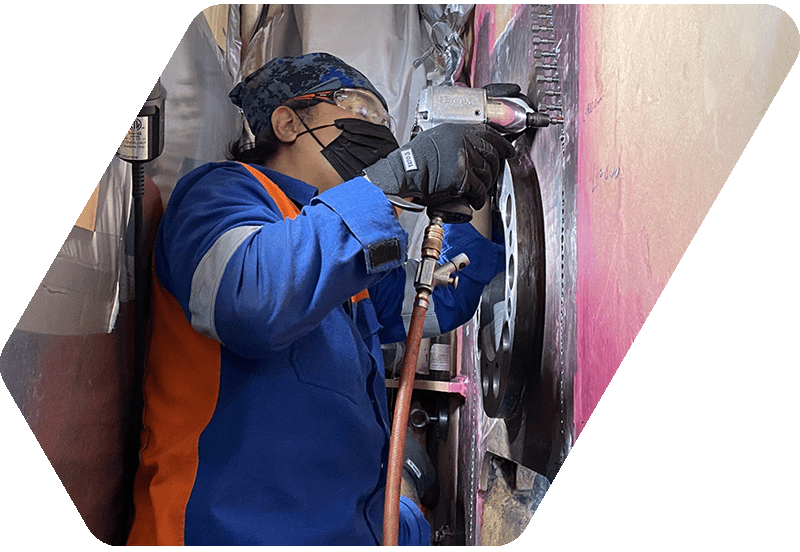
Metal stitching repair (pins and locks)

  • Restores cracked components using interlocking stitching pins and locks
  • Suitable for cast iron and selected other metals in applicable cases
  • Commonly used for engine blocks, cylinder heads, frames, casings, and cracks in castings

Thread repair inserts (bolt hole recovery)

  • Repairs damaged bolt holes using our patented high quality thread inserts
  • Restores threads to original condition with a high-strength, permanent solution
  • Restores bolt hole location, dimensions, and torque performance to support safe reassembly
  • Designed to control radial forces generated during fastener tightening, helping reduce the risk of crack propagation in repaired areas

service employee during Metal stitching services

Why choose Wärtsilä for metal stitching?

When a large component cracks, replacement is not always the most practical option. Manufacturing lead times, shipping, dismantling, and rigging work can extend downtime significantly. In suitable cases, metal stitching offers a faster, lower risk repair alternative.

Unlike surface level repairs, metal stitching enables structural reconstruction designed to remain stable in compression, helping the repair perform under cyclic operational loads in suitable applications.

Key benefits

  • Minimal dismantling: often little or no dismantling is necessary; access from one side may be sufficient.
  • No heat related distortion and re-cracking avoids heat input and the stress effects associated with welding.
  • Alignment retained: original alignments are maintained; re machining after repair is often not required.
  • Improved load distribution: the repair seam helps distribute tensile stresses over a larger area.
  • Sealing performance: when suitable and properly executed, repaired areas can be made liquid and gas tight, supported by verification practices.

Frequently asked questions about metal stitching

What is metal stitching, and when is it used instead of welding?

Metal stitching is a cold repair method used when welding heat could cause distortion, residual stress, or alignment issues – especially in large or cast components. It restores integrity through a mechanically engineered repair rather than heat based joining.

Which types of components can be repaired using metal stitching?

Engine blocks, cylinder heads, frames, casings, and housings – primarily in cast iron, ductile iron and steel along with selected other metals – subject to suitability based on damage location, access, and operating conditions.

Can metal stitching be accepted as a permanent repair?

In suitable cases, metal stitching can be accepted as a permanent repair following inspection and verification. Final acceptance depends on component criticality, application, and classification society requirements, and is assessed case by case. Wärtsilä’s metal stitching repairs are engineered to be permanent repair solutions.

Can metal stitching repairs be carried out on site?

Yes, all our metal stitching repairs will be performed on site or onboard, depending on access and safe working conditions. This can reduce dismantling requirements and downtime compared to workshop repairs or replacement.

How does metal stitching compare to replacement?

Metal stitching can reduce lead time and downtime by avoiding manufacturing and logistics delays, while also avoiding heat related risks. The best solution – repair or replacement – depends on suitability, safety, and operational requirements.

Repairing large castings supports decarbonisation by avoiding the emissions from producing and transporting new replacements. Extending component life reduces raw material use, energy consumption, waste, and downtime, leading to significant carbon savings compared with full replacement.

Restore cracked components with confidence

Cracked components don’t always need to be replaced. When applied in suitable cases, metal stitching offers a reliable cold repair alternative that helps reduce downtime while preserving alignment and structural integrity. Wärtsilä can support you in selecting the most appropriate repair approach – based on engineering suitability, operational risk, and verification needs.

Wärtsilä Marine. Let's connect.