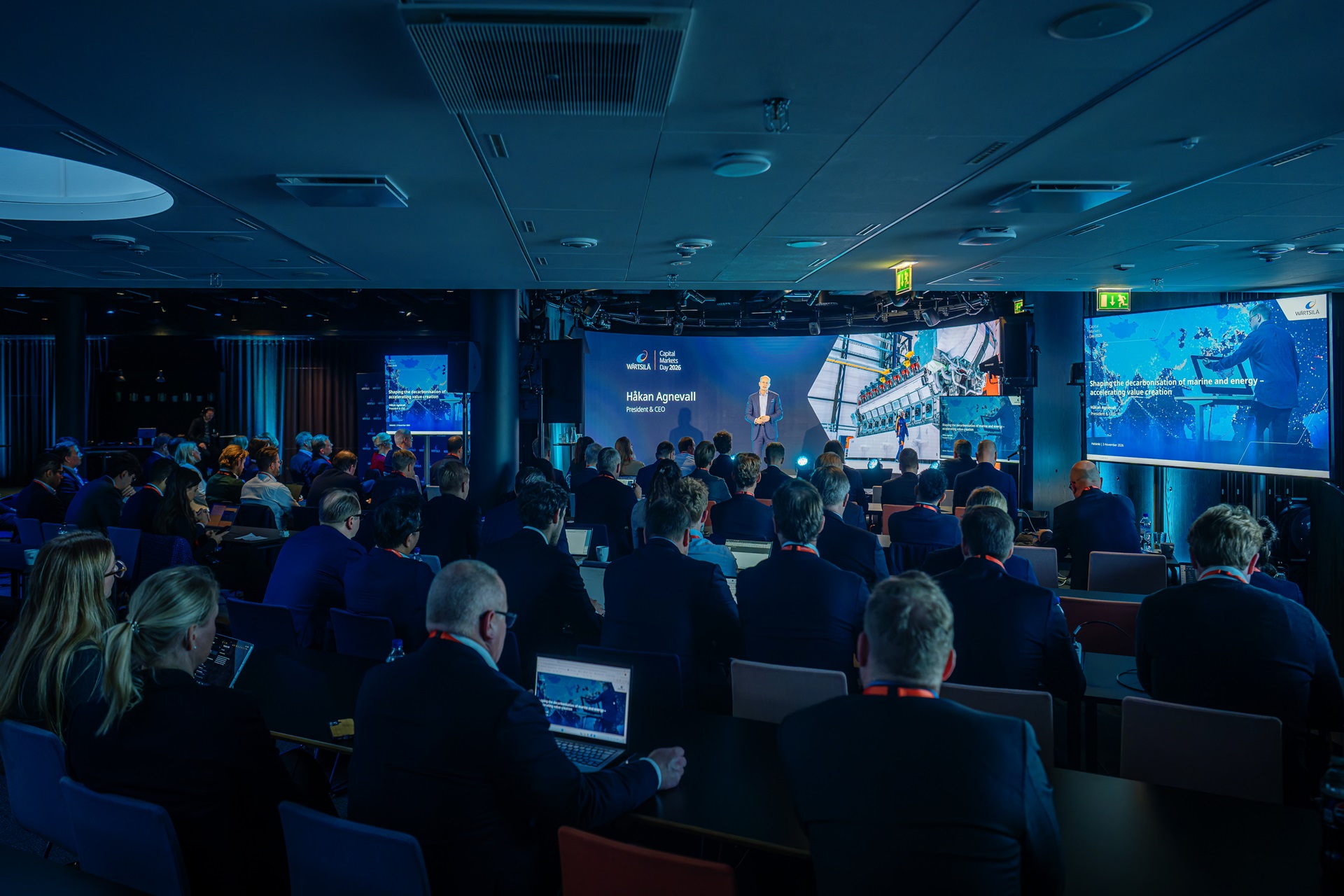
Wärtsilä welcomed investors and analysts to its Capital Markets Day 2026 in Helsinki and online on 3 November, to discuss how the company plans to accelerate value creation and reach its new mid-term financial targets. The event marked three years since the previous Capital Markets Day, a period during which Wärtsilä has become a more focused and profitable company.
The day focused on the significant opportunities ahead in the energy and marine markets and Wärtsilä’s plans to capture them through technology leadership, a growing lifecycle business and continued excellence in execution. President & CEO Håkan Agnevall opened the presentations, followed by Anders Lindberg, President of Wärtsilä Energy; Roger Holm, President of Wärtsilä Marine; and CFO Arjen Berends.
The recording of the presentations, and the presentation materials can be found here.
A solid path to accelerating value creation
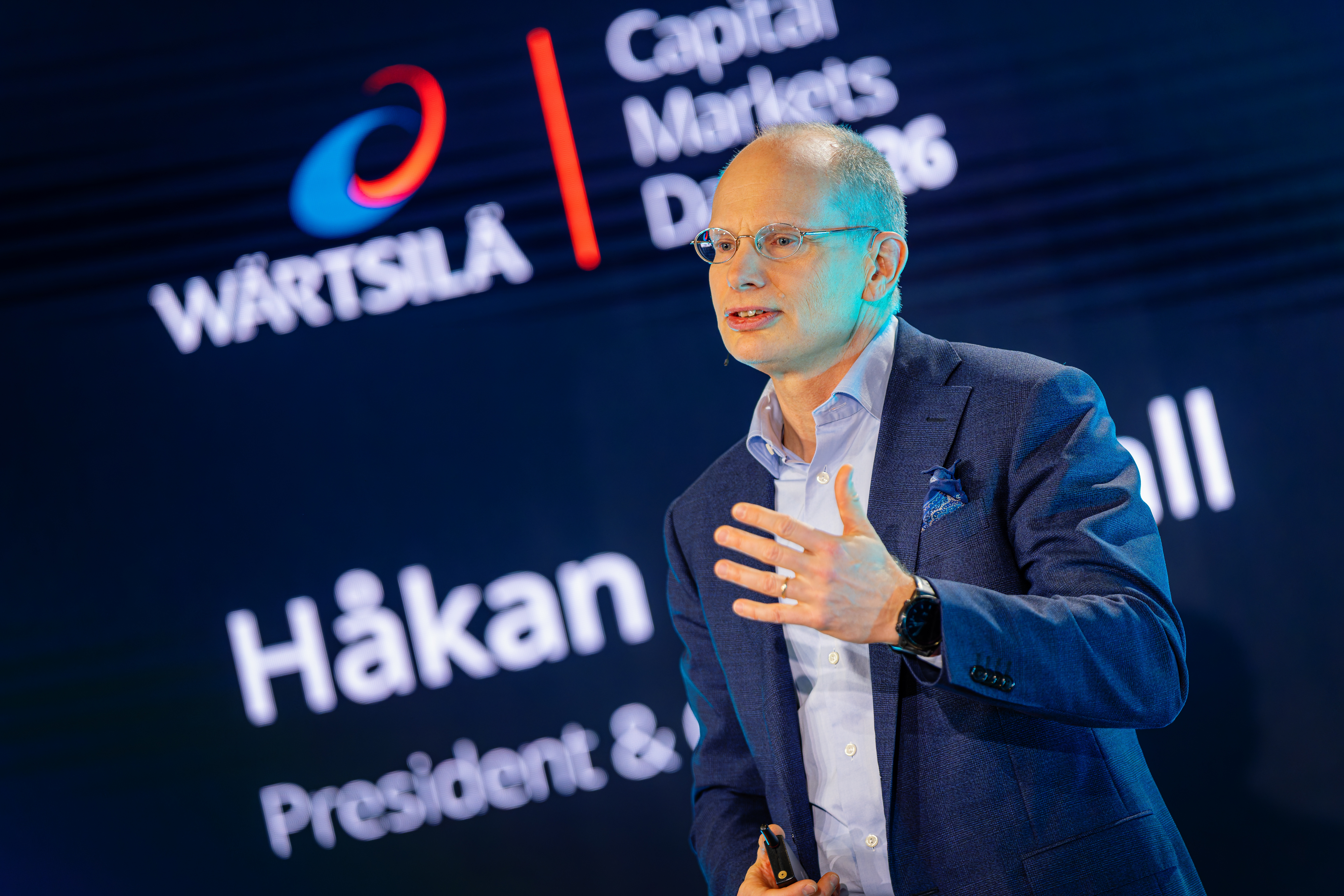
Håkan Agnevall opened the day by looking at the long-term changes taking place across Wärtsilä’s markets. In energy, rapidly growing electricity demand, increasing deployment of renewable energy and the need for flexible balancing capacity are creating significant opportunities. In marine, the decarbonisation transition and higher fuel costs continue to increase the importance of fuel efficiency and fuel flexibility.
Reflecting distinct market dynamics between Marine and Energy, Wärtsilä has raised its ambitions and introduced separate financial targets for its businesses. Marine targets mid-single-digit growth and a 14% operating result, while Energy targets high-teens growth and an 18% operating result. At group level, Wärtsilä targets low-double-digit growth and a 16% operating result, and also introduced a target of more than 90% free cash flow conversion from net profit, while retaining its dividend target of distributing at least 50% of earnings per share.
The path towards these targets is built around three main priorities: capturing equipment growth opportunities, transforming the expanding installed base into lifecycle business over the coming decades, and maintaining a strong focus on execution. Services already account for more than half of Wärtsilä’s business, and the significant expansion of the installed base is expected to create further lifecycle opportunities well into the 2030s and beyond.
Håkan also highlighted Wärtsilä’s investments in R&D, additional production capacity and digitalisation and AI. Wärtsilä will more than double its operational capacity by the beginning of 2029, while continuing to develop its technology leadership and resilient supply chain. AI is expected to support both customer value, for example through improved uptime, reliability and fuel efficiency, and Wärtsilä’s own productivity and processes.
Håkan's message for the day was clear: “The best is yet to come.”
Wärtsilä sees a solid path towards its financial targets based on market opportunities, its existing strategy and team, and continued focus on execution.
Energy: Capturing unprecedented opportunities for structural growth and profitability improvements
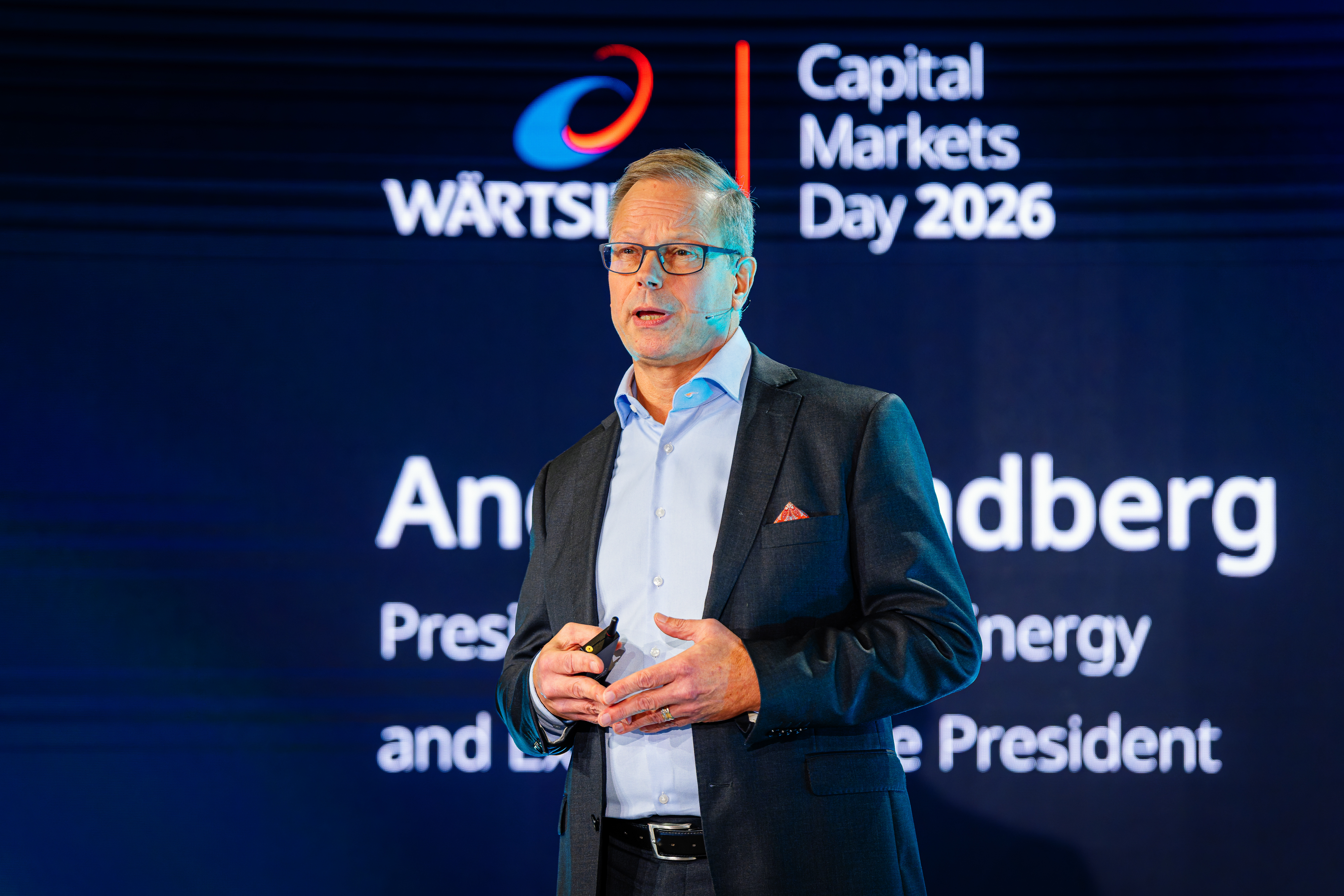
Anders Lindberg, President of Wärtsilä Energy, explored what Wärtsilä sees as a structural shift in the global energy market. Electricity demand is entering its highest growth period in history, increasing by more than 1,000 TWh annually until 2030, while 200 GW of ageing coal and turbine capacity is expected to be retired by 2030. The growth is broad-based: industrial electrification represents around 36% of the increase, cooling and heating 13%, electric vehicles 12%, other uses such as appliances 31% and data centres 9%.
As much of the new electricity demand is expected to be met by wind and solar, the need for flexible balancing power is increasing. Wärtsilä sees this as a significant opportunity for its medium-speed engine technology with 25% CAGR from 2026 to 2030 in Wärtsilä’s addressable market. Off-grid data centres provide another major growth avenue, with the off-grid share of future U.S. data centres estimated at 25% to 42% based on BNEF, Orennia, and Cleanview. Wärtsilä’s addressable market for data centres is expected to grow with 15% CAGR 2026-2030. Since mid-2025, Wärtsilä has sold more than 3 GW of power plants for data centres, and data centres currently represent around half of Energy’s order backlog. While today’s market is lead-time driven, Wärtsilä has strong confidence that its competitive position remains strong in the longer term as well, supported by efficiency, flexibility, modularity and lifecycle economics.
The strong equipment outlook is also building the foundation for future service growth. Wärtsilä expects to deliver approximately 13 GW of new Energy capacity by the end of 2030, of which 6 GW is already in the order book. Around 80% of these new deliveries are expected to have a service agreement in place before the start of operations, compared with 37% agreement coverage for the current installed base. Together with moving customers further up the service value ladder, Wärtsilä expects the new capacity to generate more than 50% higher lifecycle revenue per kilowatt than the current operating installed base. As each equipment sale can create a lifecycle opportunity of more than 20 years, the largest service growth impact is expected beyond the mid-term target period.
While data centres represent an important new growth opportunity, Wärtsilä's Energy growth story is much broader, supported by structural growth in balancing power, electrification, replacement capacity and selected baseload applications.
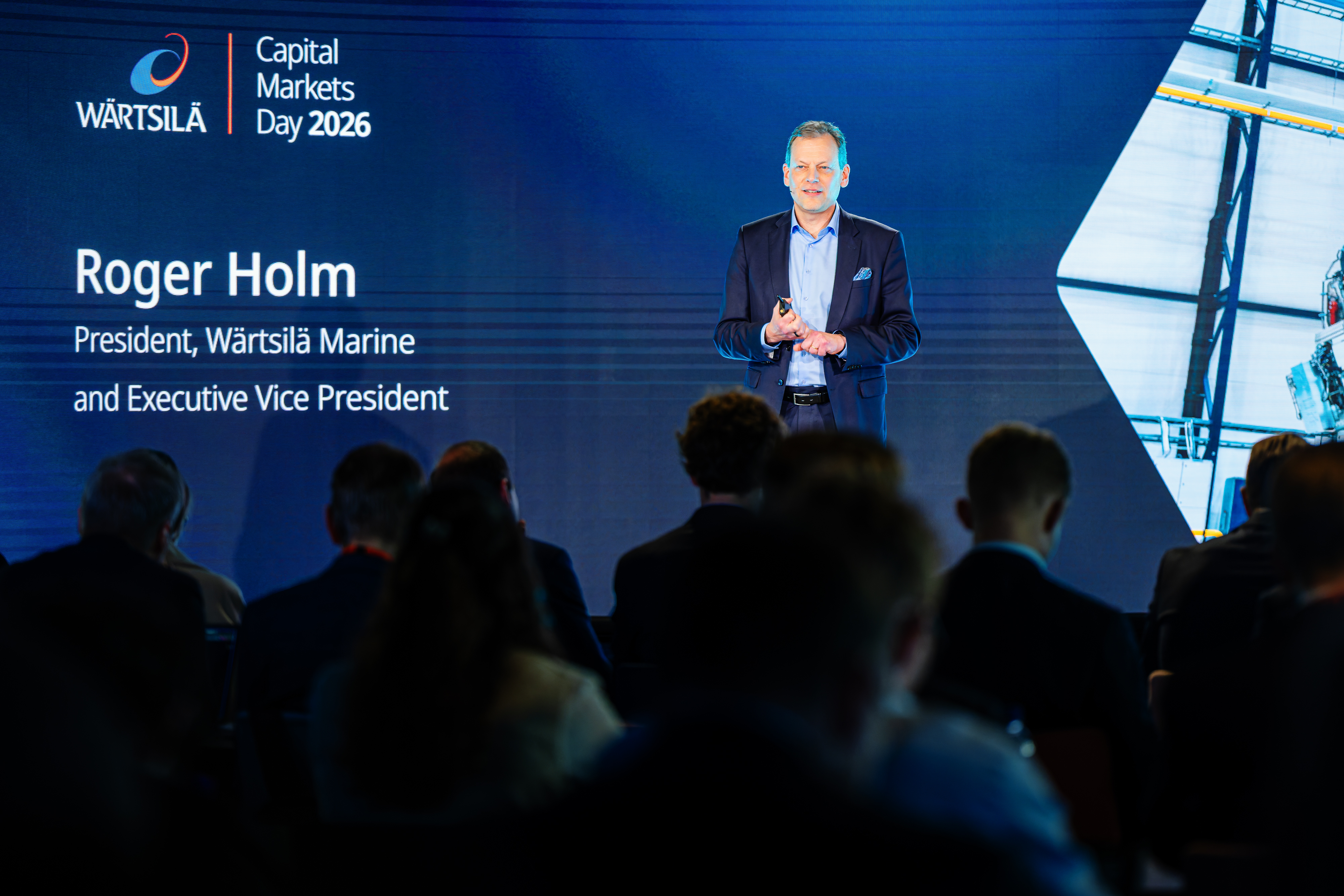
Marine: Decarbonisation leadership drives profitable growth in equipment and services
Roger Holm, President of Wärtsilä Marine, highlighted how growing regulatory complexity, evolving fuel choices and emission costs are increasing the importance of efficiency, flexibility and lifecycle optimisation. Wärtsilä aims to help shipowners optimise financial performance as they make long-term investment decisions amid the decarbonisation transition.
Wärtsilä has strengthened its position across key transition technologies, from fuel and operational efficiency to cleaning up emissions and alternative fuels. Fuel flexibility remains a key differentiator, supported by Wärtsilä’s 85% market share in alternative fuel medium-speed main engines.
The growing installed base also creates significant lifecycle opportunities. Wärtsilä estimates Marine deliveries of 17 GW by 2030, around half of which are expected to come from joint ventures. Of the total 17 GW, ~6 GW is already in the order book. Of these deliveries, around 70% are expected to use alternative fuels. These installations typically generate around 30% more customer service spend than conventional diesel, while increasing agreement coverage further supports the development of the lifecycle business.
"We continue to see good development on our 4-stroke medium speed engine market, especially what comes to main engines. By capturing above-market equipment growth, growing lifecycle revenues over many years and increasing value through excellence in execution, we will reach our financial targets", Roger states.
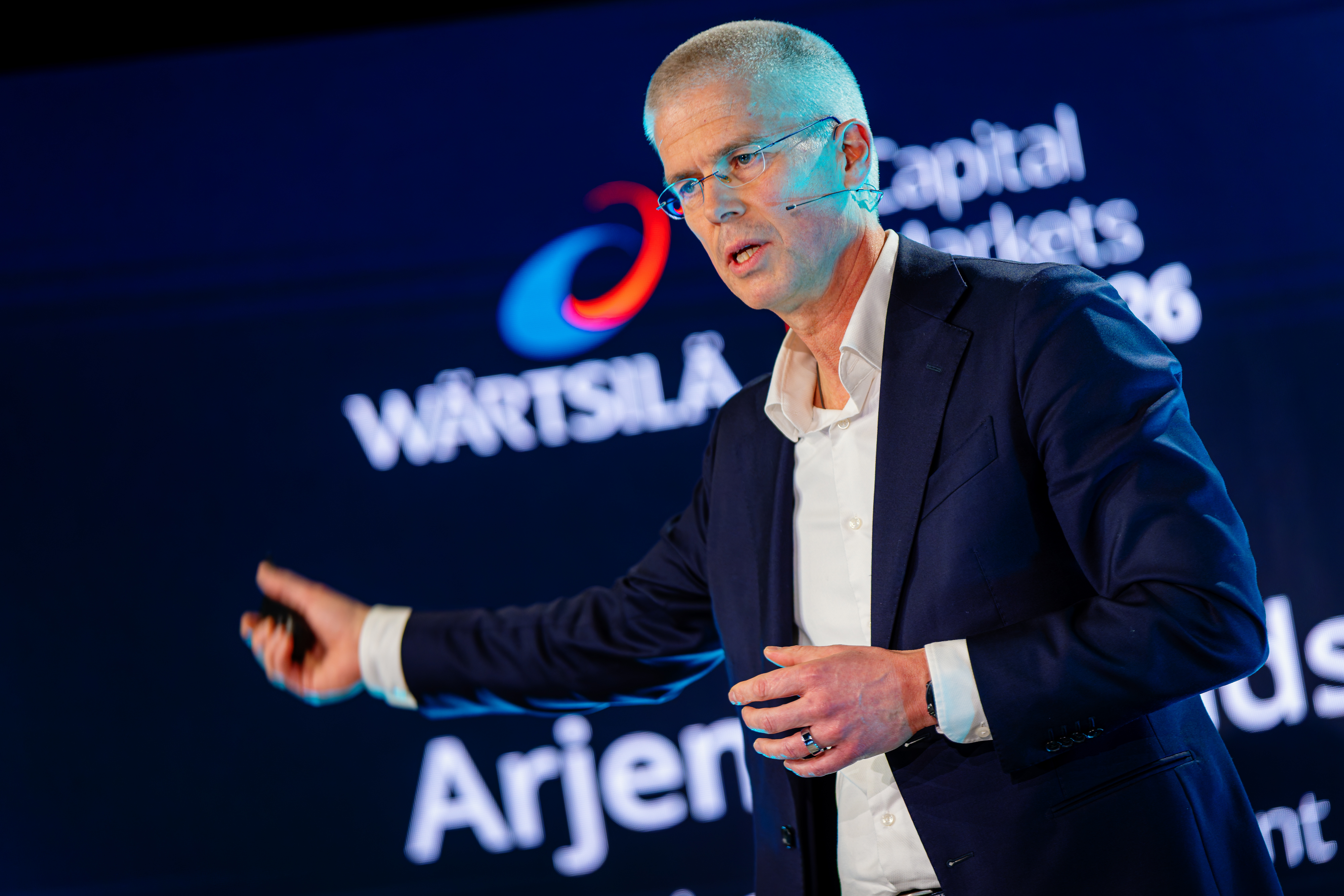
Solid path to mid-term financial targets and sustainable value creation
CFO Arjen Berends brought the different elements of the day together by outlining how the opportunities for growth and profitability improvement in Energy and Marine translate into Wärtsilä’s financial framework.
His message built on Wärtsilä’s track record of setting targets, delivering them and subsequently raising its ambitions, and Wärtsilä aims to achieve the new targets “sooner rather than later”.
A key theme was the quality and resilience of future earnings. Agreement coverage has increased to 37% in both Energy and Marine, Wärtsilä has continued investing in R&D and capacity, and working capital has been reduced despite significant sales growth. The company has also sharpened its portfolio through the divestment of 11 non-core businesses since 2019 and the establishment of its energy storage joint venture.
Wärtsilä is well positioned to capture attractive growth opportunities in both businesses, while profitability targets are supported by operating leverage and price realisation. Arjen highlighted that today’s equipment growth will provide the foundation for tomorrow’s higher-margin service business. In the near term, rapid equipment growth relative to services will have a dilutive mix effect on margins, but the expanding installed base is expected to create a significant service opportunity beyond the mid-term period.
Wärtsilä enters this growth phase with an all-time-high order book of EUR 9.9 billion, including EUR 2.8 billion in services. The company increases transparency by providing greater granularity on its order book and, from January 2027, changing its quarterly guidance from a demand outlook to a net sales outlook.
Growth and profitability are also expected to translate into strong cash generation and Wärtsilä targets >90% free cash flow conversion from net profit. While recent cash generation has benefited from customer advances, increasing volumes will also require working capital, which is nevertheless expected to remain negative over the mid-term.
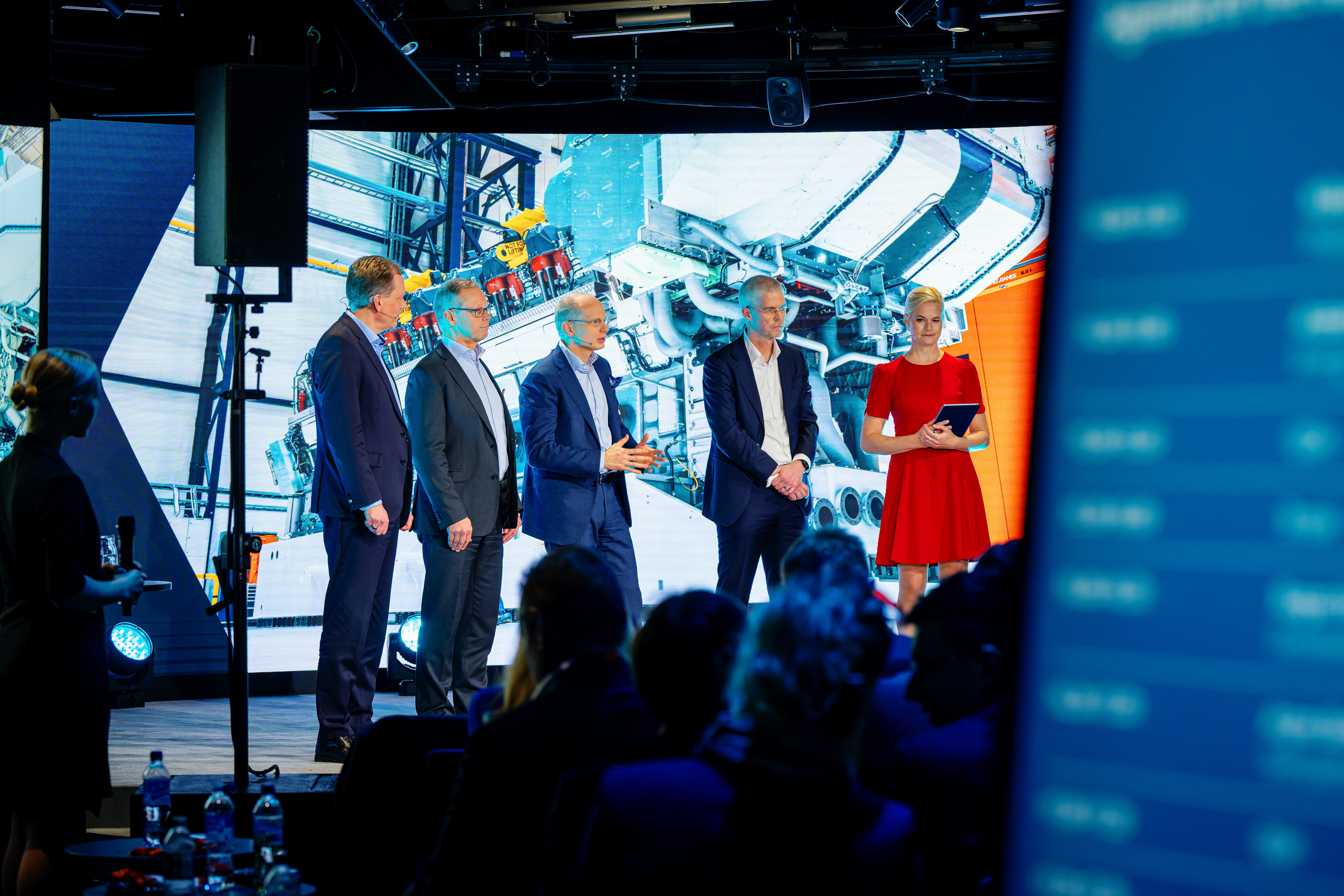
The best is yet to come
The presentations were followed by active Q&A sessions with investors and analysts, covering topics including capacity expansion, data-centre demand, pricing, services, margins, capital allocation and the resilience of Wärtsilä’s order book.
Closing the day, Håkan Agnevall returned to the central message of the event: He believes Wärtsilä has a solid path to its new targets, supported by favourable long-term market drivers, technology leadership, continued investments and a consistent strategy. The company is investing not for the short term, but to capture opportunities that extend well into the next decade.
“We have the right team in place. We have consistency on the strategy side. The market situation looks very favourable, and there are several long-term drivers for it”, stated Håkan.
Site visit to Sustainable Technology Hub in Vaasa: seeing Wärtsilä’s growth plans in action
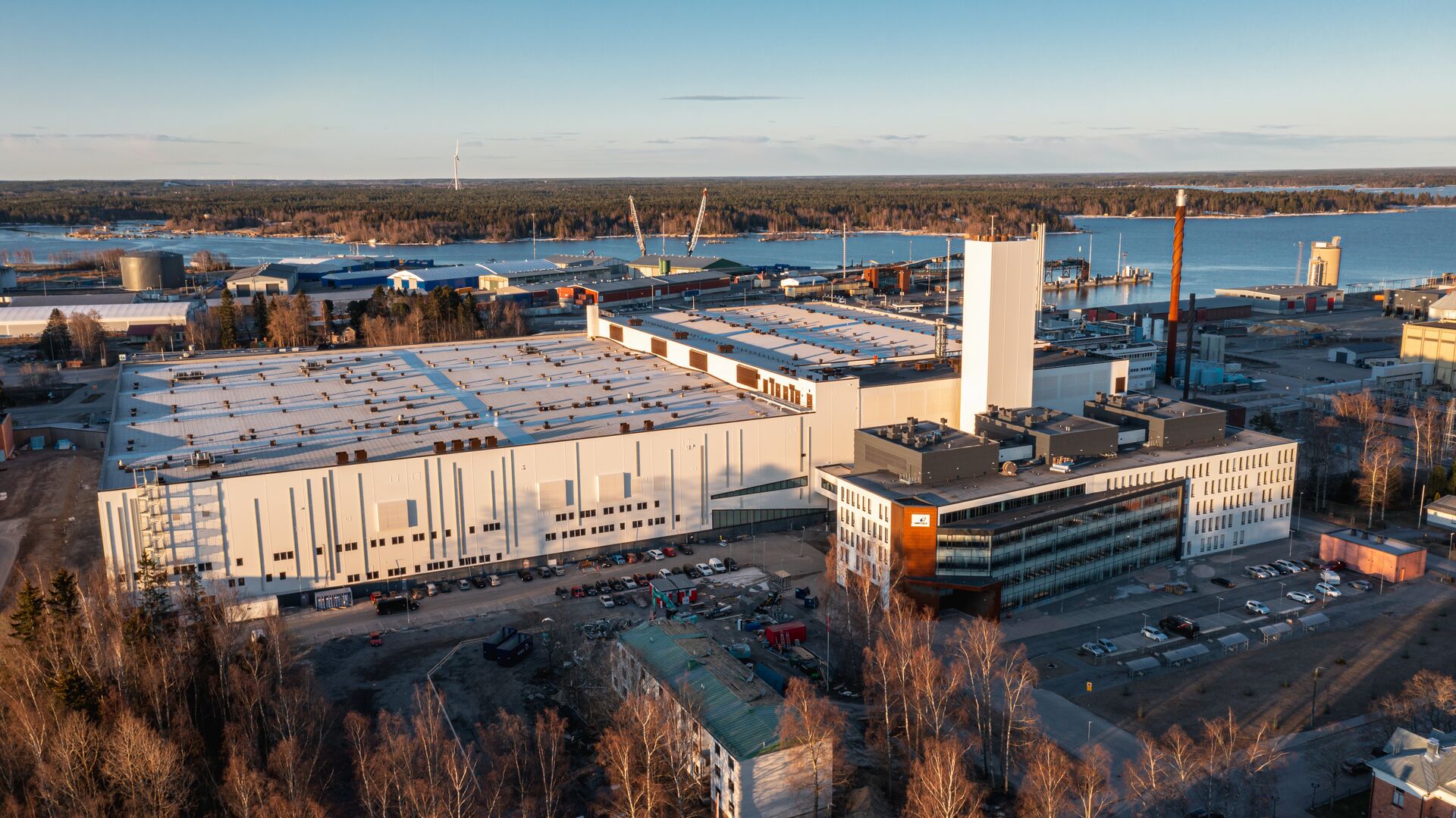
On the second day of Capital Markets Day, investors and analysts travelled to Wärtsilä’s Sustainable Technology Hub (STH) in Vaasa to see how the company is preparing for future growth in practice. Opened in 2022, STH brings together manufacturing, research and development, Marine and Energy expertise, lifecycle capabilities, training and remote monitoring.
The recording of the presentations, and the presentation materials can be found here.
The programme focused on three perspectives: engine manufacturing and capacity expansion, technology and R&D, and what customers especially in the Americas are looking for as energy markets evolve. The presentations were followed by a tour of the manufacturing facilities and Expertise Centre, giving participants a closer look at Wärtsilä’s production, testing and lifecycle capabilities.
Adding manufacturing capacity for future growth
Vesa Riihimäki, Director, Delivery Management, opened the site visit presentations with a closer look at Wärtsilä’s manufacturing capabilities and capacity expansion plans. Both Wärtsilä’s Marine and Energy engines are manufactured in Vaasa. Through investments already announced and under way, Wärtsilä is more than doubling is operational capacity by the beginning of 2029, a key investment area also highlighted during the first day of Capital Markets Day.
Capacity is being increased step by step, with investments focused particularly on testing capacity, critical component manufacturing and the supply chain. The first major capacity increase is expected to become operational in the first quarter of 2028, with full expansion available from the first quarter of 2029. Automation, robotics, lean manufacturing and optimised material flows will also support higher volumes and operational efficiency.
Entering 2029, operational capacity is expected to reach approximately 8 GW, comprising around 6 GW in Vaasa serving both Energy and Marine, and around 2 GW in Marine joint ventures.
Strengthening technology leadership
Juha Kytölä, Director, R&D & Engineering, continued with Wärtsilä’s approach to technology development. R&D is focused on efficiency, emissions reduction, fuel flexibility and future-proof solutions that create value both in new installations and throughout their lifecycle. Wärtsilä’s technology leadership is demonstrated through many achievements, such as world-record engine efficiencies demonstrated on several latest engine types and word-leadership in 4-stroke engine methane slip reduction.
Wärtsilä has reached the key milestones in its alternative fuel roadmap, focusing now on commercialisation and expanding engine platform. Development spans technologies including methanol, ammonia, hydrogen and hybrid solutions combining engines and batteries. Wärtsilä is also increasingly front-loading development through digital modelling, simulation and digital twins, supported by advanced computing. At the same time, connected equipment, AI and advanced analytics are creating further opportunities to support customers in improving reliability, efficiency and performance.
Growing opportunities in the Americas
Risto Paldanius, Vice President, Americas, Energy, brought the customer perspective to the discussion, focusing particularly on the opportunities Wärtsilä sees in the Americas. Demand is coming from both flexible balancing power and baseload generation, including the rapidly growing behind-the-meter market for data centres.
For utilities, Wärtsilä’s medium-speed engines provide flexible capacity to complement growing renewable generation. Data-centre customers, meanwhile, are particularly focused on speed to power, reliability, efficiency and scalability. Wärtsilä’s modular engine technology enables capacity to be added in stages as data centres expand, while its lifecycle capabilities support customers throughout the operational life of the assets. Wärtsilä focuses on credible, well-financed projects and established data centre developers.
This builds directly on the structural Energy growth opportunity presented on the first day, when Wärtsilä highlighted both increasing demand for balancing capacity and rapid growth in off-grid power generation for data centres.