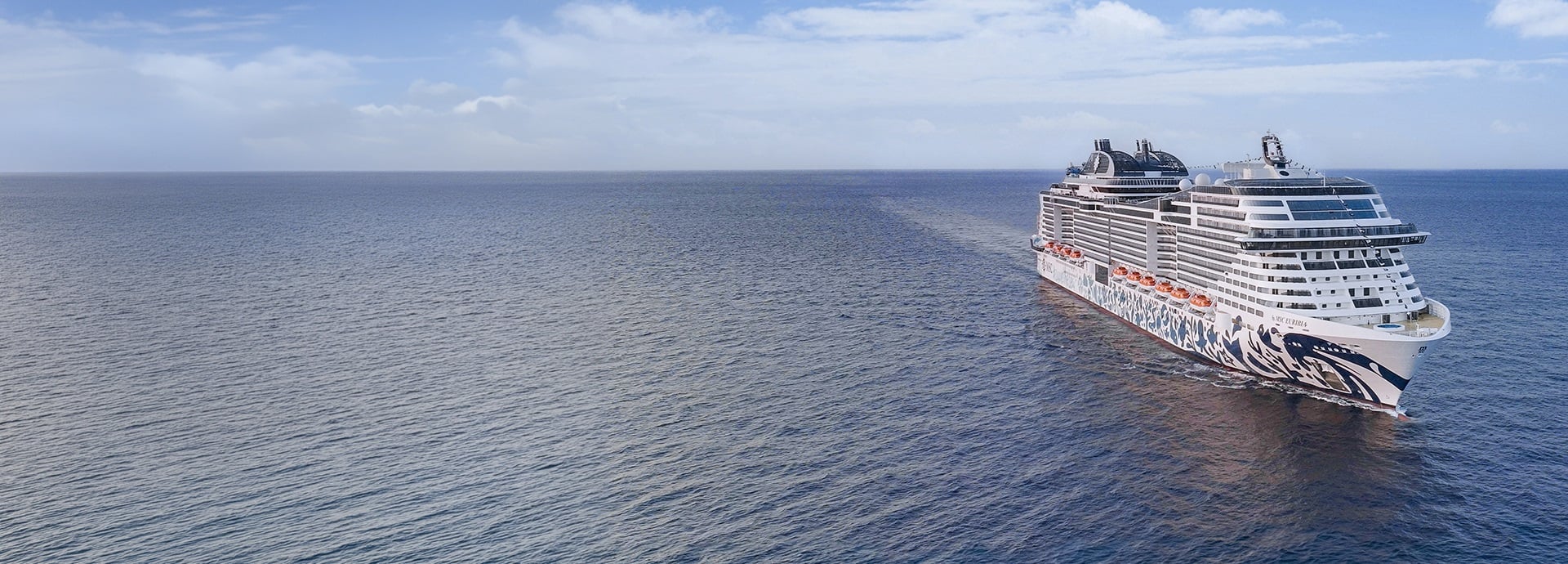
MSC Cruises is the first cruise ship operator to undertake a large-scale, verified measurement campaign to record actual methane emissions in real operations. The campaign looked at the emissions from the LNG-fuelled MSC World Europa and MSC Euribia cruise ships, which operate using modern Wärtsilä engines in European waters.
The broader aim of the campaign was to improve the validity of emissions reporting under FuelEU Maritime, allowing the vessels to move from default methane slip values to real ones
MSC Cruises are committed to taking meaningful, measurable actions towards achieving net zero greenhouse gas emissions by 2050. They aim to do this by investing in new technology and design, renewable fuels and operational efficiency.
Both MSC World Europa and MSC Euribia use LNG as fuel. When LNG is used as fuel in ship engines, a small fraction of the methane passes through the engine unburned and is released into the atmosphere. This phenomenon is known as methane slip.
Methane slip emissions are now recognised in regulations and carry an explicit monetary value in emissions trading systems. Based on what was known about the emissions performance of the Wärtsilä 46DF engine type, MSC Cruises expected the actual methane slip levels on MSC World Europa and MSC Euribia to be below the regulatory default values. By measuring and verifying the actual methane emissions from the two ships, MSC Cruises could strengthen the accuracy and credibility of their emissions reporting under FuelEU Maritime.
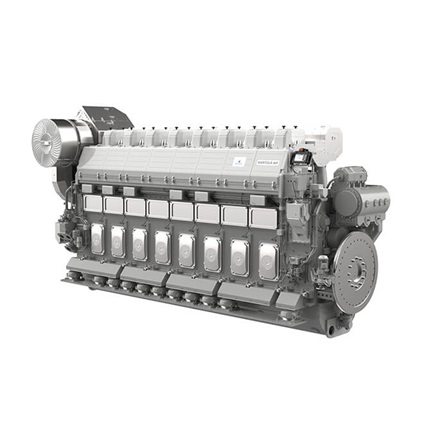
The measurement campaign focused on the Wärtsilä 12V,14V and 16V46DF dual-fuel engines on board MSC World Europa and MSC Euribia. Methane emissions were recorded during vessel operations, and used, together with engine load monitoring, as the basis for vessel-specific methane slip values.
Engine-specific methane files were prepared to support verification in line with IMO Resolution MEPC.402(83) and the FuelEU Maritime Guidelines. They include a dedicated methane record book, a defined description of engine load monitoring procedures and exhaust gas measurement results.
Following the campaign, a Statement of Compliance was issued, formally recognising the verified results and supporting alignment with EU ETS and FuelEU Maritime requirements.
MSC Cruises became the first cruise line to achieve independent verification and flag state recognition of actual methane emissions for FuelEU Maritime compliance. This allowed the company to report actual, independently verified methane emissions under the FuelEU Maritime framework, replacing default emissions assumptions with measured vessel performance.
MSC World Europa achieved an actual methane slip value of 1.67%, while MSC Euribia achieved 1.48%. Both values are substantially below the 3.1% default value prescribed in FuelEU Maritime Annex II.
These results provide verified, vessel-specific data from real cruise operations. They also support more accurate regulatory reporting and more informed decision-making as the maritime sector progresses towards net zero.
For MSC Cruises, the certification marked an important step in moving from default assumptions to verified vessel-specific data:
“This certification marks an important step forward in how methane emissions are measured and reported in our industry. By replacing default assumptions with independently verified data based on real-world ship performance, we are strengthening the accuracy and credibility of emissions reporting under FuelEU Maritime. This approach supports informed regulatory decision-making and reinforces the importance of robust measurement as the maritime sector progresses towards net-zero greenhouse gas emissions.”
Michele Francioni, Chief Energy Transition Officer, MSC Cruises
Many modern, LNG-fuelled vessel operating in waters covered by emissions legislation like FuelEU Maritime could benefit from moving from default emissions reporting to verified operational data. MSC Cruises have established a clear and repeatable pathway to move to verified emissions reporting based on actual vessel performance, reinforcing transparency through independent verification and regulatory oversight.
From an industry perspective, the case underlines the value of independently verified operational data in improving the accuracy and transparency of methane emissions reporting:
“This industry-first verification demonstrates the value of using independently verified operational data to improve the accuracy and transparency of methane emissions reporting. Replacing default assumptions with the verification of actual emissions data enables more effective compliance strategies, helps optimise performance and supports greater confidence in vessel efficiency as the industry advances towards net-zero greenhouse gas emissions.”
Paillette Palaiologou, Senior Vice President of East Europe, Mediterranean Sea, Middle East, India and Africa (EMA), Bureau Veritas Marine & Offshore
The case also shows why engine technology matters. When verified methane slip values are lower than regulatory defaults, they can translate into lower reported emissions and a more accurate assessment under FuelEU Maritime, with direct implications for regulatory cost exposure.
LNG is predominantly methane, and when vessels burn LNG as fuel there is always a small amount that escapes with the exhaust gases. This is known as methane slip.
Both the EU Emissions Trading System (EU ETS) and FuelEU Maritime explicitly recognise methane emissions as part of regulatory compliance calculations. Methane emissions therefore carry either an explicit or implicit monetary value in voyages involving EU (and eventually EEA) ports.
Default methane slip values are defined for different engine and combustion concepts. These default values provide a standardised basis for compliance calculations and can always be applied. Alternatively, representative actual methane slip values can be used, provided they reflect real engine operation and are appropriately verified.
When a vessel’s real‑world methane slip performance is better than the regulatory default, using representative values translates directly into lower reported emissions and a financial benefit compared to using default values.
Last updated: July 2026
Content owner: Wärtsilä Marine