The global energy landscape is undergoing a profound transformation. As the world rapidly electrifies, driven by industrial conversions, transport, cooling, and the exponential growth of AI data centres, the integration of intermittent renewable energy presents unprecedented grid stability challenges. It is increasingly evident that renewables alone, coupled with severe transmission line constraints, cannot consistently cover global energy needs when required.
From my perspective, the global definition of "gas utilisation" is shifting away from a traditional, flat baseload mindset toward a dynamic, flexible balancing model. While wind and solar are anticipated to be the most affordable ways to generate electricity going forward, their inherent intermittency requires immediate, fast-acting balancing power. Flexible gas technology steps into this gap, providing electricity precisely when needed to stabilise the grid and directly enable a much higher percentage of renewable penetration.
Overcoming infrastructure bottlenecks
Expanding gas development heavily depends on regional infrastructure, including pipelines and LNG terminals. However, unlocking this capacity in areas where traditional gas grids are constrained presents a unique set of challenges. In my view, there is still significant room for cost reductions and optimisation within small-scale LNG shipping and effective on-land transport.
Currently, these innovative deployment models face a cumulative network of obstacles, including complex regulatory environments, poor port and road conditions, cross-border permitting hurdles, and localised taxes. This accumulation of friction drives up the ultimate cost of LNG fuel, making it less attractive to industries and investors comparing it against alternative business segments. For gas to truly fulfil its balancing potential worldwide, we must streamline these logistical and regulatory bottlenecks.
The power of operational agility
Where gas infrastructure is established, technology choice dictates grid resilience. Modern grid requirements dictate that frequency and voltage must be kept within strict tolerances, despite the volatile forecast accuracy of renewables. Because of this, it is crucial to have generation assets in the system capable of supporting ancillary services, including primary and secondary reserves.
Wärtsilä’s gas engine power plants are uniquely engineered for this environment, capable of going from start-up to full load in under two minutes to provide immediate support, while retaining the durability to supply baseload power on days when there is no sun or wind.
An increasing number of customers are realising these intrinsic benefits of engines over legacy gas turbine technologies. Driven by high energy efficiency, ultra-low water consumption, modular design flexibility, and zero thermal derating, interest in engine technology has surged, accelerated by long competitor lead times for traditional gas turbines.
This demand is notably amplified by the data centre boom. According to the International Energy Agency (IEA), data centre demand is a key driver for recent increases in global electricity demand forecasts. Data centres offer an interesting baseload business opportunity, specifically because operators are facing severe grid capacity limitations and long lead times just to secure basic grid access.
Future-proofing assets and scaling capacity
When utilities and independent power producers (IPPs) invest in natural gas infrastructure today, ensuring that these multi-million-dollar assets will not become stranded tomorrow is a top priority. Our technology roadmap at Wärtsilä is explicitly designed to safeguard these investments.
While natural gas is projected to remain a core part of the global energy mix for a long time, green hydrogen will gradually blend into existing gas infrastructure, eventually replacing natural gas entirely in certain segments as its economic affordability increases.
Right now, utilising natural gas instead of other fossil fuels like diesel or coal delivers an immediate, major positive impact on emission reductions. Our R&D focuses on maximizing combustion efficiency to ensure operators benefit from low fuel costs and lower emissions immediately. Looking forward, Wärtsilä engines can already operate on a 25% hydrogen volume blend with natural gas today. Furthermore, we supply "hydrogen-ready" plants that can be fully converted to pure hydrogen operation in the future, alongside active development into solutions for other sustainable fuels like methanol and ethanol.
This convergence of electrification, data centre growth, and the need for grid balancing means that the demand environment for the energy segment is expected to remain highly robust. However, this booming pipeline means that the global market is tightening.
Lead times are gradually increasing for Wärtsilä. Depending on engine configuration and order size, we still have some unsold production slots for 2027 and 2028, while discussions with customers are increasingly extending into 2029 and beyond.
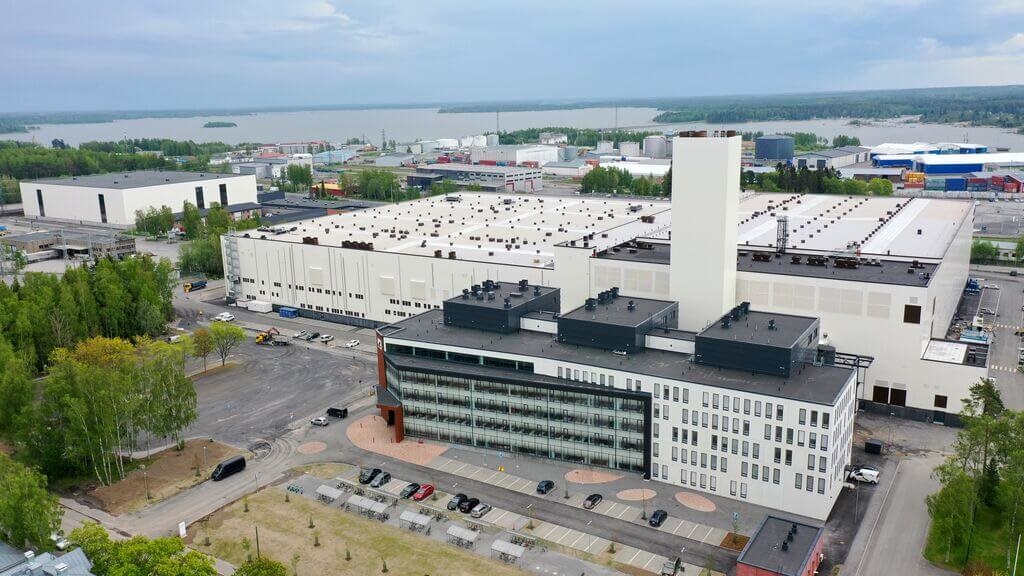
To directly address these lengthening timelines, Wärtsilä will invest approximately EUR 90 million to further expand its technical production capacity by 30% at our Sustainable Technology Hub (STH) in Vaasa, Finland and across our associated global supply chain. This expansion follows the 35% increase in technical production capacity announced in February 2026 with an investment of EUR 140 million, bringing the total planned increase to 65% compared to Wärtsilä’s 2025 baseline.
This significant investment will enable us to deliver higher volumes of engines, meet increasingly growing market demand in both the energy and marine industries, and better support our customers' long-term business growth. The earlier 35% capacity expansion is expected to be commissioned in the first quarter of 2028, while this additional 30% expansion will come online in the first quarter of 2029.
While current geopolitical uncertainties, shifting international trade landscapes, and a lack of clarity regarding global tariffs present ongoing risks of investment postponements for the broader economy, the stable utilisation of Wärtsilä’s installed base continues to anchor grid reliability. By aggressively expanding our manufacturing footprint, we are positioning ourselves to deliver the flexible, future-proof infrastructure required to anchor the next generation of the global power grid.
Once every six weeks, you will get the top picks – the latest and the greatest pieces – from this Insights channel by email.