In 2023, Senegal signed the #JETP (Just Energy Transition Partnership) agreement, which grants access to €2.5 billion in funding to accelerate the development of renewable energy, aiming to increase its share to 40% of the electricity mix by 2030. This initiative comes at a particular time, as Senegal is set to become a major natural gas producer and has logically directed its strategy towards increasing gas power plants to meet the growing demand for cheap electricity. The JETP renewable programme is seen as a solution to avoid a "gas lock-in," meaning excessive dependence on gas and a heavy carbon footprint for decades.
However, the opposition between gas and renewables is not very relevant.
- Rapidly increasing access to reliable and affordable electricity for the entire population is Senegal's top priority. Renewable energy, particularly solar, is already the cheapest new electricity production source available to the country, a global trend that will accelerate. Modelling by Wärtsilä clearly shows that maximising renewable energy in Senegal's energy mix is beneficial both economically and in terms of emissions.
- A higher share of renewable energy reduces the overall system cost but requires more flexibility. An electricity grid with a high share of renewables generates instability due to their intermittent nature, thus requiring several forms of flexibility to react in real-time to supply and demand variations. Each megawatt of installed intermittent renewable capacity must be associated with corresponding levels of flexibility.
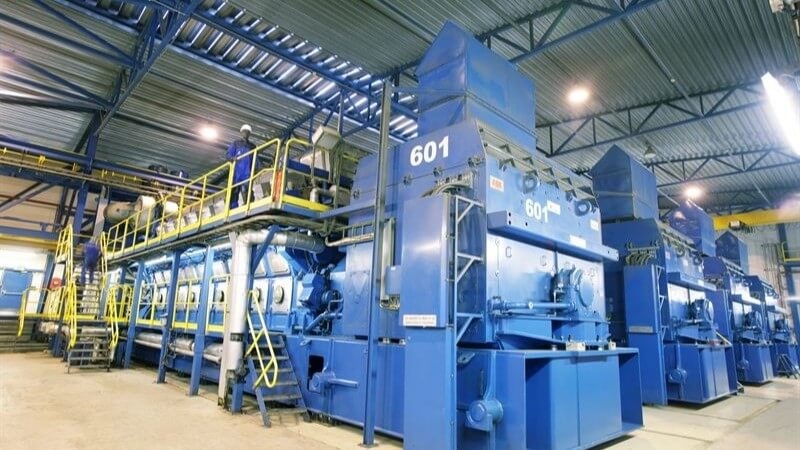
- To balance the grid, operators can use two complementary balancing technologies: engine power plants and storage systems. Engine power plants can start and synchronise with the grid in less than 5 minutes and can ramp up or down very quickly without impacting their maintenance and are used whenever renewable capacity is insufficient. They can run on gas or decarbonised fuels like hydrogen. Storage systems, on the other hand, store excess renewable electricity production.
- The illustration shows an energy system with a significant proportion of renewable energy, highlighting the need for thermal power plants to flexibly support the integration of renewables.
- Combining gas and renewables is the most cost-effective (and realistic) energy strategy for Senegal. It is characterised by a strong deployment of renewables mainly associated with new ultra-flexible engine power plants to balance the grid. The economic superiority of this strategy is demonstrated in all scenarios modelled by Wärtsilä.
- Last but not least: the concept of "gas lock-in" has become technologically obsolete. Flexible engine power plants running on natural gas can be converted to run on decarbonised fuels such as green hydrogen. This is already a concrete reality. When these fuels become more widely available, the electricity system will have drastically reduced its dependence on gas.
To conclude, here are the key questions to ask for the future:
- How much flexible electricity capacity will be needed to ensure grid stability with an increasing share of intermittent renewables?
- At what annual rate should renewable and balancing technologies be deployed?
Written by
Antoine De Chaumont
Business Development Manager