As marine fuel costs rise and regulatory pressures tighten, improving efficiency is the smartest way for shipowners to lower operating costs and emissions. Energy-saving technologies for ships are already delivering verified, repeatable results for real vessels.
This article shows what works – and how you could achieve measurable efficiency gains. The biggest challenge is often not finding efficiency technologies, but identifying which combination will deliver the greatest benefit for your vessel. The examples in this article include energy-saving technologies, hybrid systems and engine upgrades – all proven ways to improve vessel efficiency using commercially available solutions today.
The following real-life cases show what different types of vessels have already achieved with proven solutions.
Shipowner: Aasen Shipping
Vessel type: Bulk carrier
Technology: Wärtsilä HY hybrid solution
Verified result: 50% less fuel and emissions per tonne of cargo transported
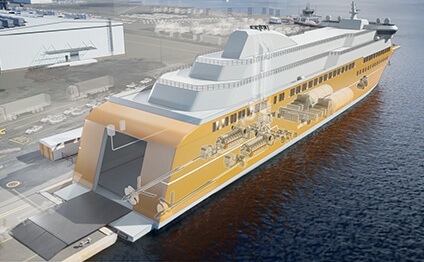
Aasen Shipping installed fully integrated Wärtsilä HY hybrid solutions on two newbuild self-discharging bulk carriers. The hybrid solution has cut fuel and emissions by 50% per tonne of cargo transported when compared to standard self-discharging vessels of a similar size.
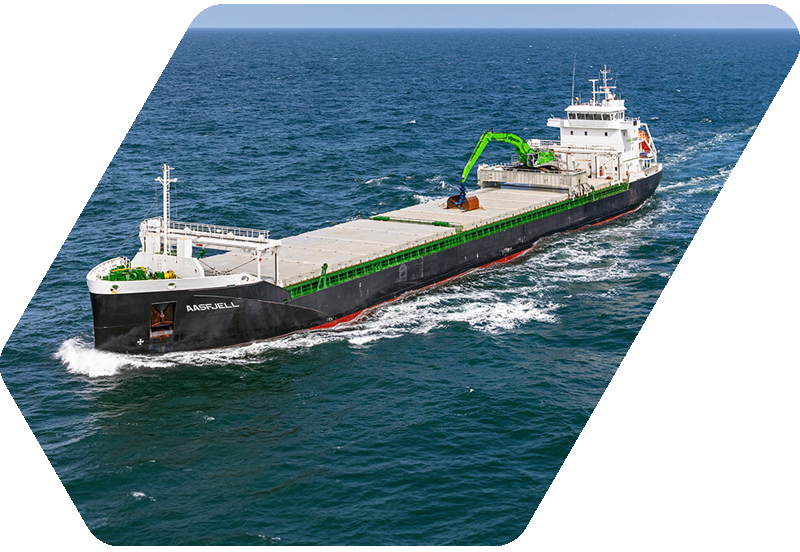
Why it worked: The hybrid solution offers outstanding reliability and performance while cutting fuel consumption and emissions. Engines can run at optimal load with the batteries absorbing load fluctuations. Vessels can also sail in and out of port and manage cargo operations using only battery power, which eliminates smokestack emissions.
Read about how Aasen Shipping achieved 50% fuel and emissions savings per tonne
Shipowner: Misje Rederi
Vessel type: Bulk carrier
Technology: Wärtsilä HY hybrid solution
Verified result: 40% reduction in fuel use
Misje Rederi’s newbuild bulk carrier is powered by a Wärtsilä HY hybrid system. The system has brought fuel savings of as much as 40% compared to equivalent size vessels in the fleet. Because the vessel can operate purely on battery power for port and cargo operations, the solution has also had a direct impact on the ship’s Carbon Intensity Indicator (CII) rating.
Why it worked: The Wärtsilä HY hybrid solution is controlled by an energy management system (EMS), which optimises energy flow between power sources, consumers and storage. Hybrid systems reduce fuel consumption and improve environmental performance by allowing engines to run at optimal load and using battery power when appropriate.
Read more about how Misje Rederi reduced fuel use with hybrid propulsion
Shipowner: Partenreederei MS Splittnes
Vessel type: Bulk carrier
Technology: EnergoProFin energy-saving technology (EST), hull coating and an engine upgrade
Verified result: 10% saving in fuel and emissions
The owners of the self-unloading bulk carrier Splittnes invested in a Wärtsilä Vasa 32 engine upgrade, Wärtsilä EnergoProFin and a new hull coating for their vessel. This helped them comply with International Maritime Organization (IMO) Tier II NOx emissions regulations and reduced fuel use by 10%, extending the profitable lifetime of the vessel and allowing it to continue operating in Norwegian waters.
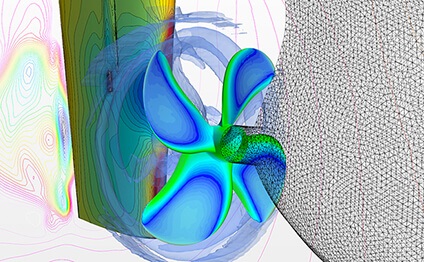
Why it worked: The engine upgrade with new turbocharger boosts both performance and efficiency, and the hull coating ensures the vessel moves smoothly through the water without resistance. Wärtsilä EnergoProFin, an energy-saving propeller cap that reduces energy losses and increases overall efficiency, also helps to bring the total fuel bill down.
Read more about how bulk carrier Splittnes increased efficiency by 10%
The following examples show how energy-saving technologies deliver consistent, repeatable gains.
Shipowner: Vitol
Vessel type: Tankers
Technology: EnergoFlow and EnergoProFin energy-saving technologies (ESTs)
Verified result: 6% reduction in fuel consumption and emissions
Two of Vitol’s tankers needed to lower their emissions to comply with CII. Wärtsilä’s EnergoFlow and EnergoProFin helped the company achieve a 6% reduction in fuel consumption and emissions as well as an improved CII rating for both vessels. This is equivalent to 16 days of free fuel.
Why it worked: Wärtsilä EnergoFlow is an innovative pre-swirl stator that creates optimal inflow for the propeller; Wärtsilä EnergoProFin is an energy-saving propeller cap. Both technologies improve propulsive efficiency, reducing fuel consumption and emissions. They have a short payback period and contribute to long-term savings throughout the vessel’s remaining service life.
Read more about how Vitol cut emissions with EnergoFlow and EnergoProFin
6% reduction in fuel consumption = 16 days of free fuel
6% reduction in emissions = 2050 tonnes of CO2 saved
2050 tonnes of CO2 saved = the annual emissions of 510 cars each driving 25,000 km – a total of 12,750,000 km or 318 times around the earth.
Shipowner: Kuwait Oil Tanker Company (KOTC)
Vessel type: Very large crude carrier (VLCC)
Technology: Wärtsilä Fuel Efficiency Boost (FEB) solution
Verified result: 6% fuel saving at 50% engine load
KOTC had already upgraded the engines on four VLCCs with Wärtsilä Fuel Activated Sacless Technology and Intelligent Combustion Control. After seeing measurable improvements in performance, KOTC upgraded the same engines with the Wärtsilä FEB solution. The vessels have achieved significant fuel savings since implementing FEB, with one vessel measuring a remarkable 6% fuel saving at 50% engine load.
The upgrade also improved environmental performance by reducing greenhouse gas emissions and ensuring NOx levels remain within Tier II limits.
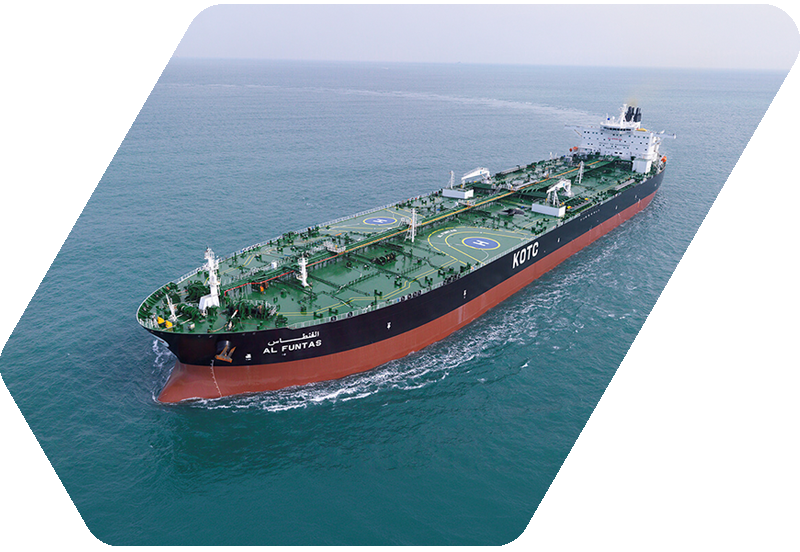
Why it worked: Wärtsilä FEB improves combustion by increasing the compression ratio and optimising the engine’s injector nozzles. This is combined with optimised engine tuning parameters to deliver meaningful fuel savings, increased efficiency and improved environmental performance.
Read about how KOTC achieved 6% fuel savings with Wärtsilä FEB
Operator: Staff Centre Shipmanagement
Vessel type: Bulk carrier
Technology: EnergoProFin energy-saving technology (EST)
Verified result: Fuel savings exceeding 2.5%
Staff Centre Shipmanagement installed the Wärtsilä EnergoProFin energy-saving propeller cap on the ocean-going bulk carrier MV Arvika. Thanks to the improved efficiency, fuel savings exceeded 2.5%. This added up to an annual saving of more than USD 58,000 – with a payback time of less than a year. The vessel has also been able to reach faster speeds without overloading the engine.
The total amount of fuel saved is 156,870 litres a year – which is equal to the annual consumption of 131 medium-sized passenger cars.
Why it worked: The Wärtsilä EnergoProFin was exclusively customised for MV Arvika’s fixed pitch propeller to reduce the hub vortex strength, decrease the total torque and hub resistance and reduce fuel consumption.
Shipowner: Fast Lines
Vessel type: Coaster vessel
Technology: EnergoProFin energy-saving technology (EST)
Verified result: 1–2% reduction in fuel consumptio
Fast Lines’ coaster vessel Fast Jef operates in a highly competitive market segment, where all possible fuel reductions are essential. The company installed Wärtsilä’s EnergoProFin energy-saving propeller cap on Fast Jef’s fixed pitch propeller and have seen reductions in fuel consumption of 1–2% with a payback time of only 12 months.
Why it worked: Wärtsilä EnergoProFin minimises the hub vortex behind the propeller by converting rotational energy into thrust. This increases efficiency and reduces fuel consumption, while also reducing noise and vibrations from the propeller.
Read more about how Fast Lines reduced fuel consumption with EnergoProFin
Shipowner: Berge Bulk
Vessel type: Bulk carrier
Technology: Shaft generator retrofit
Verified result: Improved EEXI and reduced carbon footprint
Berge Toubkal, a cape-size bulk carrier owned by Berge Bulk, had an inline shaft generator system retrofitted – the maritime industry’s first ever shaft generator retrofit. The system has improved the vessel’s Energy Efficiency Existing Ship Index (EEXI) while also reducing the overall carbon footprint.
Why it worked: Shaft generator systems onboard ships save fuel and emissions by using the main engine to generate electrical energy. They are sized to eliminate the need to use auxiliary engines at sea.
Read about how Berge Bulk saved fuel and emissions with a shaft generator retrofit
Operator: Maersk Supply Service
Vessel type: Anchor handling tug supply (AHTS) vessel
Technology: Wärtsilä HY hybrid solution upgrade and exhaust gas treatment system
Verified result: Confirmed reductions in fuel consumption and emissions; NOx emissions reduced by 80% on average
The AHTS vessel Maersk Minder lowered fuel consumption and carbon emissions with a Wärtsilä HY hybrid solution upgrade. The upgrade also reduced maintenance needs and improved operational performance.
In parallel with the hybrid upgrade, Maersk Supply Service also installed a Wärtsilä NOx Reducer (NOR) selective catalytic reduction (SCR) exhaust gas treatment system. The system has reduced the Maersk Minder’s NOx emissions by 80% on average. This reduction means the vessel is already compliant with IMO Tier III emissions standards.
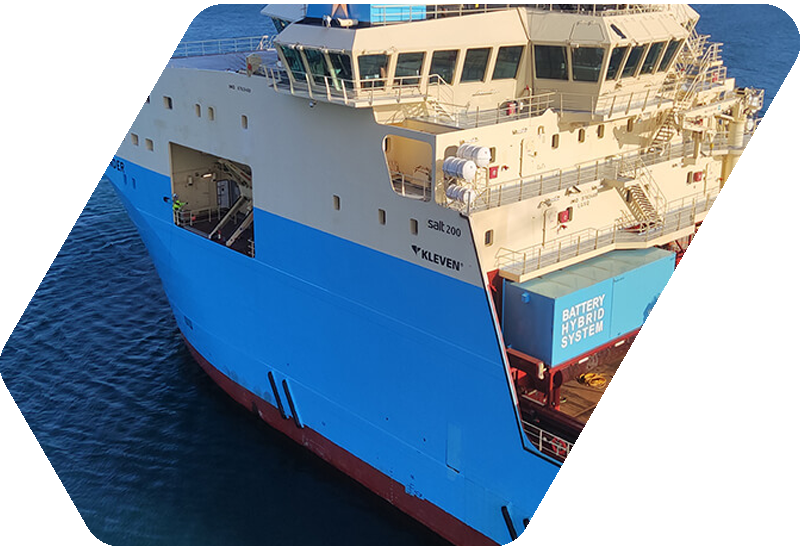
Why it worked: The Wärtsilä HY solution improves vessel efficiency by allowing the engine to run at optimal load, using batteries to absorb load fluctuations. The system is controlled by an energy management system, which optimises energy flow to achieve the best performance in all operational modes.
The Wärtsilä NOx Reducer works by mixing a urea solution with the exhaust fumes, creating a reaction that removes NOx from the flue gas stream. This reduces NOx emissions significantly – in this case by 80% on average.
Read more about how Maersk reduced fuel consumption and emissions
Most ship efficiency upgrades target one or more of the following areas:
While the results have been verified in real operating conditions, it’s important to note that efficiency gains can vary. Results depend on several factors, including:
This is why the best results are often achieved working with a trusted partner who can take your vessel-specific data into account.
The nine examples above show what’s possible – but choosing the right combination is what determines your actual savings. In our final real-life example, we see how Carnival Corporation did just that.
Shipowner: Carnival Corporation
Vessel type: Cruise ship
Technology: Wärtsilä Decarbonisation services
Verified result: Improved efficiency through optimised system design
Carnival Corporation had a clear picture of the decarbonisation technologies available but wanted to know which would be the most effective combination for their Princess Cruises Royal Class vessels. Carnival worked with Wärtsilä Decarbonisation services to evaluate the potential impact of different technologies and to prioritise the order in which to implement them.
Why it worked: Wärtsilä Decarbonisation services used three years of real operational data to make a digital model of the Regal Princess. This was used to understand exactly how the vessel was being operated – and where improvements could be made.
Each decarbonisation solution was evaluated to see its impact on fuel consumption and emissions, first separately and then together to determine the best possible combination. The focus wasn’t just on the hardware – it was also on how to optimise vessel operation to get the most from the proposed investments.
Because the digital model is based on real operational data, it allows investment decisions to be made with confidence and reduces risk.
Read about how Carnival used Wärtsilä Decarbonisation services to increase efficiency
These examples span many different vessel types, market segments and operating profiles, but all of them show that energy-saving solutions for ships can deliver significant efficiency improvements.
The verified data reveals some clear patterns:
The examples above show that significant reductions in fuel consumption and emissions are achievable for all vessels using solutions that are field proven and available now. If you want to achieve these sorts of results for your existing fleet or newbuild vessel design, Wärtsilä Decarbonisation services can help.
Analysing your vessel and using real-world performance data, simulation tools and professional expertise will reveal the most effective combination of energy-saving solutions for your vessel.
Energy-saving technologies provide consistent efficiency gains and are often straightforward to retrofit, with a short payback time. Wärtsilä Decarbonisation services will also quantify your fuel and emissions savings along with how much less your vessel will pay in taxes and penalties – with recommendations and results based on real data.
Learn how Wärtsilä Decarbonisation services identify vessel efficiency improvements
Written by
Once every six weeks, you will get the top picks – the latest and the greatest pieces – from this Insights channel by email.