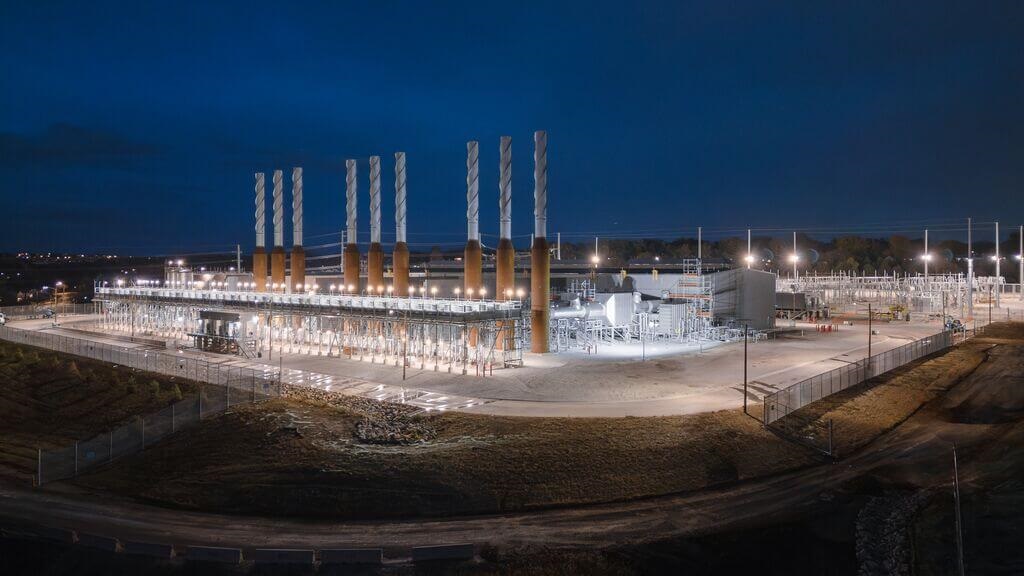
Resilience is the defining requirement of power systems for industrial minigrids in Nigeria. For many businesses, the real question is not “What is the cheapest electricity?”. It is “What power system will keep my operations running no matter what?”.
In an environment defined by grid instability, fuel supply uncertainty, and rapidly growing electricity demand, flexible engine power plants (ICE) have quietly emerged as the most resilient technology available on the market.
And resilience is exactly what industrial minigrids need. Here’s why.
Instant flexibility to match real demand
Industrial electricity demand rarely follows a perfectly smooth curve. Production lines ramp up and down, facilities expand, and unexpected changes happen. Flexible engine power plants can ramp output up or down in minutes and start almost instantly. This allows operators to match generation precisely to demand in real time. Instead of forcing the system to adapt to the power plant, the power plant adapts to the system. That flexibility becomes critical in industrial minigrids where load profiles are constantly evolving.
High efficiency even at partial load
Many conventional power technologies lose efficiency when operating below full capacity. Engine power plants are different. They maintain high performance even when running at partial load. This means operators can adjust output frequently without sacrificing fuel efficiency or increasing operating costs. This is a key advantage for minigrids where demand fluctuates throughout the day.
Built-in redundancy
Because engine plants consist of multiple independent units, they naturally provide redundancy. If one unit is offline for maintenance or trips, the remaining engines continue to operate. Instead of losing the entire plant, only a fraction of capacity is temporarily unavailable. For industrial operations where downtime can cost millions, that redundancy is invaluable.
Resilience to gas pressure fluctuations
Gas supply instability remains a real challenge in Nigeria’s power sector. Low pipeline pressure events have historically forced many gas turbine plants offline. Engine power plants are much more tolerant of gas pressure fluctuations and can continue operating when other technologies cannot. In practical terms, that means fewer shutdowns and more reliable power.
Proven performance in hot climates
Power plants operating in tropical climates must cope with high ambient temperatures. Engine power plants maintain strong performance under hot conditions and do not suffer the same level of efficiency degradation that affects some turbine technologies. This makes them particularly well suited for industrial deployments across West Africa.
Multi-fuel capability reduces fuel risk
Fuel supply disruptions remain a major operational risk in Nigeria’s power sector. Engine power plants offer a powerful hedge against this risk. They can operate on multiple fuels and switch between them when necessary. This fuel flexibility allows industrial operators to maintain power supply even when gas availability, pressure, or quality fluctuates. In other words, the plant keeps running even when the fuel market becomes unpredictable.
Scalability that matches industrial growth
Industrial minigrids rarely remain static. Facilities expand. New factories connect. Demand increases. Because engine power plants are modular by design, capacity can be added incrementally through additional engine units as demand grows. This avoids overbuilding capacity upfront and allows power infrastructure to scale alongside industrial development.
The perfect partner for renewable energy
Nigeria has enormous solar potential, and cheap renewable energy will play a growing role in industrial power systems. But renewables alone cannot guarantee reliability. Solar output drops when clouds arrive. Wind fluctuates. Demand spikes at unexpected moments. Flexible engine power plants are the ideal complement to renewables because they can ramp up within minutes when renewable production drops, and ramp down just as quickly when it recovers. This ability to balance intermittent energy sources is essential for integrating renewables without sacrificing reliability.
Built for the future of sustainable fuels
Energy systems are evolving rapidly. What runs on natural gas today may run on biofuels, green hydrogen or ammonia tomorrow. Flexible engine plants are uniquely positioned for this transition because they can be adapted to operate on emerging sustainable fuels as they become commercially viable. That makes them not just resilient today, but future-proof.
The final word
Industrial minigrids in Nigeria require more than just power generation. They require resilience. Flexible engine power plants deliver exactly that. They combine operational flexibility, modular scalability, fuel adaptability, and renewable integration capability into a single technology platform.
In an environment where reliability determines competitiveness, that combination makes flexible engine power plants one of the most powerful allies available to secure industrial energy systems.
Once every six weeks, you will get the top picks – the latest and the greatest pieces – from this Insights channel by email.