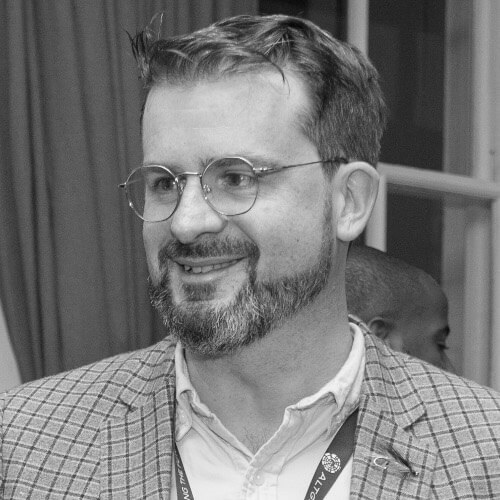
This article is based on Season 1, Episode 2 of the Energy Situation Room Podcast.
Listen to the full conversation here:
Mark Howard, Editor at African Energy Newsletter, recently shared a comprehensive and optimistic outlook for the continent’s power industry with host Terence Mentor on the Wärtsilä Energy-hosted Energy Situation Room podcast.
Howard highlighted that while challenges persist, key developments in policy, capital, and regional integration suggest the sector is on the verge of a "Big Bang moment".
Howard’s publication, African Energy Newsletter, was founded in 1998 and maintains an objective, industry-focused voice, reporting impartially on all aspects of the energy industry, from renewable projects to upstream oil and gas.
The single most significant development in the sector is the launch of Mission 300. This "transformative program" was initiated in Tanzania and involves a collaborative effort by the African Development Bank and the World Bank. The program commits over $48 billion with the ambitious goal of bringing electricity access to 300 million people by the end of the decade.
Howard noted that this goal is ambitious given typical project development timelines. The funding is split approximately 50/50 between on-grid and off-grid solutions. This approach acknowledges the difficulty of building out traditional grid infrastructure quickly enough to keep pace with demand and population growth. The capital is designed to stimulate the off-grid sector, supporting developers building large-scale mini-grids (or 'metro-grids') using solar, storage, and thermal backup.
Howard pointed to the further liberalisation of South Africa's energy sector as a leading development on the continent. Reforms are materialising in a "good way" and include the execution of the unbundling of Eskom and the introduction of new procurement rounds for large-scale battery storage. Private procurement of transmission infrastructure is also emerging in South Africa and other countries like Kenya, Uganda, and Mozambique.
He suggests that the political will, spurred by the load shedding crisis, was necessary to unlock the vast private capital waiting to invest. Howard characterised the dynamic between the regulator (NERSA) and the incumbent utility (Eskom) as a "positive disharmony", which indicates that the regulator is effectively performing its function. This environment creates a system where a diverse array of players (IPPs, developers, and regulators) all have a vested interest in delivering more electricity to the consumer.
The industry is also seeing accelerating momentum in large-scale commercial industrial (C&I) power projects. While mines have historically been the classic off-takers, Howard noted that IT, telecoms, and data centres are increasingly driving demand.
Furthermore, regions across the continent are looking to follow the success of the Southern African Power Pool (SAPP). The East Africa Power Pool (EAPP) is now seeing a strong emergence, establishing the political, technical, and administrative capacity needed to regulate the power market. This integration creates additional market liquidity and new opportunities for power developers to secure off-take outside of the country where their plant is situated. This interconnection is also vital for the provision of ancillary services, such as balancing the grid and providing peaking capacity.
In conclusion, Howard stated that developments, which have been discussed for 10 to 15 years, are now "really crystallising at a rapid clip". The collective result is a powerful shift in the sector, bringing hope and positivity to the continent’s energy future.
Once every six weeks, you will get the top picks – the latest and the greatest pieces – from this Insights channel by email.