Choosing an electronic chart display and information system (ECDIS) has become increasingly complex for ship owners, fleet operators and marine superintendents. In addition to supporting safe navigation, modern ECDIS must comply with IMO regulations and SOLAS requirements.
Modern systems need to integrate with vessel and shore-based systems and typically include some level of connectivity, making maritime cyber security requirements another important consideration.
Fleet operators must also prepare for the industry's gradual transition towards S-100 standards, evaluate retrofit and upgrade options, manage crew training requirements and consider long-term lifecycle costs.
Choosing an ECDIS is therefore no longer simply a navigation software decision. It is also a decision about operational risk, compliance, lifecycle costs, future readiness and fleet-wide efficiency.
The following seven questions reflect some of the most common evaluation criteria used by ship owners, fleet operators and marine superintendents when selecting or upgrading an ECDIS.
One of the most important things to remember when choosing an ECDIS for your vessel or fleet is that the solution you choose needs to serve both onboard and onshore stakeholders. Crews on the bridge will appreciate a system that is designed with their needs in mind. Intuitive, familiar interfaces, clear menus and excellent usability are highly valued by mariners because they make the job of navigating safer and less stressful.
Onshore teams and management, on the other hand, are increasingly looking beyond the initial price tag to put greater emphasis on total cost of ownership. For example, the possibility to integrate with third-party equipment like radars, autopilots and peripheral devices is a clear advantage. An ECDIS that is easy to integrate with third-party sensors and other hardware can be upgraded or retrofitted without the need for potentially costly and time-consuming replacement of other bridge equipment.
Training is another factor that you should consider. A comprehensive training offering that can be delivered at locations convenient for your bridge crews will make it easier to get crews trained up. Furthermore, the easier a system is to use, the faster bridge crews can learn the skills they need and start applying them onboard vessels.
Reliability is important to both these stakeholder groups. Crews need to be able to rely on their ECDIS to help them navigate safely in all conditions, while onshore teams need to be able to rely on connectivity to support crews with decision-making processes, including route planning, that keep vessel operations efficient and safe.
Finally, the ECDIS must comply with IMO and SOLAS requirements as well as standards relating to maritime cyber security. These standards, which include IACS UR E27 and IEC 61162-460, are playing an increasingly important role in protecting maritime operations as vessels become more connected.
During a vessel’s lifetime, its ECDIS will typically be replaced two or even three times. Two of the most important things that you should consider before upgrading or replacing an ECDIS are how easy it will be to integrate with existing bridge systems, and how flexible the proposed new ECDIS is.
When you decide to retrofit a new ECDIS system, it’s typical to replace selected components rather than the entire bridge ecosystem. You can reduce both the cost of the retrofit and the risk of delays by looking for an ECDIS that is as easy as possible to integrate with existing hardware and software.
Upgradeability is primarily a question of cost effectiveness. An ECDIS that is made up of flexible, modular blocks will not only make the retrofit process less complicated, but also less expensive. A modular system that allows operators to reuse existing hardware like displays, keyboards and power supplies can save a considerable amount of time and significantly reduce the complexity and cost of an ECDIS retrofit.
Beyond the time and cost savings, reusing hardware like displays and keyboards allows crews to continue using equipment that they are familiar with.
S-100 is a standards framework developed by the International Hydrographic Organization. The standard enables maritime information from different sources to be integrated and presented in a unified way in navigation systems.
The aim of S-100 is to enhance situational awareness for bridge crews by expanding the range of information available for navigation by combining different data sources. Essentially, S-100 turns static charts into dynamic data, for example by integrating information about tides and currents. This change enhances situational awareness for bridge crews by giving them more information on how sailing conditions will likely change over time. They can use this information to make smarter voyage decisions that increase safety and improve cost effectiveness.
From 1 January 2026, newly installed ECDIS can follow either the existing S-57 standard or the new S-100 standard. From 1 January 2029, all newly installed ECDIS must comply with the requirements of the S-100 standard. Although the testing standards for type approval are still being developed, you should keep up to date with developments over the coming years so that you can plan future retrofits and upgrades accordingly.
The requirements of the S‑100 standard are still maturing, so it pays to keep your options open and have flexibility as a priority. A system where migration to S-100 compatibility can be handled through software updates rather than needing hardware replacement will likely cost less and be less disruptive.
You should also take into account the cost and time involved in training bridge crews on the new features and functionalities that S-100 will bring, so an ECDIS supplier that already has a training demo of an S-100 compatible solution would be an advantage.
In reality, it is common to find ECDIS solutions from several different OEMs within the same fleet, particularly in larger or more diverse ship fleets where vessel age and type can vary greatly. There are, however, two key benefits to aiming for fleetwide standardisation.
The first benefit relates to both practicality and cost. With a fleetwide solution it is much easier to organise and manage the provision of spare parts, service and system upgrades for an ECDIS. From a pure cost perspective, sourcing parts and services is far more economical when done at scale for a single system type. From a practicality perspective, there is much less of an administrative burden on your procurement teams.
The second benefit relates to training. With a common fleetwide ECDIS, organising training for crews with a single training provider, such as the OEM, is much easier. Crews can familiarise themselves with processes and procedures for an ECDIS and apply this knowledge across a wider range of vessels.
There are three main ECDIS-related reasons why a Port State Control (PSC) inspection might result in a vessel being detained:
Choosing a supplier with a global service network and the ability to fix a high proportion of ECDIS issues remotely will minimise the length of delays caused by system faults. If your vessel has an ECDIS that is familiar, intuitive to use and backed up by high-quality training, it is far easier for crews to demonstrate their ability to operate the system.
Finally, examine how easy it is for crews to demonstrate that charts are up to date and exactly when they were last updated. Automatic chart updates and a clear, user-friendly user interface make a difference here. The sooner the crew can demonstrate that charts are current, the sooner the vessel can be on its way.
With these three main risks mitigated, your vessel is much less likely to be detained because of issues with the ECDIS and you avoid the associated delays and costs.
An ECDIS that can be easily integrated with radar systems, conning stations and autopilot systems will provide a much more coherent experience for bridge crews. An ECDIS that can be integrated with shoreside fleet management solutions can become a valuable source of fleetwide insights and optimisation opportunities.
Connectivity opens up a wealth of benefits for both crews and shoreside teams. With a connected ECDIS, preliminary voyage planning can be done by the navigation officer on the vessel and the plan sent instantly to onshore teams for review and approval. The route can be optimised according to the prevailing weather conditions using a fleet optimisation solution, which can also be used to monitor the vessel as the voyage progresses.
On long-distance oceangoing voyages in particular, this kind of connectivity provides a far greater degree of visibility and control. Daily fuel and charter party reporting is quicker, reports can be shared instantly with shoreside teams and any issues with the ECDIS can often be addressed remotely.
Connectivity, however, brings risks as well as benefits so cyber security compliance is an essential box to tick on the list of requirements for any new ECDIS. Ship operators should look for compliance with two requirements in particular: IACS UR E27 and IEC 61162-460. A connected ECDIS that fulfils these requirements will be capable of providing cybersecure, reliable connectivity for charts, routes, updates, remote assistance and support.
Just like with many other ship systems and components, when choosing a new ECDIS it is important to look beyond the initial cost. The total cost of ownership of an ECDIS is made up of several different elements. Here is a handy checklist to help you think about what drives the total cost of ownership of an ECDIS.
What are your next steps when investigating what a modern ECDIS can do for your fleet?
Choosing an ECDIS is no longer just a navigation software decision. It is also about compliance, fleet operations, integration, lifecycle support and future readiness.
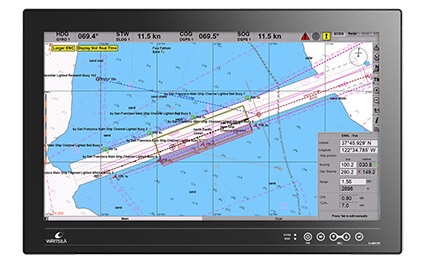
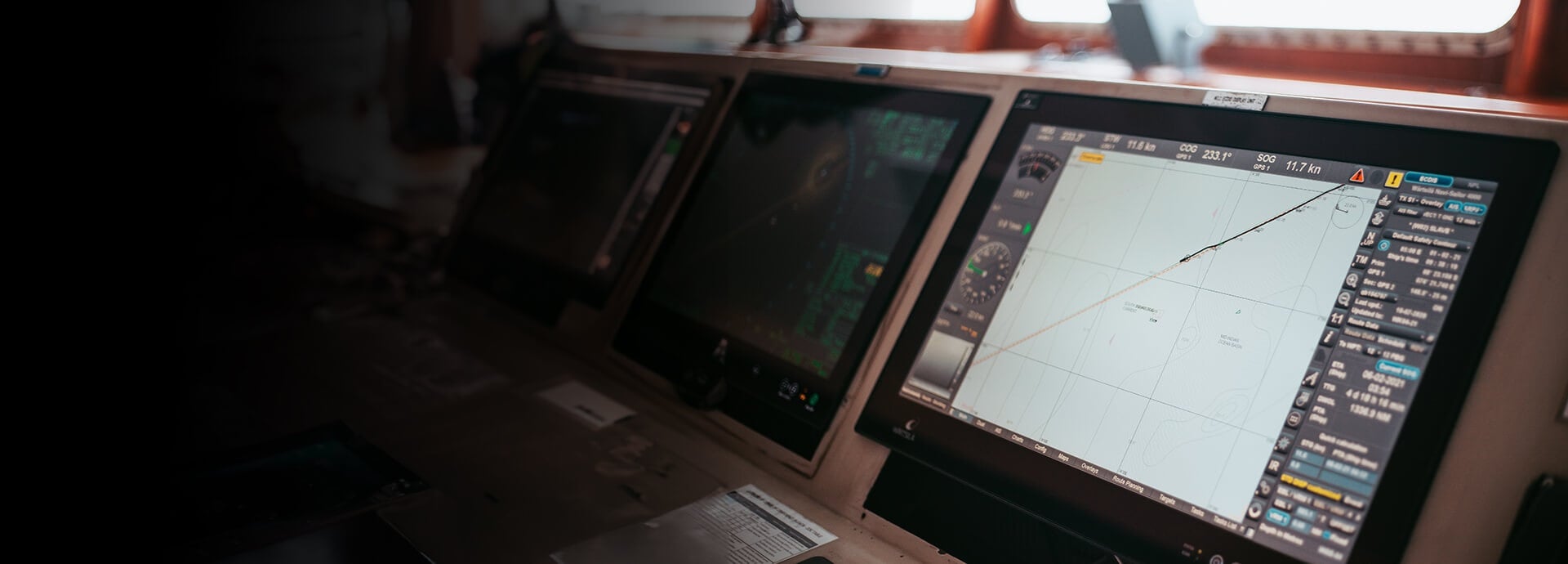
If you would like to see how a modern ECDIS addresses these considerations in practice, explore Wärtsilä Navi-Sailor ECDIS and its capabilities in terms of fleet-wide deployment, bridge integration, S-100 readiness and ship-to-shore connectivity.
Written by
Once every six weeks, you will get the top picks – the latest and the greatest pieces – from this Insights channel by email.